
Business
Nigeria may feel impact as Iran shuts strategic Strait of Hormuz

By Ezurike Ugochukwu
Fresh concerns have emerged over global energy supplies and maritime trade after Iran’s Islamic Revolutionary Guard Corps (IRGC) announced the closure of the strategic Strait of Hormuz “until further notice,”
IRGC’s announcement could trigger higher crude oil prices, increased shipping costs and renewed pressure on global supply chains, including those affecting Nigeria.
The announcement came on Sunday after the Guards said they intercepted a vessel allegedly sailing through an unauthorised route in the waterway. According to Iran’s state news agency, IRNA, the ship ignored repeated instructions to use an approved shipping corridor before it was stopped with warning shots.

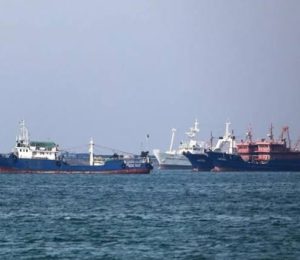
Following the incident, the Revolutionary Guards declared that no vessel would be allowed to transit the strait until what it described as “the end of American interventions in the region.”
The Guards also warned that they would target additional enemy positions across the Middle East should further military action be taken against Iran.
The latest development is expected to further strain already fragile relations between Tehran and Washington following recent military exchanges between both countries. Reports indicate that the United States had demanded that Iran cease interference with commercial shipping and formally guarantee free navigation through the waterway.
The Strait of Hormuz remains one of the world’s most strategic maritime routes, serving as the gateway for about 20 per cent of global crude oil and liquefied natural gas exports. Any prolonged disruption could significantly affect international energy markets, insurance premiums and freight charges.
For Nigeria, Africa’s largest crude oil producer and a major maritime nation, the implications could be mixed.
Industry experts say a sustained rise in global crude oil prices could boost Nigeria’s oil export earnings and increase foreign exchange inflows if production targets are maintained. However, higher freight charges, marine insurance premiums and shipping costs could increase the cost of imported goods, refined petroleum products, industrial raw materials and consumer items entering Nigerian ports.
The development could also affect Nigeria’s maritime sector, with shipping lines expected to review sailing schedules, impose emergency risk surcharges and reroute vessels where necessary. Such measures may ultimately translate into higher logistics costs for importers, exporters and consumers.
Maritime analysts note that although Nigerian-bound vessels do not transit the Strait of Hormuz, disruptions in one of the world’s busiest shipping corridors often have a ripple effect on global freight rates, vessel availability and international trade.
Oil marketers also warn that any prolonged closure could influence domestic fuel prices if international petroleum prices continue to rise, despite Nigeria’s increased refining capacity.
Under international maritime law, straits used for international navigation are generally expected to remain open to commercial shipping. However, Iran has consistently maintained that it has the authority to regulate passage through the Strait of Hormuz and has previously indicated plans to impose charges on vessels using the route.
The United States and several Western allies have rejected that position, insisting that the waterway must remain open to unrestricted international navigation.
With tensions in the Gulf showing little sign of easing, global shipping companies, energy traders and governments are closely monitoring developments, amid fears that a prolonged disruption at the Strait of Hormuz could have far-reaching consequences for world trade, energy security and economies, including Nigeria’s.










Afeni deepens inter-agency alliance as Ogun I Customs, NAFDAC, Army intensify anti-smuggling fight

Oyetola’s waterways safety directive gains momentum as NIWA reaches FCT communities

Customs implements new ECOWAS tariff regime, updates import, export rules
-

 Crime2 years ago
Imo police confirm arrest of journalist, ‘Nonsonkwa’ over alleged Cyberstalking, Incitement
-
 Education5 months ago
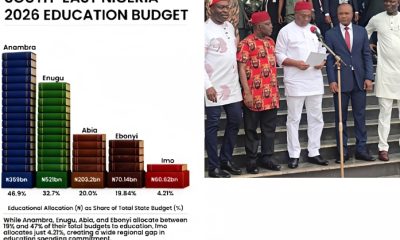
Anambra leads South-east in education allocation ratio, as Imo ranks lowest
-
 News6 years ago
Orthodox Anglican Church, not Same as Church of Nigeria- Bishop
-

 Business6 years ago
Pay-As-You-Go not applicable to pay TV – FCCPC
-

 Agriculture4 years ago
Environment Day: Foundation partners, FCMB, Chevron, harps on collective efforts on earth protection
-

 Crime3 years ago
Pastor allegedly kills female member, prevents 20 year old daughter from attending burial