
Business
Customs implements new ECOWAS tariff regime, updates import, export rules
By Ezurike Ugochukwu
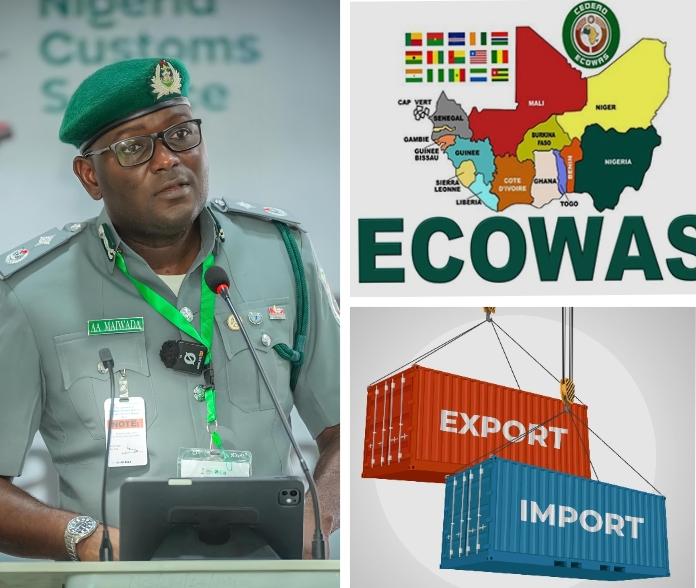
The Nigeria Customs Service (NCS) has commenced the implementation of the Federal Government’s 2026 Fiscal Policy Measures and revised Customs and Excise Tariff framework, introducing a new ECOWAS tariff regime and significant changes to Nigeria’s import, export and excise rules.
The implementation follows the approval of the fiscal measures by President Bola Ahmed Tinubu as part of the Federal Government’s broader efforts to strengthen fiscal policy, enhance trade competitiveness, boost revenue generation and align Nigeria’s tariff system with regional and international trade obligations.
Announcing the development in a statement on Wednesday, the National Public Relations Officer of the NCS, Deputy Comptroller Abdullahi Maiwada, said the new measures represent comprehensive amendments to the nation’s Customs and Excise Tariff structure designed to support industrial growth, facilitate legitimate trade and improve the administration of fiscal and tariff policies.

According to him, the reforms are anchored on the implementation of the ECOWAS Common External Tariff (CET) 2022–2027, which seeks to harmonise customs duties and trade policies among member states while promoting regional integration and economic cooperation.

President Tinubu
Among the major changes are the Revised Import Adjustment Tax (IAT) List, the Revised National List under the ECOWAS Common External Tariff, the Revised Import Prohibition List (Trade), the Revised List of Goods Liable to Excise Duty, the introduction of a Green Tax Surcharge on motor vehicles with engine capacities of 2,000cc and above, and a Revised Export Prohibition List.
The Customs Service explained that the updated tariff framework is intended to encourage domestic manufacturing, improve regulatory compliance, strengthen trade facilitation and create a more transparent and predictable business environment for importers and exporters.
It urged importers, exporters, manufacturers, licensed customs agents and other stakeholders in the international trade value chain to study the amended tariff schedules and ensure full compliance with the new fiscal and regulatory requirements governing their transactions.
To ensure a smooth transition, the Service said the complete 2026 Fiscal Policy Measures and Tariff Amendments have been uploaded to its official website, where stakeholders can access and download the approved document.
The NCS encouraged businesses and trade operators to familiarise themselves with the revised provisions to avoid delays, penalties or other compliance issues during cargo processing.
Reaffirming its commitment to supporting the Federal Government’s economic reform agenda, the Service said it would continue to balance its statutory responsibilities of trade facilitation, revenue generation and border security while ensuring the effective implementation of the new tariff regime.
According to the Service, the successful implementation of the 2026 Fiscal Policy Measures will require the active cooperation of importers, exporters, manufacturers, customs agents and other participants in the trade ecosystem as Nigeria seeks to build a more competitive, transparent and sustainable economy.
The revised tariff regime is expected to play a critical role in improving customs administration, protecting strategic domestic industries, enhancing regional trade under the ECOWAS framework and strengthening Nigeria’s position as a leading trading nation in West Africa.








-

 Crime2 years ago
Imo police confirm arrest of journalist, ‘Nonsonkwa’ over alleged Cyberstalking, Incitement
-
 Education7 months ago
Anambra leads South-east in education allocation ratio, as Imo ranks lowest
-

 News6 years ago
Orthodox Anglican Church, not Same as Church of Nigeria- Bishop
-

 Business6 years ago
Pay-As-You-Go not applicable to pay TV – FCCPC
-

 Agriculture4 years ago
Environment Day: Foundation partners, FCMB, Chevron, harps on collective efforts on earth protection
-

 Crime3 years ago
Pastor allegedly kills female member, prevents 20 year old daughter from attending burial