
Business
From roadside joints to rooftop lounges: Moniepoint tracks ₦billions flowing after dark

By Ezurike Ugochukwu
Africa’s leading all-in-one financial ecosystem, Moniepoint Inc., has released a new case study that pulls back the curtain on the digital payment systems powering Nigeria’s nightlife beyond the glitz of headline-grabbing December concerts and luxury club culture. Titled, “The Business of Community Nightlife in Nigeria,” the case study provides a rare, data-driven exploration of the country’s informal night economy. While premium festive venues often dominate headlines with daily revenues running into hundreds of millions of naira, the report instead focuses on the dense network of local establishments where nightlife is less glamorous but economically significant.  Whereas the premium “Detty December” venues often dominate public conversation with reported daily revenues running into hundreds of millions of naira and VIP tables priced in seven figures, Moniepoint’s research redirects attention to everyday nightlife operators whose cumulative economic footprint tells a far deeper story. The study went on to draw on anonymised transaction data from more than 27,000 bars, clubs, and lounges operating on Moniepoint’s payment rails, complemented by field interviews and on-the-ground observations across multiple Nigerian cities. By combining hard transaction figures with human stories from operators and workers, the report offers one of the most granular looks yet at how money, labour, and social life intersect after dark. Digital Payments Take Centre Stage, as cash takes back seat One of the report’s most striking findings is the rapid decline of cash usage in nightlife transactions. Contrary to broader assumptions about Nigeria’s informal economy, digital payments now dominate after-dark spending.
  Bank transfers lead the way, closely followed by card payments, while cash is increasingly discouraged due to safety concerns. During peak night hours, transfers exceed card payments by nearly two million transactions across Moniepoint’s network, underscoring how deeply embedded digital payments have become in social settings. To support this ecosystem, Moniepoint has introduced features such as POS Transfers and dedicated bank accounts for each terminal, offering instant audio-visual confirmations – including its signature payment “ping” – that allow businesses to continue serving customers without delays linked to SMS alerts or payment verification screenshots. Its cards are also designed without visible card numbers, expiry dates, or CVVs, an added security measure tailored to busy nightlife environments. The Economics of the Night The report also challenges assumptions about peak spending patterns. While nightlife activities may stretch into the early hours, transaction volumes tell a different story. Spending begins rising sharply from 8 p.m., peaks before midnight, and steadily declines afterward – even when venues remain crowded. For operators, this means the economic fate of the night is often sealed early. The most critical window for staffing decisions, inventory stocking, vendor payments, and cash flow management lies between midnight and 6 a.m., when operators reconcile accounts and prepare for the next cycle.
 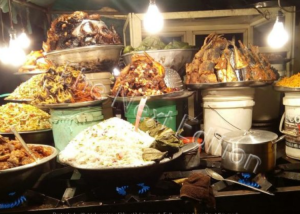 Employment data further highlights the sector’s economic relevance. On peak nights, neighbourhood bars typically expand their workforce by between 30 and 50 percent. Conservative estimates suggest that at least 54,000 Nigerians are engaged in nightlife-related labour every night, spanning bartenders, cooks, DJs, security personnel, food vendors, and logistics workers. Food: The Quiet Stabiliser While alcohol remains a major revenue driver, the data reveals that food plays a stabilising role in many local venues. In several neighbourhood establishments, bottled water and meals often outsell beer and spirits, particularly earlier in the evening. Transaction narrations such as “food,” “pay,” “sent,” “pos,” and “cash” reflect the diversity of nightlife spending – from street meals and club entries to transport fares and after-party expenses. The findings suggest that Nigeria’s night economy is more socially distributed and less elitist than popular narratives imply. Regional Footprint
 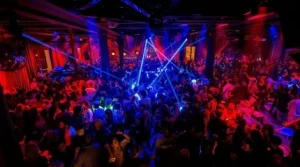 In terms of venue concentration, Lagos State leads with 4,856 bars, clubs, and lounges on Moniepoint’s network. The Federal Capital Territory follows with 2,515 establishments, while Rivers State (2,362), Delta State (1,930), and Edo State (1,574) round out the top five. Interestingly, Katsina State leads the country in nighttime food truck payment value, generating over ₦130 million in the past year, while Kwara State tops transaction count. The distribution underscores how nightlife commerce extends well beyond Nigeria’s largest metropolitan centres.
  Investment and Growth On the lending side, a significant proportion of loan applications from nightlife operators are directed toward renovations, lighting, sound systems, and furniture – investments aimed at strengthening ambience and customer retention in a highly competitive environment. Speaking on the findings, Co-Founder and Group CEO of Moniepoint, Tosin Eniolorunda, described local nightlife operators as central – not peripheral – to Nigeria’s economic structure.
  He noted that the sector sustains hundreds of thousands of livelihoods and deserves policy and financial recognition comparable to agriculture, healthcare, and retail. According to him, Moniepoint’s goal is to equip these businesses with credit, same-day settlements, and business management tools such as Moniebook to enable growth and operational stability. Driving Financial Inclusion As one of Africa’s largest financial service distributors, Moniepoint processes billions of naira in transactions monthly and continues to expand its support for small and medium-sized enterprises through payments, banking, credit, and business management solutions.
  With this latest study, the company not only spotlights the economic weight of Nigeria’s community nightlife but also reinforces the role of digital infrastructure in transforming how informal sectors operate – proving that long after sunset, a sophisticated financial engine is at work behind the scenes, thriving after dark.









-

 Crime2 years ago
Imo police confirm arrest of journalist, ‘Nonsonkwa’ over alleged Cyberstalking, Incitement
-
 Education7 months ago
Anambra leads South-east in education allocation ratio, as Imo ranks lowest
-

 News6 years ago
Orthodox Anglican Church, not Same as Church of Nigeria- Bishop
-

 Business6 years ago
Pay-As-You-Go not applicable to pay TV – FCCPC
-

 Agriculture4 years ago
Environment Day: Foundation partners, FCMB, Chevron, harps on collective efforts on earth protection
-

 Crime3 years ago
Pastor allegedly kills female member, prevents 20 year old daughter from attending burial