
News
Tinubu tightens ministers’ foreign travel as own trips hit 261 days

By Ezurike Ugochukwu
President Bola Ahmed Tinubu’s administration has tightened regulations governing official foreign travel by ministers, service chiefs, heads of government agencies and other appointees, requiring them to obtain prior approval from the Office of the Secretary to the Government of the Federation (OSGF) before travelling abroad.
The new enforcement comes against the backdrop of records showing that President Tinubu himself has made 52 foreign trips and spent about 261 days outside Nigeria since assuming office in May 2023. The latest figures have renewed public attention on the administration’s approach to official travel, particularly as government moves to impose stricter controls on other public officials.
The directive, contained in a circular dated August 13, 2026, and signed by Secretary to the Government of the Federation, George Akume, said some Federal Government appointees had continued to embark on official foreign trips without securing the required approval from the OSGF.

The circular covers ministers and ministers of state, permanent secretaries, heads of ministries, departments and agencies, service chiefs, senior political appointees and chief executives of government-owned companies and parastatals, among others.
Under the new enforcement regime, the Ministry of Foreign Affairs is required to demand evidence of valid OSGF approval before processing official travel documentation, including Notes Verbales, diplomatic facilitation and relevant official, diplomatic or service visa applications.
The Auditor-General for the Federation has also been directed to demand evidence of the required approval during audit exercises. Government accounting officers, permanent secretaries and heads of agencies have, meanwhile, been instructed not to process expenditure relating to official foreign trips unless the necessary approval had been obtained.
The government said the measures were designed to strengthen accountability, fiscal discipline, transparency and coordination of official foreign engagements, while ensuring that public funds are not spent on unauthorised trips.
Familiar Rule, now Being Enforced

The latest circular is not entirely a new travel policy. Rather, it reinforces existing regulations that have been issued by successive administrations to control foreign travel by public officials.
The SGF cited previous directives, including the September 18, 2023 guidelines for official travels by cabinet members and heads of agencies, the September 27, 2017 cost-control measures for foreign trips by ministers and senior government officials, and earlier circulars issued in 2015, 2018 and 2012.
The renewed directive followed what the government described as continued non-compliance with those rules.
According to the SGF, such violations undermine efforts to ensure proper coordination of government business and prudent management of public resources.
The government has therefore moved beyond simply issuing guidelines by introducing mechanisms that could make unauthorised travel more difficult to undertake and harder to fund.
The timing of the tougher measures, however, has created an interesting public-policy contrast.

Available travel records indicate that President Tinubu has spent approximately 261 days abroad since becoming president, across 52 foreign trips, including his latest European trip. The records show that he has visited about 30 countries, with his journeys covering state visits, diplomatic engagements, investment meetings, international summits and working vacations.
The President’s latest European trip, which began in late August, was described by the Presidency as a three-week annual working vacation, with London as the first stop.
The frequency of the President’s foreign engagements has previously generated public debate over the cost and necessity of presidential travel, particularly amid economic pressures facing Nigerians.
According to GovSpend records cited in recent reporting, the Presidency spent about ₦37.64 billion on presidential trips and related travel expenses between June 2023 and April 2026.
It is against this background that the latest restrictions on ministers and other officials are likely to attract scrutiny.
There is, however, an important distinction.
The OSGF directive is specifically targeted at Federal Government appointees undertaking official foreign trips. It does not establish the same approval requirement for the President himself, who operates under a different constitutional and administrative framework.
Indeed, the circular expressly allows exceptions where otherwise provided by law or through a specific presidential directive.
Consequently, the issue is not necessarily whether the President has violated the new rule, but whether the administration can convincingly demonstrate that the principles of fiscal prudence and accountability underpinning the directive are being applied consistently across government.
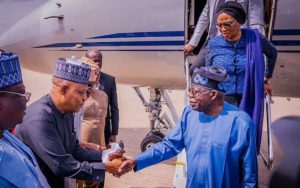
That distinction may become increasingly important as public attention shifts from the number of trips taken to the justification, cost and outcomes of those journeys.
The government’s latest action also reflects a broader attempt to tighten control over public expenditure.
By making OSGF clearance a condition for official travel processing and subsequent expenditure, the administration is effectively placing a financial gate around foreign engagements by senior officials.
The Ministry of Foreign Affairs must now ensure that the required approval accompanies relevant travel documentation, while foreign missions are to be informed of the requirement. Government agencies are similarly expected to ensure that public funds are not released for unauthorised official foreign travel.
For ministers and agency heads, the implication is clear: official foreign engagements must now be justified, approved and properly documented before public resources can be committed.
The policy could therefore reduce unnecessary trips, improve coordination and ensure that official overseas engagements are tied more directly to government priorities.
But beyond the circular itself, the bigger test for the Tinubu administration will be implementation.
The government has repeatedly emphasised fiscal prudence, accountability and the need to reduce waste in public expenditure. The travel directive is consistent with that objective.
Yet with the President’s own foreign travel record standing at about 261 days, the policy inevitably invites questions about how government defines necessary travel and how it measures the value derived from such journeys.
The administration may argue that presidential travel serves diplomatic, economic and strategic purposes that cannot be equated with routine official trips by ministers or agency heads. That distinction is valid. But it also places greater responsibility on government to demonstrate the outcomes of foreign engagements, particularly when public finances remain under pressure.
Ultimately, the significance of the new rule may lie less in the requirement for ministers to obtain SGF approval—which has existed in one form or another for years—and more in the administration’s willingness to enforce it consistently.
If the policy succeeds in curbing unnecessary official travel, controlling expenditure and improving accountability, it could become an important component of the government’s fiscal discipline agenda.
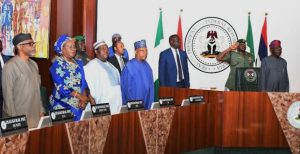
But if it is perceived as a rule for ministers and officials while presidential travel remains largely beyond similar scrutiny, the administration may continue to face questions over the consistency of its approach to public-sector spending.










Seme–Krake: Nigeria, Benin Customs begin push for seamless border trade
AMJON Conference: NIMASA, Customs, NPA, NSML push innovation, digital skills for future-ready maritime sector

Customs: Discipline, character critical as 2025 recruitment screening enters final phase
-

 Crime2 years ago
Imo police confirm arrest of journalist, ‘Nonsonkwa’ over alleged Cyberstalking, Incitement
-
 Education6 months ago
Anambra leads South-east in education allocation ratio, as Imo ranks lowest
-

 News6 years ago
Orthodox Anglican Church, not Same as Church of Nigeria- Bishop
-

 Business6 years ago
Pay-As-You-Go not applicable to pay TV – FCCPC
-

 Agriculture4 years ago
Environment Day: Foundation partners, FCMB, Chevron, harps on collective efforts on earth protection
-

 Crime3 years ago
Pastor allegedly kills female member, prevents 20 year old daughter from attending burial