
Business
Shippers’ Council blocks sharp tariff hike, pushes dialogue with industry players
By Ezurike Ugochukwu
The Nigerian Shippers’ Council (NSC) has reaffirmed that comprehensive stakeholder engagement will remain a prerequisite for the implementation of the proposed tariff increase by shipping companies, as it seeks to balance industry sustainability with economic stability.
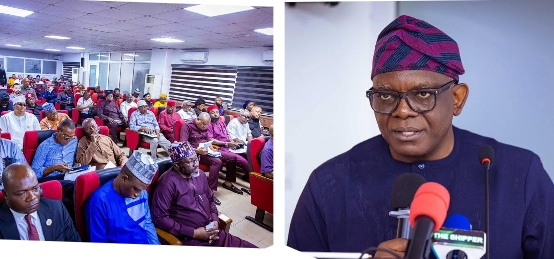
NSC’s position was reinforced during a one-day stakeholders’ forum that brought together shipping companies, freight forwarders, importers, exporters, and other key players across the maritime value chain.
 Speaking at the meeting, the Executive Secretary/Chief Executive Officer of the NSC, Dr. Akutah Pius, MON, explained that the earlier suspension of the tariff implementation in March 2026 was a strategic decision aimed at creating room for wider consultations.

“The suspension of the tariff implementation last month created an opportunity for us to engage stakeholders and address key concerns,” he said.
“Implementation will only proceed after shipping companies conclude consultations with importers, shippers, clearing agents, and other critical stakeholders.”
30% Increase a Cap, Not a Fixed Rate
Akutah clarified that the approved 30 per cent tariff increase should be seen as a ceiling rather than a mandatory benchmark, noting that actual adjustments could be lower depending on the outcome of engagements.
“The 30 per cent increase is the upper limit. Shipping companies may implement 10 or 20 per cent depending on their consultations. It will also be gradual,” he stated.

Alhaji Tanko Ibrahim of NAGAFF
He assured stakeholders that the adjustment would not come as a shock to the economy, adding that some operators had already begun phased consultations and partial implementation.
The NSC boss disclosed that shipping companies initially proposed tariff increases ranging between 150 and 200 per cent, but the Council intervened to moderate the figure in the interest of economic stability.
“Shipping companies argued that 30 per cent is too low given inflation and rising operational costs, but we determined it was necessary to avoid overburdening the economy,” he said.
According to him, the Council carefully considered prevailing economic conditions, including wage adjustments within the sector, before arriving at the approved rate.
He reiterated that tariff adjustments are not designed to maximise profit but to sustain operations without placing undue pressure on businesses and consumers.
“We need shipping companies to remain efficient and viable, but we cannot allow increases that could strain the entire system. The goal is to maintain balance,” he added.
 Stakeholders Demand Due Process
Industry stakeholders at the forum broadly acknowledged the need for tariff adjustments but emphasised that due process and inclusive engagement must be prioritised.
President of the National Shippers’ Association of Nigeria (NSAN), Dr. Jamilu Umar, stressed that opposition was not to the increase itself but to the process leading to it.
“We are not against the increase, but due process must be followed. There must be proper consultation, and all stakeholders must be carried along,” he said.
The Manufacturers Association of Nigeria (MAN) echoed similar concerns, urging regulators to mandate shipping companies to engage stakeholders before implementing any tariff changes.
 Operators Cite Rising Costs
On their part, shipping companies attributed the proposed tariff hike to mounting operational costs and economic pressures.
President of the Shipping Association of Nigeria (SAN), Boma Alabi, noted that the approved 30 per cent increase fell short of industry expectations.
“The 30 per cent approved is not entirely commercial. We initially proposed over 100 per cent, but this reflects current realities,” she said.
“Operators are dealing with rising costs, including a minimum wage of about N200,000 within the subsector.”
Alabi, however, called for sustained collaboration among stakeholders to ensure a competitive and value-driven maritime industry.
 The meeting drew participation from a wide range of industry groups, including freight forwarding associations, customs agents, exporters, manufacturers, and trade organisations, reflecting the far-reaching implications of tariff adjustments across the maritime ecosystem.
A Measured Path Forward
The forum ended with a consensus on the need for continued dialogue, transparency, and phased implementation of any tariff adjustments.
 With the NSC positioning itself as a mediator between operators and users of shipping services, stakeholders expressed optimism that a balanced outcome can be achieved—one that sustains the industry while safeguarding the broader economy.















-

 Crime2 years ago
Imo police confirm arrest of journalist, ‘Nonsonkwa’ over alleged Cyberstalking, Incitement
-
 Education7 months ago
Anambra leads South-east in education allocation ratio, as Imo ranks lowest
-

 News7 years ago
Orthodox Anglican Church, not Same as Church of Nigeria- Bishop
-

 Business6 years ago
Pay-As-You-Go not applicable to pay TV – FCCPC
-

 Agriculture4 years ago
Environment Day: Foundation partners, FCMB, Chevron, harps on collective efforts on earth protection
-

 Crime3 years ago
Pastor allegedly kills female member, prevents 20 year old daughter from attending burial