
Metro
Ipokia’s true wealth lies in agriculture, enterprise – LGA chairman, Avoseh
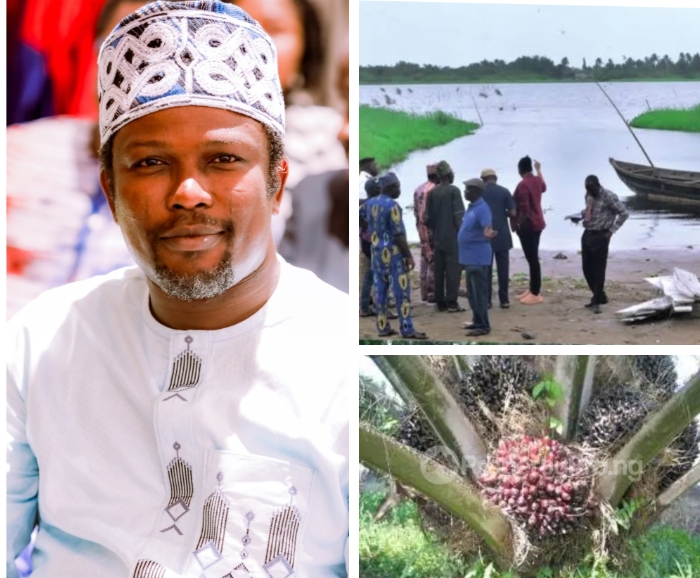
By Ezurike Ugochukwu
At exactly 3:55pm, a team of journalists walked unannounced into the office of the Executive Chairman of Ipokia Local Government Area of Ogun State, Hon. Johnson Akohomeh Avoseh.
Inside the office, the council boss was seated behind his desk, attending to a stream of residents waiting patiently for their turn. The scene reflected a leadership style rooted in accessibility — a conscious decision by the chairman to remain within the rural border community rather than governing from a distant city residence through proclamations and intermediaries.
In a country where many public officials prefer to run local affairs from state capitals or major cities, Avoseh has chosen to stay among the people he governs.


Hon. Johnson Akohomeh Avoseh, Executive Chairman, Ipokia Local Government Area
“I made a promise during my campaign that I would live among my people, and that is exactly what I am doing,” he said.
Ipokia, located along the Nigeria–Benin Republic border, is often associated with smuggling activities due to its strategic location. But the chairman insists that such a narrative ignores the vast economic and agricultural potential of the area.
According to him, the majority of residents are engaged in legitimate enterprises, particularly agriculture and small-scale production.
The famous Tongeji Island, situated less than a five-minute drive from Port Novo in Benin Republic, and 150 minutes by speedboat from the Western Naval Command (WNC) headquarters in Apapa, Lagos. With its impressive waterfront and breathtaking scenery, it’s a beauty to behold, located in Ipokia.
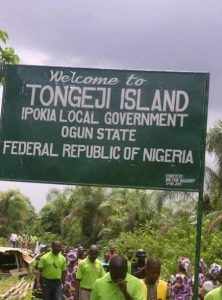
The chairman explained that this holiday haven and island is surrounded by aquatic splendour with its enormous palm/coconut trees, white sand, humid weather is a great tourist site.
Avoseh said, “When people tag Ipokia or Idiroko as smugglers, I always ask: what percentage of our people are involved in that?
“Our people are farmers. We produce palm oil, maize, cassava, fish, and many other things. Food is even cheaper here because we produce what we eat.”
The council boss explained that Ipokia remains one of the leading producers of palm oil and palm kernel in Ogun State, with large volumes transported daily to markets across the country.
Aquaculture is also thriving in the area. Along the Ilashe axis, he noted, fish farming investments worth more than ₦500 million have been established.
 “If you go to Ilashe, on both sides of the road you will see fish farms. The investment there alone runs into hundreds of millions of naira,” he said.
Livestock farming is another growing sector in the local economy. Avoseh disclosed that several individuals within the local government maintain cattle herds exceeding 100 cows each, creating employment for local residents who manage the animals.
Beyond agriculture, the chairman believes youth empowerment remains crucial to discouraging illegal cross-border activities.

Acting CAC Afeni
He noted that sustained dialogue between community leaders, traditional rulers and security agencies has helped reduce clashes between youths and operatives of the Nigeria Customs Service(NCS) in recent years.
“The situation is not the way it used to be. A lot of engagement has taken place between community leaders, political leaders and traditional rulers, and Customs have also soft-pedalled in their approach, especially within this period of Acting Area Comptroller of Customs DC Afeni of Idiroko Command,” he said.
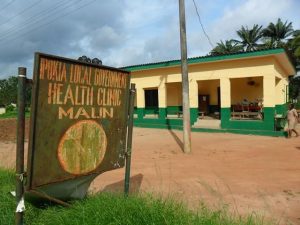 Avoseh explained that the local government is supporting various initiatives aimed at providing alternative livelihoods for young people.
One of such initiatives is the Borderline Creative Empowerment Centre in Idiroko, run by Dr. Bonny Abisogun Botoku, which trains youths and women in skills ranging from garri processing to arts and crafts.
“They are training people in garri processing, painting, sculpture, Adire and batik production. These are things that can give our youths legitimate income and keep them engaged,” he said.
The centre produces a locally branded product known as “Border Garri,” while also using art to reflect the realities of life in border communities.
According to Avoseh, some of the artworks depict issues such as smuggling, porous border routes and the interaction between security agencies and residents.
“Their paintings even tell stories about life along the border. Some discourage smuggling, some reflect the relationship between security agencies and the people. These are things that can be showcased at exhibitions,” he explained.
The chairman also highlighted the role of other organisations in supporting youth empowerment, including the National Youth Council and the National Council of Women Societies, which run training programmes in soap making and other small-scale production ventures.
Despite the economic opportunities in agriculture, Avoseh admitted that farmers in the area sometimes face market challenges.
He cited the example of cassava farming, where a drastic drop in prices left many farmers struggling to recover their production costs.
“Last year, many of us planted cassava, including myself. Now the cassava is mature, but there is no buyer. The price dropped from about ₦15,000 to ₦5,000,” he said.
However, he encouraged farmers to diversify into other crops such as watermelon and groundnut, which proved highly profitable in the previous farming season.
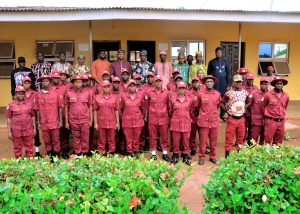
Security in Ipokia
On security, Avoseh described Ipokia as one of the most peaceful local government areas in Ogun State, attributing the stability to strong community bonds and collective vigilance.
“Ipokia is a close-knit community. We know ourselves. If a stranger comes into the community, people easily notice and begin to ask questions,” he said.
Security efforts in the area involve collaboration among the police, the Nigeria Security and Civil Defence Corps, the Amotekun Corps and local vigilante groups such as the Oodua People’s Congress.
Residents also mount informal checkpoints in some communities at night to monitor movements and deter criminal activities.
While occasional incidents of cult-related violence occur in places such as Agosasa, Ajegunle and Idiroko, the chairman said such cases are isolated and usually contained quickly.
For Avoseh, the ultimate goal of his administration is to change perceptions about Ipokia while strengthening the economic foundation of the border communities.

Hon. Johnson Avoseh
“I came here to contribute my best to the development of Ipokia, and that is what I intend to do.
“I want to be remembered as one of the best chairmen that have served this local government with all their strength,” he said.


Revenue up, unsafe imports down: Kirikiri Customs reports ₦19.4bn collection, major vape seizure

Ododo courts UK diaspora support for Tinubu’s economic agenda, Kogi development

Afeni deepens inter-agency alliance as Ogun I Customs, NAFDAC, Army intensify anti-smuggling fight
-

 Crime2 years ago
Imo police confirm arrest of journalist, ‘Nonsonkwa’ over alleged Cyberstalking, Incitement
-
 Education5 months ago
Anambra leads South-east in education allocation ratio, as Imo ranks lowest
-

 News6 years ago
Orthodox Anglican Church, not Same as Church of Nigeria- Bishop
-

 Business6 years ago
Pay-As-You-Go not applicable to pay TV – FCCPC
-

 Agriculture4 years ago
Environment Day: Foundation partners, FCMB, Chevron, harps on collective efforts on earth protection
-

 Crime3 years ago
Pastor allegedly kills female member, prevents 20 year old daughter from attending burial