By Ezurike Ugochukwu
Licensed customs agents and freight forwarders have rallied behind the Federal Government’s National Single Window (NSW) Project, declaring it a decisive step toward modernising Nigeria’s trade facilitation architecture and restoring confidence in port operations.
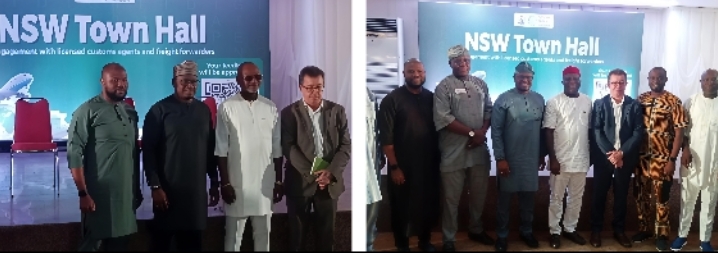
The endorsements came during separate stakeholder engagement sessions organised in Apapa, Lagos, where leaders of ANLCA and NAGAFF unanimously described the initiative as timely, strategic and capable of addressing long-standing inefficiencies in cargo processing.
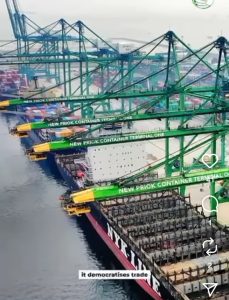
It will be recalled that for years, port users have grappled with repetitive documentation, overlapping regulatory mandates and delays caused by fragmented agency platforms.
The NSW, designed as a unified digital interface for trade documentation and regulatory approvals, is expected to consolidate these processes into a single, transparent system accessible to all stakeholders.
ANLCA National President, Mr. Emenike Nwokeoji, characterised the platform as “a much-needed reform” that has the potential to eliminate duplication and foster accountability within the system.
According to him, the introduction of a unified portal will end the era of multiple submissions and opaque objections that often slow down cargo clearance.
“The multiplication of documents and repeated submissions will come to an end. Any objection raised on the platform will be visible to all stakeholders,” Nwokeoji said.
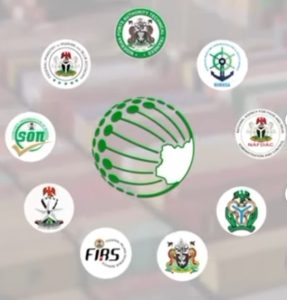
He noted that the system would allow licensed customs agents to submit documents remotely, monitor cargo movement in real time, and resolve compliance issues more efficiently.
“This project is going to help in making our jobs easier. That is why we are giving it our full support. On behalf of licensed customs agents, I believe it will succeed,” he added.
Similarly, NAGAFF expressed confidence that the Single Window initiative would significantly improve operational efficiency while promoting transparency in trade transactions.
NAGAFF National President, Mr. Tochukwu Ezisi, described the reform as a strategic intervention aligned with global best practices in trade facilitation. He stressed that sustained stakeholder engagement and adequate training would be critical to unlocking its full benefits.
He maintained that if properly implemented, the platform would enhance Nigeria’s ease of doing business ranking, reduce clearance timelines and stimulate economic growth.
Founder of NAGAFF, Dr. Boniface Aniebonam, went further in his assessment, describing the Single Window as a landmark development for Nigeria’s maritime industry.
“The Single Window platform is the best thing that is going to happen in the maritime sector because it is interactive. NAGAFF members will fully support this project. We are always eager to embrace due process,” Aniebonam stated.
Both associations, however, emphasised the importance of early adoption among their members, noting that previous digital transitions within the port system faced resistance due to delayed compliance and insufficient awareness.

They urged freight forwarders and customs agents to register promptly for training programmes and take advantage of support centres that will be established nationwide to ease the transition.
Providing further insight into the project’s implementation roadmap, the Director of the NSW Project, Mr. Tola Fakolade, outlined a structured three-phase rollout plan designed to minimise disruptions and ensure smooth integration.
According to Fakolade, Phase One of the deployment will commence on March 27, 2026. This initial stage will focus on import-related Licences, Certificates, Permits and Other (LCPO) submissions, air and sea manifest submissions, centralised risk management for regulatory agencies such as the Standards Organisation of Nigeria (SON), National Agency for Food and Drug Administration and Control (NAFDAC), and the Nigeria Agricultural Quarantine Service (NAQS), as well as LCPO payments.
Phase Two, expected in the second and third quarters of 2026, will extend LCPO submissions to exports. It will also integrate export process applications such as the Nigeria Export Proceed (NXP) form, migrate Form M initiation to the Single Window platform, and introduce advanced data analytics, reporting tools and performance dashboards.
Phase Three, projected for the first quarter of 2027, will incorporate declaration submissions, duties assessment and payment modules, Advanced Risk Analytics (ARA), the Trade Visualisation System (TVS), and expanded operational reporting capabilities.
Fakolade reassured stakeholders that processes not yet integrated into the Single Window during Phase One would continue on existing government agency platforms until migration is completed.
To facilitate a seamless transition, the project team plans to conduct intensive two-day, hands-on training sessions for licensed customs agents and freight forwarders across the country over a four-week period. Participants have been advised to register at centres closest to their operational bases.
In addition, dedicated support centres equipped with internet access will be established at major ports, beginning with Apapa. Help desks and walk-in support facilities will also be available after the platform goes live to address operational concerns in real time.
While commending ANLCA and NAGAFF for their proactive support, Fakolade urged association leaders to intensify sensitisation efforts among their members, encouraging them to serve as ambassadors of the reform.
He described the National Single Window as “the start of a great trade journey for Nigeria,” noting that its success would depend not only on technology but also on stakeholder cooperation and collective ownership.
With the backing of two of the most influential freight forwarding bodies in the country, industry observers say the National Single Window Project may well mark a turning point in Nigeria’s quest for a more efficient, transparent and globally competitive maritime sector.








 Crime2 years ago
 Education7 months ago
 News6 years ago
 Business6 years ago
 Agriculture4 years ago
 Crime3 years ago