
Business
Maritime sector reforms yield ₦1.83trn as FG targets efficiency, accountability, port expansion
By Ezurike Ugochukwu
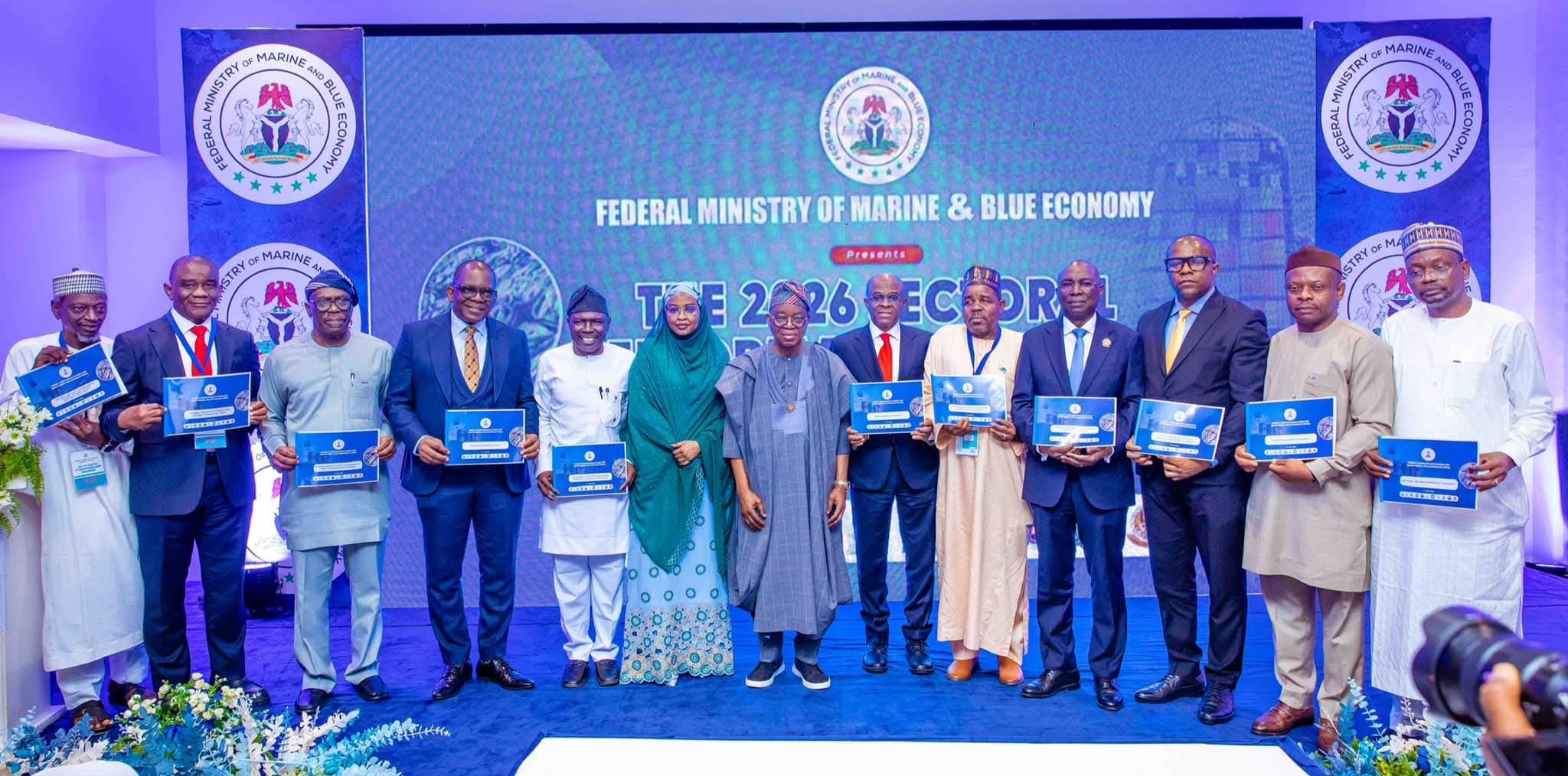
The Minister of Marine and Blue Economy, Dr. Adegboyega Oyetola, has unveiled sweeping reforms that have driven a remarkable 160 per cent increase in revenue across agencies under the Ministry, rising from ₦700.79 billion in 2023 to about ₦1.83 trillion by the end of 2025.
Oyetola disclosed this during the 2026 First Quarter Citizens/Stakeholders’ Engagement, Sectoral Performance Review, and Ministerial Management Retreat in Lagos, where he also signed performance bonds with heads of agencies, including the Nigerian Shippers’ Council, to enforce accountability and measurable results.
 “In 2023, our agencies generated ₦700.79 billion. By the end of 2025, this figure had risen to approximately ₦1.83 trillion. This remarkable achievement is the result of deliberate and sustained reforms,” the Minister said.

He attributed the surge to strengthened regulatory oversight, improved revenue assurance mechanisms, digitalisation of operations, and a determined effort to block leakages across the maritime sector.
Oyetola emphasised that the reform agenda is anchored on transparency, efficiency, and inclusive governance, noting that the convergence of stakeholders was designed to align policy direction with implementation and public expectations.
“This gathering reflects our commitment to a governance approach that is inclusive, transparent, and results-driven,” he stated.
Performance Bonds, Accountability Drive
At the retreat, the Minister issued a strong warning to heads of agencies, stressing that the era of non-performance was over, as he formalised expectations through the signing of performance bonds.
“These are not ceremonial documents. They are binding commitments. Accountability will not be optional,” Oyetola declared.
He insisted that all agencies must embrace data-driven decision-making, robust monitoring frameworks, and strict alignment with ministerial priorities.
“Every department and agency must deliver measurable outcomes,” he added.
The move places agencies such as the Nigerian Shippers’ Council at the centre of regulatory efficiency, trade facilitation, and consumer protection within Nigeria’s port system, reinforcing its role in ensuring fairness and cost competitiveness in maritime operations.
Port Modernisation Goes Nationwide
Addressing concerns over perceived concentration of infrastructure in Lagos, Oyetola clarified that the Federal Government’s port modernisation programme is nationwide in scope.
 “Let me address a concern that has been raised in some quarters that our focus is limited to Lagos ports. This is not the case,” he said.
He disclosed that procurement processes are ongoing for the upgrade of ports in Warri, Port Harcourt, Onne, and Calabar, alongside approved modernisation works at Apapa and Tin Can Island ports.
According to him, the initiative is a transformative intervention aimed at boosting efficiency, reducing vessel turnaround time, and enhancing cargo handling capacity.
“We are committed to a balanced and inclusive development of port infrastructure across the country,” Oyetola emphasised.
He further revealed that approvals have been secured for new deep seaports in Bayelsa, Cross River, Akwa Ibom, and Ondo States to expand Nigeria’s maritime footprint and unlock new economic corridors.
National Shipping Line, Indigenous Capacity Boost
In a major policy direction, the Minister also announced significant progress toward the establishment of a new national shipping carrier.
“I am pleased to inform you that we have made significant progress toward the refloating of a National Shipping Carrier,” he said.
Oyetola disclosed that discussions with global operators, including AD Ports Group and DP World, are at an advanced stage to bring the project to fruition.
The proposed national carrier is expected to reduce reliance on foreign shipping lines, retain maritime value within Nigeria, and create employment opportunities for Nigerians.
He linked the initiative with the imminent disbursement of the Cabotage Vessel Financing Fund (CVFF), designed to empower indigenous shipowners and deepen local participation in the sector.
“By empowering local operators, we are strengthening national capacity and positioning Nigeria for greater participation in global shipping,” he stated.
Stakeholders Endorse Reforms
Stakeholders at the engagement, including operators, trade groups, and development partners, commended the Ministry’s reform-driven approach, noting that it has improved investor confidence and institutional discipline.
The strengthened role of the Nigerian Shippers’ Council, particularly in regulatory oversight and trade facilitation, was highlighted as critical to sustaining the gains, ensuring fair pricing, and protecting port users amid ongoing transformation.
With reforms gaining traction across infrastructure, regulation, and capacity development, the Ministry signalled a clear intent to position Nigeria as a leading maritime hub in Africa while reducing the cost of doing business and enhancing global trade competitiveness.












-

 Crime2 years ago
Imo police confirm arrest of journalist, ‘Nonsonkwa’ over alleged Cyberstalking, Incitement
-

 News6 years ago
Orthodox Anglican Church, not Same as Church of Nigeria- Bishop
-

 Business6 years ago
Pay-As-You-Go not applicable to pay TV – FCCPC
-

 Crime3 years ago
Pastor allegedly kills female member, prevents 20 year old daughter from attending burial
-

 Agriculture4 years ago
Environment Day: Foundation partners, FCMB, Chevron, harps on collective efforts on earth protection
-

 News2 years ago
Ex-TCN Abuja GM, Nwaire wears cap of General Overseer Christian Life Gospel Assembly