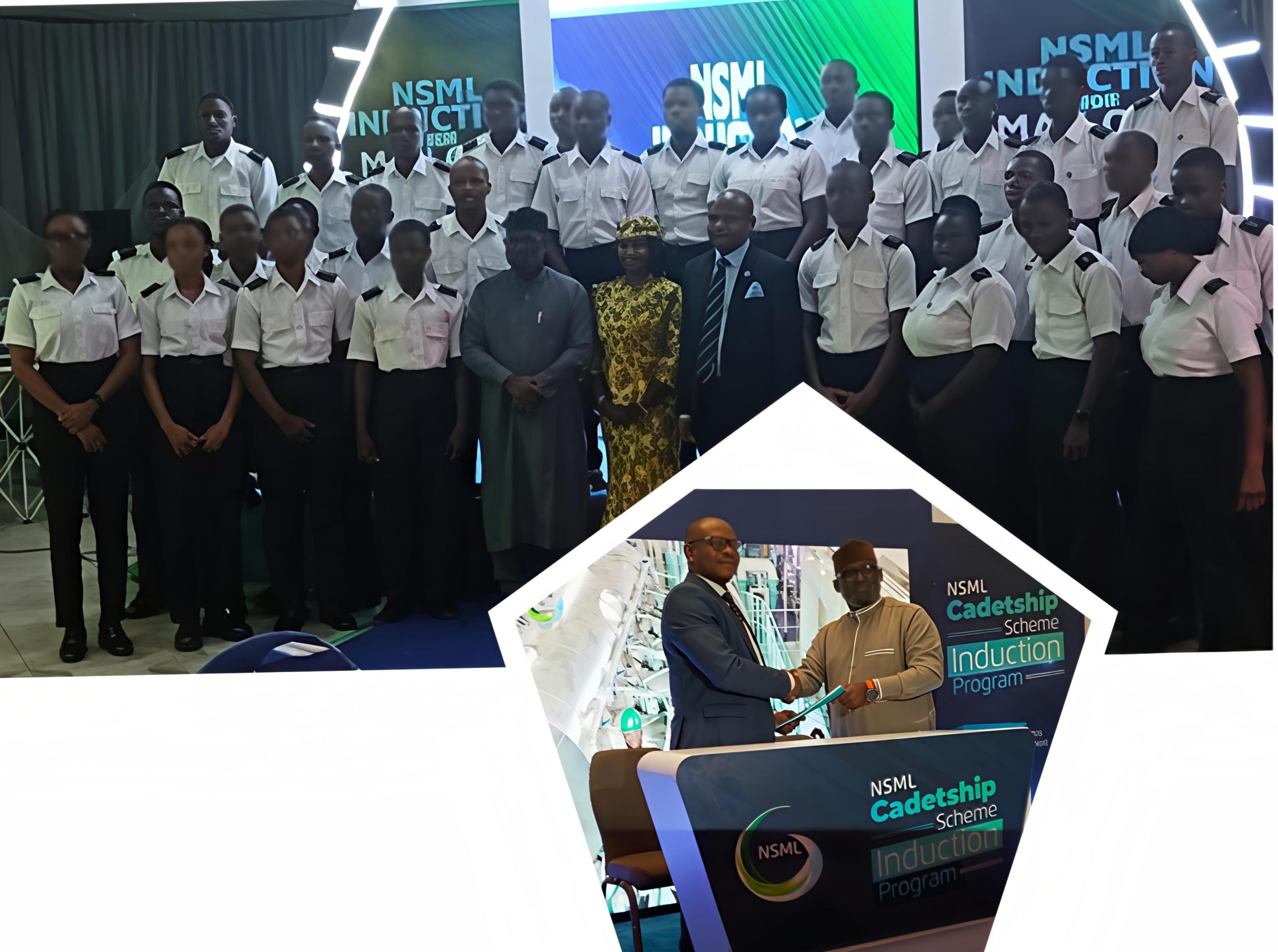
In a decisive step toward closing Nigeria’s sea-time training gap, and in keeping to its words, Nigeria LNG Ship Management Limited (NSML) has inducted 30 cadets of the Maritime Academy of Nigeria (MAN), Oron, into its onboard training programme.
The induction was towards advancing the Memorandum of Agreement signed in December 2025 to expand structured sea-time opportunities for Nigerian seafarers.
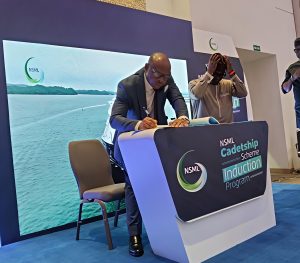
At the pact signing in Lagos in December
As a mark of practical rollout of the December 19, 2025 pact reached in Lagos between NSML and MAN -Oron, an agreement designed to provide cadets with mandatory onboard exposure required under the Standards of Training, Certification and Watchkeeping (STCW) Convention. For years, limited vessel placements have slowed the certification process for many Nigerian cadets. Industry observers say the NSML intervention directly addresses that bottleneck.
Speaking at the ceremony, NSML Managing Director, Abdulkareem Abdul, described the programme as a deliberate investment in people, professionalism and operational safety.
“This is not just about numbers; it is about building competence and confidence at sea,” he said. “Sea-time training will challenge you, but it will also refine you. Discipline, safety consciousness and resilience must define your journey.”
 Abdul noted that NSML’s vessels operate under strict international safety and performance standards, giving cadets exposure to global best practices in navigation, engineering and maritime operations. According to him, strengthening human capacity remains central to sustaining Nigeria’s relevance in international shipping.
The Honourable Minister of Marine and Blue Economy, Adegboyega Oyetola, represented at the event by the Director of Press, Mrs. Anastasia Ogbonna, reaffirmed the Federal Government’s commitment to fostering public–private collaboration in maritime manpower development. The Minister’s Marine and Blue Economy policy framework emphasizes industry partnerships as a pathway to producing globally competitive Nigerian seafarers.
Acting Rector of MAN, Dr. Kevin Okonna, described the induction as a milestone that consolidates the Academy’s strategic alliance with NSML. He stressed that the December pact was conceived not as a ceremonial agreement but as a practical response to the pressing need for sea-time berths.
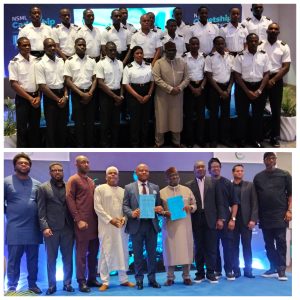 “Through this partnership, another batch of cadets now has a clear pathway from classroom instruction to professional certification in line with STCW requirements,” Okonna said. “This demonstrates Nigeria’s seriousness in contributing quality manpower to the global maritime labour market.”
He added that the International Maritime Organization (IMO) has been kept informed of industry-backed training initiatives, reflecting Nigeria’s commitment to compliance with international standards.
Maritime stakeholders at the ceremony noted that structured onboard training remains one of the most critical components of maritime education. Without sea-time, cadets cannot obtain Certificates of Competency, effectively stalling career progression. By absorbing 30 cadets into its fleet operations, NSML is helping to unlock that pathway.
Beyond individual career prospects, analysts say the initiative could enhance Nigeria’s competitiveness in international shipping, reduce reliance on foreign manpower, and deepen the country’s footprint in the global seafarer supply chain.
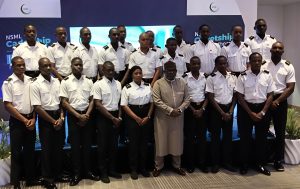
For the cadets, the induction signals the start of a demanding professional voyage. For the industry, it reflects a maturing collaboration between academy and operator — one that aligns policy direction with practical opportunity, and transforms agreements on paper into capacity on deck.







 Crime2 years ago
 Education7 months ago
 News6 years ago
 Business6 years ago
 Agriculture4 years ago
 Crime3 years ago