
Business
National Single Window to deploy robust cybersecurity measure ahead of phase-one rollout

By Ezurike Ugochukwu
The Director of the National Single Window (NSW) Project, Mr. Tola Fakolade, has reaffirmed the Federal Government’s commitment to safeguarding the platform against cyber threats and operational failures ahead of its Phase I rollout on March 27, 2026.
Fakolade made this known on Monday in Lagos during a media interaction with members of the Maritime Correspondents’ Organisation of Nigeria (MARCON), where he disclosed that the platform is currently being tested in real operating conditions to identify vulnerabilities, ensure system stability, and strengthen electronic safeguards.
 According to him, the NSW is not a “set-and-forget” system but one designed for continuous testing, monitoring, and improvement, particularly given the sensitive trade and revenue data it will handle.

“We are in the stabilisation phase. The platform is being closely watched for security risks, operational gaps, and possible abuse. Testing and monitoring will continue even after deployment to ensure errors, inefficiencies, and loopholes are detected and addressed early,” Fakolade said.
He assured that the government is deploying multiple layers of cybersecurity protection, working with specialised cybersecurity experts and in strict compliance with the Nigeria Data Protection Commission (NDPC) and other relevant regulatory agencies.
Fakolade explained that measures are being put in place to prevent cyber threats such as hacking, data breaches, system manipulation, as well as insider abuses including unauthorised access and data tampering.
“Given the volume and sensitivity of data the Single Window will process, continuous monitoring is critical. We are determined to prevent digital revenue leakages, system downtime, transaction failures, false declarations, and attempts by agencies or criminal elements to bypass the platform,” he added.

He noted that constant system oversight would allow early detection and correction of issues, avoiding costly failures that could undermine confidence in the platform.
The NSW Director further disclosed that feedback from users: including the Nigeria Customs Service (NCS), Federal Inland Revenue Service (FIRS), Nigerian Ports Authority (NPA), Nigerian Maritime Administration and Safety Agency (NIMASA), banks, importers, exporters, and other stakeholders-would guide system adjustments and improvements.
Acknowledging the likelihood of initial teething challenges, Fakolade said the project team is deliberately watching out for such issues and remains fully prepared to address them promptly.
On the Phase I take-off, he revealed that the platform would be launched at Apapa Port, Nigeria’s busiest port corridor, with support centres to be established at other seaports and air cargo terminals nationwide.
“These centres will provide a stable internet environment and technical support to help agents process transactions seamlessly and minimise disruptions during the early stages of implementation,” he explained.

Fakolade stated that the NSW steering committee comprises key government agencies including the Nigeria Customs Service (NCS), National Agency for Food and Drug Administration and Control (NAFDAC), Standards Organisation of Nigeria (SON), Federal Inland Revenue Service (FIRS), and the Nigeria Police Force (NPF), among others.
The project involves integrating multiple government agencies onto a single digital platform to streamline trade processes through a one-time submission of documents, with automatic distribution of information to all relevant authorities.
He added that the system will deploy risk-management algorithms based on factors such as product type, country of origin, and compliance history, enabling compliant traders to enjoy faster cargo clearance while high-risk consignments are flagged for scrutiny.
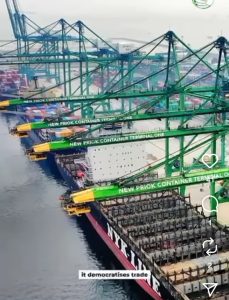
“In Nigeria today, compliance levels among importers are relatively low. We want to encourage compliance by making the process easier and more transparent for those who play by the rules,” Fakolade said.
He also emphasised the role of the media in building public trust and awareness around the platform, calling for sustained collaboration ahead of and beyond the launch.

“We want to work closely with the media to ensure accurate information reaches the trading community and the general public. The more educated people are about the Single Window, the smoother and more successful the launch will be,” he said.








Seme–Krake: Nigeria, Benin Customs begin push for seamless border trade
AMJON Conference: NIMASA, Customs, NPA, NSML push innovation, digital skills for future-ready maritime sector

Customs: Discipline, character critical as 2025 recruitment screening enters final phase
-

 Crime2 years ago
Imo police confirm arrest of journalist, ‘Nonsonkwa’ over alleged Cyberstalking, Incitement
-

 Education7 months ago
Anambra leads South-east in education allocation ratio, as Imo ranks lowest
-
 News6 years ago
Orthodox Anglican Church, not Same as Church of Nigeria- Bishop
-

 Business6 years ago
Pay-As-You-Go not applicable to pay TV – FCCPC
-

 Agriculture4 years ago
Environment Day: Foundation partners, FCMB, Chevron, harps on collective efforts on earth protection
-

 Crime3 years ago
Pastor allegedly kills female member, prevents 20 year old daughter from attending burial