
Business
NPERA takes off, targets efficient, competitive ports as Shema, Akutah link reform to $1trn economy

By Ezurike Ugochukwu
The Nigeria Ports Economic Regulatory Agency (NPERA) has formally commenced operations following the transition of the Nigerian Shippers’ Council (NSC) into the new statutory economic regulator, with its leadership targeting fair tariffs, efficient port services, stronger competition and increased investment.
The transition followed President Bola Ahmed Tinubu’s assent to the Nigeria Ports Economic Regulatory Agency Act, 2026, marking a major restructuring of Nigeria’s port governance architecture and giving permanent statutory backing to economic regulation of the country’s ports.
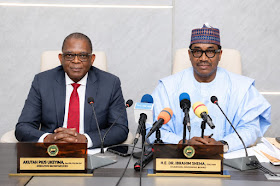
The development was further underscored by the inaugural and transition meeting of the NPERA Governing Board, chaired by former Katsina State Governor, Dr. Ibrahim Shehu Shema, as the agency formally assumed responsibilities previously performed by the Shippers’ Council as the interim Port Economic Regulator.

Speaking at events marking the transition and commencement of operations in Lagos, Shema described NPERA as a fundamental reform designed to create a more transparent, predictable and competitive port environment.
He said the agency would regulate port tariffs and charges, licensing, service standards, fair competition, commercial dispute resolution, trade facilitation and protection of port users.
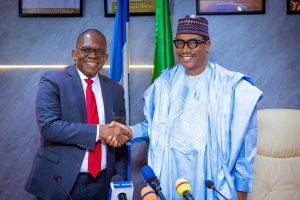
According to him, the new framework is expected to provide greater certainty for shipping lines and terminal operators, while giving importers, exporters, freight forwarders, clearing agents and investors more predictable procedures and mechanisms for resolving commercial disputes.
Shema stressed that NPERA was not created to compete with existing maritime institutions but to establish a coherent regulatory structure in which each agency operates within a clearly defined statutory mandate.
“This is not about creating competing authorities. It is about establishing a coherent system in which institutions work together, each within its statutory responsibilities, in the broader national interest,” he said.
He said NPERA’s regulatory approach would be anchored on transparency, fairness, predictability, efficiency and accountability, with particular emphasis on reducing uncertainty and the cost of doing business through Nigerian ports.
Five-decade journey gets statutory foundation
Shema traced the evolution of Nigeria’s port economic regulation to the establishment of the Nigerian Shippers’ Council in 1978 and the subsequent concessioning of port terminals in 2006.
The Shippers’ Council was designated the interim Port Economic Regulator in 2014 and subsequently performed functions including tariff regulation, dispute resolution and protection of port users.
The NPERA Act has now provided permanent statutory backing for those functions.
Shema said the transition would be orderly and designed to maintain continuity in essential regulatory functions while addressing issues relating to personnel, assets, liabilities, existing contracts, regulatory records, pending disputes and licensing arrangements.
He also said the agency would deploy technology and data to strengthen licensing, tariff administration, monitoring, compliance, reporting and stakeholder engagement.
The chairman said NPERA would work closely with the Nigerian Ports Authority (NPA), Nigerian Maritime Administration and Safety Agency (NIMASA), Nigeria Customs Service (NCS), terminal operators, shipping lines, freight forwarders, manufacturers, investors and other industry stakeholders.
He clarified that the NPA would retain responsibility for port infrastructure and its landlord functions, while NPERA would provide independent economic oversight within its statutory mandate.

The Executive Secretary/Chief Executive Officer of NPERA, Dr. Pius Akutah, said the emergence of the agency was critical to positioning Nigeria as a maritime nation and a major logistics hub for West and Central Africa.
Akutah linked the reform directly to the Federal Government’s ambition of achieving a $1 trillion economy by 2030, arguing that Nigeria could not achieve such an economic target without fully unlocking the potential of its maritime sector.
He said the new law would enhance fair play and predictability, thereby giving investors greater confidence to commit resources to the sector.
“This is one of the many factors that are contributing to making Nigeria a maritime nation,” Akutah said.
He cited the establishment of the Ministry of Marine and Blue Economy and Nigeria’s return to the International Maritime Organisation (IMO) Council as other developments reflecting the Federal Government’s renewed focus on the maritime sector.
According to him, NPERA would prioritise fair pricing, healthy competition, trade facilitation, commercial dispute resolution and protection of port users, while strengthening the sector’s contribution to government revenue and the wider economy.
He expressed optimism that the new regulatory framework would significantly clarify Nigeria’s port regulatory environment within the next one to two years.
Akutah, however, acknowledged that the success of NPERA would depend heavily on effective coordination among maritime agencies.
He said functions currently performed under the previous arrangement would need to be appropriately transferred or reassigned under the new legal framework, making clear delineation of responsibilities essential.
“The real work, the main work, is starting now. It’s not all about the law itself, but it’s about how we navigate the law in terms of our relationship with other critical stakeholders,” he said.
He warned that regulatory overlaps must not degenerate into institutional rivalry, stressing that the various agencies should complement one another in advancing Nigeria’s economic interests.
The real test begins
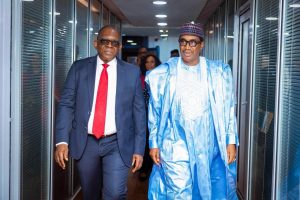
Both Shema and Akutah agreed that the passage of the NPERA Act was only the beginning, with the real test now being whether the new regulator could deliver measurable improvements to port users and the wider economy.
For stakeholders, the expectations are straightforward: fairer and more transparent charges, faster cargo clearance, better service standards, quicker resolution of commercial disputes, reduced regulatory uncertainty and greater investor confidence.
Shema said the agency’s credibility would ultimately be determined by its impact on port operations rather than the strength of its statutory powers alone.
“The establishment of NPERA is a historic achievement, but the harder work begins now,” he said.
The emergence of NPERA therefore marks a significant shift in Nigeria’s port governance – from an interim regulatory arrangement to a permanent statutory framework.








Seme–Krake: Nigeria, Benin Customs begin push for seamless border trade
AMJON Conference: NIMASA, Customs, NPA, NSML push innovation, digital skills for future-ready maritime sector

Customs: Discipline, character critical as 2025 recruitment screening enters final phase
-

 Crime2 years ago
Imo police confirm arrest of journalist, ‘Nonsonkwa’ over alleged Cyberstalking, Incitement
-
 Education7 months ago
Anambra leads South-east in education allocation ratio, as Imo ranks lowest
-

 News6 years ago
Orthodox Anglican Church, not Same as Church of Nigeria- Bishop
-

 Business6 years ago
Pay-As-You-Go not applicable to pay TV – FCCPC
-

 Agriculture4 years ago
Environment Day: Foundation partners, FCMB, Chevron, harps on collective efforts on earth protection
-

 Crime3 years ago
Pastor allegedly kills female member, prevents 20 year old daughter from attending burial