…Insists justice must be seen to be done
By Ezurike Ugochukwu
Concerned Citizens of Ndi Ebe Abam in Arochukwu Local Government Area of Abia State have issued a comprehensive public response to the February 25, 2026 press release from the Office of the Deputy Governor of Abia State concerning the implementation of the Ogbuebulu Supreme Court judgment.
In their statement, the group said they had “carefully read” the government’s release and acknowledged its affirmation that “the Supreme Court judgment delivered on 12 July 2002 is final and binding,” that “the judgment remains valid and enforceable,” and that “the implementation must align strictly with that decision.”
However, the citizens insisted that “material issues of process, transparency, and conduct must be clarified in the interest of justice and lasting peace.”
December 18 Meeting Disputed
Addressing the meeting of December 18, 2025, which involved the Office of the Deputy Governor and boundary consultant Mr. Christopher Nwanevu, the group rejected claims that it was consultative.
According to them, although representatives of both communities were present, “Representatives of Ndi Ebe Abam were not allowed to speak, ask questions, or seek clarifications.”
They further stated that their Union President General and their traditional ruler, Eze Ogo Okoko Arunsi, were “prevented from contributing.”
“The meeting functioned as a directive briefing, not a conciliatory or reconciliatory session,” the statement read.
The group also alleged that statements were made to the effect that anyone opposing the demarcation process on the appointed day would be “shot dead,” and that there were remarks suggesting government could take over the land if disagreement persisted.
“This cannot reasonably be described as consultation or mediation,” they said.
No Fresh Ownership Dispute

The citizens categorically rejected suggestions that there was an ongoing ownership dispute over the Ogbuebulu land.
“No conciliatory or reconciliation meeting was ever convened to revisit or debate ownership of Ogbuebulu land,” the statement noted.
They emphasized that the Supreme Court awarded the land to Ndi Ebe Abam in 2002 and that “for over 22 years, peaceful possession has been enjoyed without contest.”
According to them, there was “no live dispute requiring mediation until the recent petition for demarcation.”
Survey Plan Controversy
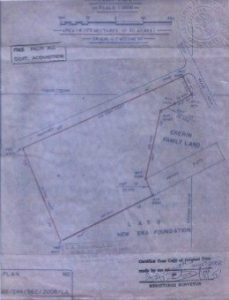
Central to their concerns is the issue of the survey plan guiding the demarcation exercise.
The group said, “We submitted the Supreme Court-validated survey plan used to secure judgment,” while alleging that Ndi Oji Ugwo Abam submitted a separate plan.
They further alleged that Mr. Christopher Nwanevu, acting as Boundary Consultant, collected their original certified survey copy and has refused to return it.
“We have not been shown the map currently being used,” they stated, adding that “If transparency exists, the certified plan being implemented should be made available for joint technical verification. Implementation cannot be opaque.”
Contradictions Over Community Presence
The statement also raised concerns about conflicting information regarding who would be present during the boundary tracing exercise.
“We were verbally informed that both communities and their surveyors would be present during the exercise,” they said.
However, they claimed that a subsequent newspaper publication stated that “no villagers will be allowed at the site until completion.”
They argued that professional boundary tracing requires the identification of natural and historical landmarks known to elders and community surveyors.
“Excluding all community presence undermines procedural credibility,” they warned.
Allegations Against Boundary Consultant
The citizens expressed strong reservations about the conduct of Mr. Christopher Nwanevu.
They alleged that he discouraged the continued engagement of their surveyor, describing him “in derogatory terms,” and that he retained their original certified documents.
“He has acted in ways that create a strong perception of bias,” the statement read, adding that “Even the appearance of partiality is damaging in a matter requiring strict neutrality.”
Security Deployment Criticized
The group also criticized what they described as excessive security deployment during the exercise.

Illustrative photograph
“A peaceful, non-warring community witnessed the arrival of multiple truckloads of armed personnel,” they stated.
According to them, women, elderly citizens, and children fled in fear, with some reportedly sustaining injuries while escaping.
“If the process is purely technical and administrative, security should be proportionate and confidence-building — not intimidating,” they added.
Demands for Confidence Restoration
While reaffirming that they are “not at war with Ndi Oji Ugwo Abam” and that both communities share “intermarriages, markets, farms, and blood ties,” the citizens outlined six demands to restore confidence in the process: 1. Immediate return of their original certified Supreme Court survey plan. 2. Public confirmation of the exact certified plan being used for implementation. 3. Presence of their surveyor and five designated elders from Ndi Ebe Abam, alongside Ndi Oji Ugwo Abam’s surveyor and five elders from their community. 4. Replacement of Mr. Christopher Nwanevu with a demonstrably neutral technical officer. 5. Deployment of reasonable, non-militarized security. 6. A documented procedural framework shared with both communities before continuation.
Final Position
The group declared, “We have lost confidence in the current handling of this process.”
However, they emphasized that as law-abiding citizens, “we will not obstruct lawful execution of a Supreme Court judgment.”
They insisted only that implementation must be “strictly according to the certified plan used in litigation,” must be transparent, professionally supervised, free from perceived bias, and must not induce communal hostility.
“Justice must not only be done; it must be seen to be done,” the statement concluded.
The document was signed by Concerned Citizens of Ndi Ebe Abam, Arochukwu LGA, Abia State, who reiterated:
“We stand for peace.
We stand for legality.
We stand for procedural integrity.
Let the judgment stand — and let its implementation be beyond reproach.”












 Crime2 years ago
 Education7 months ago
 News6 years ago
 Business6 years ago
 Agriculture4 years ago
 Crime3 years ago