
Metro
As Dubai bakes bread for the poor, questions grow over Nigeria’s welfare strategy
By Ezurike Ugochukwu
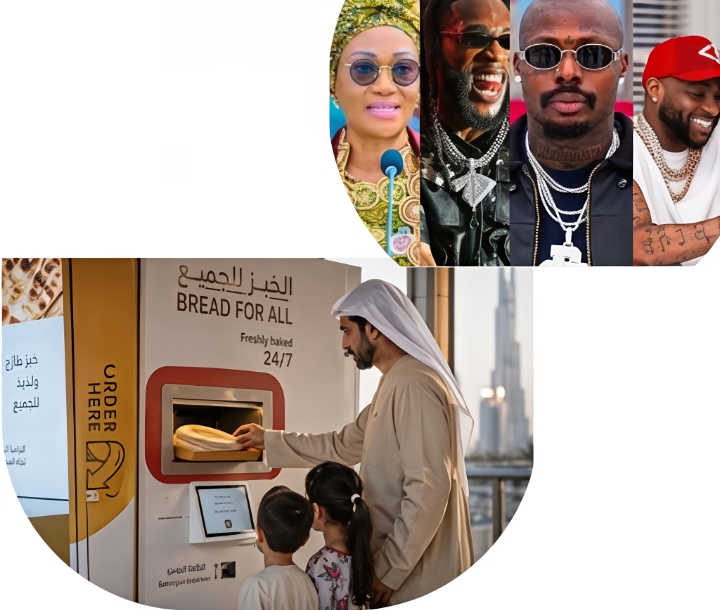
Dubai’s innovative “Bread for All” initiative is attracting global attention, not only for its use of technology to combat hunger but also for the questions it raises about how governments respond to the needs of their most vulnerable citizens.
The programme, launched in 2022 by the Mohammed Bin Rashid Global Centre for Endowment Consultancy, operates through automated kiosks that bake and dispense fresh bread and hot meals free of charge around the clock.
Designed to preserve the dignity of beneficiaries, the machines require no registration, documentation or interaction with attendants. Anyone in need can simply walk up, collect food and leave without the fear of stigma or embarrassment.

 Beyond providing food, the smart kiosks also accept voluntary donations from individuals and organisations willing to support the initiative, creating a transparent model that combines government-backed welfare with community participation.
The project’s guiding philosophy is simple: no one should go to bed hungry, regardless of social status, nationality or religion.
Although Dubai is internationally recognised for its wealth, luxury developments and booming economy, its authorities have continued to invest in programmes aimed at ensuring that vulnerable residents are not left behind.
The initiative has reignited discussions in Nigeria, where rising inflation, increasing food prices and worsening economic hardship have placed millions of households under severe pressure.

While successive Nigerian governments have introduced social intervention programmes, including cash transfers, school feeding initiatives and other poverty reduction schemes, many analysts and civil society groups argue that the impact has been limited by inadequate funding, implementation challenges and concerns over transparency.
The debate has also gained momentum following recent remarks by First Lady Senator Oluremi Tinubu, who appealed to wealthy Nigerians, particularly successful entertainers, business leaders and philanthropists, to establish charitable foundations and support vulnerable citizens.

Sen. Tinubu, First Lady
Speaking during a public engagement, the First Lady specifically called on global music stars such as Akon, Burna Boy, Davido, Asake and other influential figures in the entertainment industry to channel part of their wealth towards helping the poor.
“The Burna Boys of this world, the Asakes, all of them, Davido, we want to see you with one foundation or the other, helping the poor with your money. Good cars are good, a Maybach is good, a Rolls-Royce is good, but still, you can help,” she said.
The remarks have generated mixed reactions, with many Nigerians supporting the call for greater private philanthropy, while others argue that government should take the lead in expanding social welfare and reducing poverty through transparent, accountable and sustainable policies.

Some critics contend that public appeals for citizens to make greater sacrifices ring hollow amid concerns over government spending on luxury assets and the rising cost of governance.
Policy analysts, however, maintain that while private charity remains an important pillar of social support, philanthropy should complement, not substitute well-designed and adequately funded public welfare programmes capable of reaching the country’s most vulnerable populations.
Dr Kelvin Oribe, social commentator argued that effective social protection begins with governments creating systems that guarantee access to basic needs while encouraging voluntary public participation.
He noted that citizens are generally more willing to donate and support welfare initiatives when they have confidence that public resources are being managed transparently and that government itself is demonstrating commitment through visible investments in social protection.
 According to development experts, Monday Agholelegite, Dubai’s model illustrates how technology can simplify welfare delivery by reducing bureaucracy, improving accessibility and preserving the dignity of those receiving assistance.
Rather than relying solely on periodic food distributions or emergency relief, the automated system ensures that assistance is available every hour of every day without discrimination or unnecessary publicity.
Analysts say Nigeria, with one of Africa’s largest populations and significant levels of multidimensional poverty, could draw useful lessons from such technology-driven welfare initiatives by expanding digital food assistance, community kitchens and transparent social investment programmes.
For many Nigerians, the comparison is less about Dubai’s wealth than about governance priorities: whether innovation and public resources are being deployed in ways that directly improve the lives of ordinary citizens.
As economic pressures continue to mount, the success of Dubai’s “Bread for All” initiative has become more than an international human-interest story. It has evolved into a reference point in the growing conversation about how governments can combine innovation, accountability and compassion to ensure that no citizen is left hungry.








-

 Crime2 years ago
Imo police confirm arrest of journalist, ‘Nonsonkwa’ over alleged Cyberstalking, Incitement
-
 Education7 months ago
Anambra leads South-east in education allocation ratio, as Imo ranks lowest
-
 News6 years ago
Orthodox Anglican Church, not Same as Church of Nigeria- Bishop
-

 Business6 years ago
Pay-As-You-Go not applicable to pay TV – FCCPC
-

 Agriculture4 years ago
Environment Day: Foundation partners, FCMB, Chevron, harps on collective efforts on earth protection
-

 Crime3 years ago
Pastor allegedly kills female member, prevents 20 year old daughter from attending burial