
Business
Shippers’ Council, Reps Committee deepen stakeholders engagement on tariffs, operational bottlenecks
By Ezurike Ugochukwu
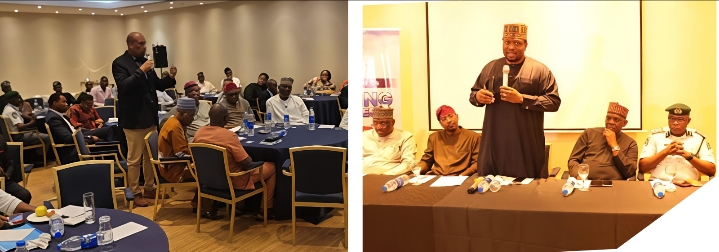
The House of Representatives Committee on Shipping Services and the Nigerian Shippers’ Council have stepped up engagement with industry stakeholders to address concerns over tariff increases and operational inefficiencies in Nigeria’s maritime sector.
Chairman of the Committee, Abdussamad Dasuki, said the meeting builds on earlier consultations with the Shipping Association of Nigeria, which had sought legislative intervention on pressing industry issues. He described the engagement as a strategic effort to balance the interests of port users and service providers while promoting sustainable growth.
The Executive Secretary/CEO of the Nigerian Shippers’ Council, Akutah Pius, reaffirmed the Council’s approval of a 30 percent tariff increase for shipping lines. He explained that although implementation was previously suspended, the approved rate remains the maximum cap and will be introduced gradually following further consultations between operators and their customers.


Dasuki and Akutah
According to him, the tariff review became necessary after over two years without adjustments, despite rising operational costs across the industry. While acknowledging concerns that the 30 percent cap may not fully reflect current inflationary realities, he said the decision was carefully calibrated to balance industry sustainability with broader economic considerations.
Akutah also disclosed plans to introduce an automated tariff system that will align future pricing with key economic indicators such as inflation and exchange rate movements. The initiative, he noted, is expected to enhance transparency, predictability, and flexibility in the sector’s pricing structure.
On her part, Chairman of the Shipping Association of Nigeria, Boma Alabi, commended the Committee for its responsiveness and proactive engagement. She highlighted persistent operational challenges affecting vessel turnaround time and overall port efficiency.
Alabi called for improved port security, stronger inter-agency collaboration, and a clearly defined framework of responsibilities to prevent undue liabilities on shipping companies. She reaffirmed the Association’s commitment to supporting reforms that will enhance efficiency, reduce costs, and strengthen Nigeria’s competitiveness in global shipping.

The meeting attracted a wide range of stakeholders, including the Manufacturers Association of Nigeria, Association of Nigerian Licensed Customs Agents, freight forwarders, and other key players across the maritime value chain, reflecting a shared commitment to resolving sector challenges.
At the close of the session, the Committee urged the Shippers’ Council to convene a follow-up meeting within one week with clear timelines for action. It also called on shipping companies to intensify consultations with stakeholders to fast-track consensus and ensure smooth implementation of agreed measures.








-

 Crime2 years ago
Imo police confirm arrest of journalist, ‘Nonsonkwa’ over alleged Cyberstalking, Incitement
-
 Education7 months ago
Anambra leads South-east in education allocation ratio, as Imo ranks lowest
-

 News6 years ago
Orthodox Anglican Church, not Same as Church of Nigeria- Bishop
-

 Business6 years ago
Pay-As-You-Go not applicable to pay TV – FCCPC
-

 Agriculture4 years ago
Environment Day: Foundation partners, FCMB, Chevron, harps on collective efforts on earth protection
-

 Crime3 years ago
Pastor allegedly kills female member, prevents 20 year old daughter from attending burial