
Business
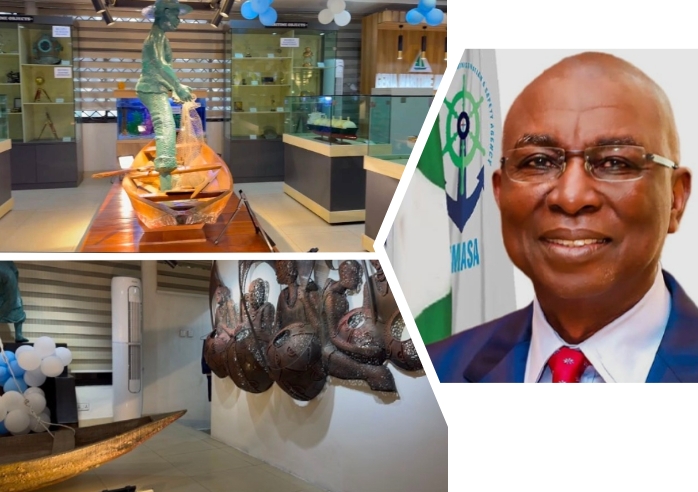
Nigeria’s maritime heritage gets permanent home as NIMASA opens museum
By Ezurike Ugochukwu
The Nigerian Maritime Administration and Safety Agency (NIMASA) has commissioned a maritime museum in Lagos as part of efforts to preserve Nigeria’s rich seafaring history, promote maritime awareness and inspire future generations of professionals in the Marine and Blue Economy sector.
The museum, located at the Nigerian Maritime Resource Development Centre (NMRDC) in Kirikiri, is designed to serve as a repository of historical artefacts, archival materials and records that document the evolution of Nigeria’s maritime industry.
 Speaking at the commissioning ceremony, the Director-General of NIMASA, Dayo Mobereola, represented by the agency’s Director of Planning, Research and Data Management Services, Mrs. Aisha Jidda, formally declared the facility open to the public.

Mobereola described the museum as a strategic investment in preserving the nation’s maritime identity and ensuring that future generations understand the historical foundations of Nigeria’s shipping, port and maritime development.
“This museum is more than a building; it is a repository of our maritime history and a centre dedicated to safeguarding Nigeria’s maritime heritage for generations to come,” he said.
According to him, the facility will function as both an educational and research hub, offering visitors access to historical artefacts, archival collections, maritime innovations and records that trace the growth of the country’s maritime sector over the years.
He noted that the establishment of the museum aligns with NIMASA’s broader mandate of promoting maritime consciousness, supporting research and strengthening public understanding of the strategic role of the maritime industry in national development.
The Director-General added that the museum would also help stimulate interest among young Nigerians seeking careers in shipping, marine engineering, maritime administration and other areas of the Blue Economy.
Mobereola encouraged students, researchers, industry stakeholders and members of the public to visit the facility to gain deeper insight into Nigeria’s maritime journey and appreciate the sector’s contribution to trade, economic growth and national development.
 Industry observers say the museum represents an important milestone in preserving Nigeria’s maritime memory at a time when the country is intensifying efforts to expand its Marine and Blue Economy, develop indigenous maritime capacity and strengthen awareness of the sector’s historical and economic significance.
With the commissioning of the museum, NIMASA joins a growing number of maritime institutions worldwide using heritage preservation as a tool for education, research and the promotion of national maritime identity.








Seme–Krake: Nigeria, Benin Customs begin push for seamless border trade
AMJON Conference: NIMASA, Customs, NPA, NSML push innovation, digital skills for future-ready maritime sector

Customs: Discipline, character critical as 2025 recruitment screening enters final phase
-

 Crime2 years ago
Imo police confirm arrest of journalist, ‘Nonsonkwa’ over alleged Cyberstalking, Incitement
-
 Education7 months ago
Anambra leads South-east in education allocation ratio, as Imo ranks lowest
-
 News6 years ago
Orthodox Anglican Church, not Same as Church of Nigeria- Bishop
-

 Business6 years ago
Pay-As-You-Go not applicable to pay TV – FCCPC
-

 Agriculture4 years ago
Environment Day: Foundation partners, FCMB, Chevron, harps on collective efforts on earth protection
-

 Crime3 years ago
Pastor allegedly kills female member, prevents 20 year old daughter from attending burial