
Business
Another crew abandonment sparks global concern over seafarers’ welfare
…As stakeholders fault Nigerian authorities over similar cases
By Ezurike Ugochukwu
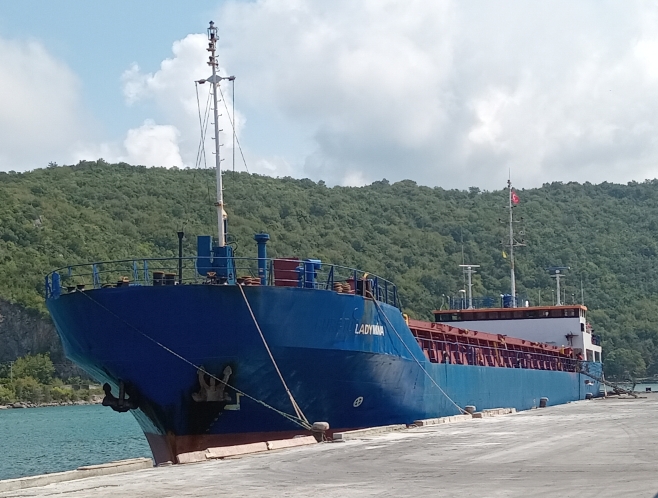
The International Transport Workers’ Federation (ITF) has launched legal action against the owners of the general cargo vessel Lady Mina after six seafarers were allegedly abandoned in Las Palmas, Spain, with unpaid wages totalling about $68,000, renewing global concerns over the persistent abuse of seafarers’ rights and the weak enforcement of international maritime labour standards.
The latest case comes as Nigeria continues to grapple with similar incidents involving abandoned seafarers, often drawing criticism over the slow response of agencies responsible for protecting maritime workers, including the Nigerian Maritime Administration and Safety Agency (NIMASA), the Federal Ministry of Marine and Blue Economy and other relevant labour and maritime authorities mandated to enforce the Maritime Labour Convention (MLC), 2006.

According to the ITF, the ordeal began in May 2026 when one of the crew members contacted the federation seeking assistance after remaining onboard long after his employment contract had expired.
An inspection conducted aboard the 3,400-deadweight-tonne vessel by ITF Inspector for the Canary Islands, Gonzalo Galan, revealed serious deficiencies affecting both the vessel and the welfare of the crew.
 The inspection found that six seafarers remained stranded aboard the detained vessel after serving well beyond the maximum 11-month continuous service period permitted under the Maritime Labour Convention.
One crew member had spent more than 13 months onboard despite repeatedly requesting repatriation, while two others had remained onboard since April 2025. The vessel’s Chief Engineer had served continuously since October 2024 and had reportedly not received any salary since January 2026.
“When I boarded the Lady Mina, it was immediately clear this crew had been left to fend for themselves,” Galan said.
“The Chief Engineer had gone six months without a single payment, yet he kept the vessel running because he had no other choice. This is not an oversight by the owner; this is abandonment.”
Following the inspection, the ITF formally notified the Spanish Maritime Authority, which subsequently detained the vessel.
The federation further alleged that the ship was operating without mandatory statutory certificates and that documents purporting to provide the financial security required under the Maritime Labour Convention to protect abandoned seafarers appeared to be fraudulent.
Although the shipowner later arranged the repatriation of two crew members, settled part of their outstanding wages and supplied food and drinking water, the ITF said the remaining crew members continue to be stranded aboard the vessel with expired contracts and unpaid salaries.
With no effort made to repair the vessel or fulfil contractual obligations, the ITF has commenced legal proceedings to secure the arrest of the ship while charity organisation Stella Maris has continued providing humanitarian assistance to the stranded crew.
The federation disclosed that the case is not isolated.
According to records in the joint International Labour Organization (ILO) and International Maritime Organization (IMO) database, the same vessel was reported for crew abandonment in Algeria in December 2024 after the owner allegedly left another crew unpaid for five months.
The vessel has also attracted repeated safety concerns.
During a Port State Control inspection in Ghana in February 2026, inspectors reportedly identified 18 deficiencies ranging from structural defects and fire safety failures to poor working and living conditions.
The ITF warned that cases of crew abandonment are rising globally and urged maritime administrations to strengthen enforcement mechanisms to ensure shipowners comply with their obligations under international labour conventions.
 The incident mirrors concerns repeatedly raised within Nigeria’s maritime sector over the plight of abandoned seafarers, where industry stakeholders have called for stronger intervention by NIMASA as the country’s designated Maritime Labour Convention authority. They have urged the agency, alongside the Federal Ministry of Marine and Blue Economy, port state control authorities and shipowners’ representatives, to ensure prompt payment of wages, timely repatriation and strict enforcement against erring shipowners.
Maritime labour experts argue that while international conventions provide robust protections for seafarers, their effectiveness ultimately depends on the willingness of national maritime administrations to enforce compliance swiftly, investigate complaints and sanction defaulting shipowners before abandonment cases escalate into humanitarian crises.








Seme–Krake: Nigeria, Benin Customs begin push for seamless border trade
AMJON Conference: NIMASA, Customs, NPA, NSML push innovation, digital skills for future-ready maritime sector

Customs: Discipline, character critical as 2025 recruitment screening enters final phase
-

 Crime2 years ago
Imo police confirm arrest of journalist, ‘Nonsonkwa’ over alleged Cyberstalking, Incitement
-

 Education7 months ago
Anambra leads South-east in education allocation ratio, as Imo ranks lowest
-
 News6 years ago
Orthodox Anglican Church, not Same as Church of Nigeria- Bishop
-

 Business6 years ago
Pay-As-You-Go not applicable to pay TV – FCCPC
-

 Agriculture4 years ago
Environment Day: Foundation partners, FCMB, Chevron, harps on collective efforts on earth protection
-

 Crime3 years ago
Pastor allegedly kills female member, prevents 20 year old daughter from attending burial