
Business
Customs, NMDPRA tighten grip on fuel smuggling with new export rules
By Ezurike Ugochukwu
Nigeria Customs Service (NCS) and the Nigerian Midstream and Downstream Petroleum Regulatory Authority (NMDPRA) have ramped up efforts to curb fuel diversion, backing new export point guidelines to safeguard energy security.
Comptroller General of Customs (CGC) Adewale Adeniyi and NMDPRA Executive Director of Distribution Systems, Storage and Retailing Infrastructure, Ogbugo Ukoha on Tuesday, 9 December 2025.
CGC Adeniyi reaffirmed interagency ties to block domestic fuel diversion to neighbouring countries, stated that Operation Whirlwind’s success shows impact of joint intel and enforcement.

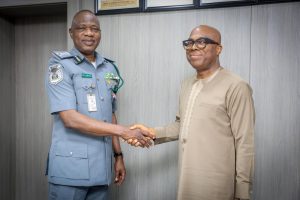
CGC Adeniyi and Ukoha
He highlighted that collaboration between both agencies had yielded results, especially via Operation Whirlwind – a model for intelligence sharing, joint enforcement, and field operations coordination.
CGC Adeniyi said the Nigeria Customs Service remains fully aligned with ongoing reforms in the petroleum regulatory space and will continue to provide technical input, operational feedback and border management expertise to support the implementation of new guidelines being developed by the NMDPRA.
He commended the Authority for its efforts to harmonise legacy processes with the Petroleum Industry Act, stressing that clear and efficient export point procedures are essential as Nigeria moves from being a net importer to an emerging exporter of petroleum products.
 “We welcome every initiative that strengthens energy security and ensures that the gains made in reducing cross border diversion are not reversed. Our shared responsibility is to protect national interest, support legitimate trade and maintain a transparent system that stakeholders can rely on. We will continue to work closely with sister agencies to achieve these outcomes,” he stated.
In his remarks, the Executive Director, Ukoha, said the NMDPRA enjoys a longstanding and productive working relationship with the Nigeria Customs Service, noting that Operation Whirlwind remained the high point of that collaboration.
He explained that both agencies deployed personnel, exchanged intelligence and jointly monitored petroleum products in border corridors, leading to a marked reduction in cross border diversion.
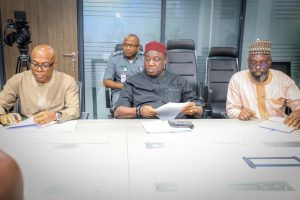 Ukoha said the purpose of the visit was to brief the CGC on newly developed guidelines for designating export points for petroleum products as Nigeria’s refining capacity expands.
He said the NMDPRA is engaging key institutions, including Customs, the Central Bank of Nigeria, the Federal Ministry of Industry, Trade and Investment, and the Nigerian Navy, to ensure the guidelines reflect operational realities before implementation.
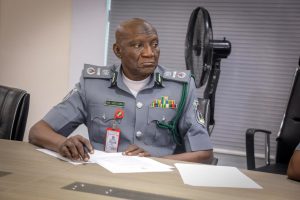 He recalled several field operations and strategic engagements with the Customs leadership, including the joint launch of Operation Whirlwind in Yola, where both agencies reinforced their commitment to curbing diversion and securing the domestic supply chain.
He said enforcement efforts plus subsidy removal slashed incentives for fuel smuggling. He reaffirmed that NMDPRA will keep working with Customs to sustain gains, regulate exports, protect energy security.




-

 Crime2 years ago
Imo police confirm arrest of journalist, ‘Nonsonkwa’ over alleged Cyberstalking, Incitement
-
 Education7 months ago
Anambra leads South-east in education allocation ratio, as Imo ranks lowest
-
 News6 years ago
Orthodox Anglican Church, not Same as Church of Nigeria- Bishop
-

 Business6 years ago
Pay-As-You-Go not applicable to pay TV – FCCPC
-

 Agriculture4 years ago
Environment Day: Foundation partners, FCMB, Chevron, harps on collective efforts on earth protection
-

 Crime3 years ago
Pastor allegedly kills female member, prevents 20 year old daughter from attending burial