
Business
Akutah: Ports hold key to Nigeria’s $1 trillion economy as NSC woos Providus Unity Bank

By Ezurike Ugochukwu
The Executive Secretary and Chief Executive Officer of the Nigerian Shippers’ Council (NSC), Dr. Pius Akutah, has declared that Nigeria’s seaports remain the engine room of the country’s economic transformation, insisting that the Federal Government’s ambition of building a $1 trillion economy by 2030 cannot be realised without a vibrant, well-funded and efficient maritime sector.
Akutah made the assertion in Lagos while receiving a delegation from Providus Unity Bank at the Council’s headquarters, where both organisations explored strategic areas of collaboration aimed at expanding investment, improving access to finance and accelerating infrastructure development within the maritime industry.
Describing the ports as the gateway to virtually every productive sector of the economy, the NSC boss said the Council has been mandated by the Presidency to work with critical stakeholders to unlock the enormous potential of the maritime sector in driving national economic growth.

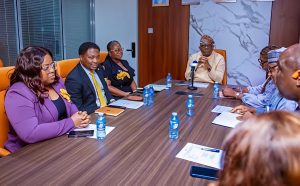
“We have a Presidential mandate to work with all sectors of the economy to ensure that by 2030 we achieve the trillion-dollar economy goal. Without the ports, there will be no sector of the economy,” he said.
Akutah noted that the maritime industry handles about 90 per cent of Nigeria’s international trade, making it one of the country’s most strategic economic assets. He stressed that enhancing port efficiency, attracting investment and removing barriers to trade would significantly boost productivity, competitiveness and revenue generation.
As Nigeria’s Port Economic Regulator, he said the Nigerian Shippers’ Council has continued to implement reforms that promote transparency, protect port users and improve the ease of doing business.
He disclosed that the Council’s regulatory interventions over the past two years have prevented more than $90 billion in capital flight by curbing excessive cargo-related charges, describing the achievement as proof that effective economic regulation can deliver measurable benefits to the national economy.
Despite these gains, Akutah acknowledged that financing remains one of the biggest constraints to the growth of Nigeria’s maritime industry, particularly in the development of critical infrastructure and the expansion of indigenous businesses.

Ernest Elue, Head of Business Dev. at Providus Unity Bank and Pius Akutah
He therefore called for stronger partnerships between financial institutions and stakeholders in the maritime value chain, saying the Council is ready to facilitate relationships that will improve access to affordable financing for importers, exporters, logistics operators and Small and Medium Enterprises (SMEs).
“We are looking for partners. SMEs are a very crucial component of the economy. We are prepared to broker relationships between banks and importers, exporters and SMEs that have the capacity to grow the economy,” he stated.
According to him, the Council intends to establish a structured engagement platform with Providus Unity Bank to identify practical financing solutions capable of supporting investment in maritime infrastructure, trade facilitation and logistics development.
Earlier, the Head of Business Development at Providus Unity Bank, Mr. Ernest Elue, said the bank’s visit was aimed at deepening collaboration with the Nigerian Shippers’ Council and other stakeholders across the maritime ecosystem.
He said the bank is well-positioned to finance large-scale maritime projects, including Inland Dry Ports and Vehicle Transit Areas, through bespoke financial packages designed for concessionaires and investors.
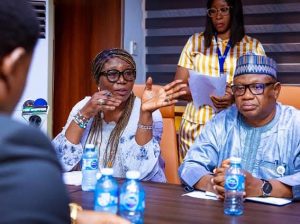 Elue added that Providus Unity Bank is also developing flexible financing solutions tailored to the needs of corporate organisations, unions, cooperatives and individual operators within the maritime value chain, with a view to expanding access to capital and supporting sustainable business growth.
The proposed partnership is expected to strengthen investment in strategic maritime infrastructure, improve financing opportunities for indigenous operators and SMEs, and reinforce the maritime sector’s role as a critical driver of Nigeria’s quest to attain a $1 trillion economy by the end of the decade.





-

 Crime2 years ago
Imo police confirm arrest of journalist, ‘Nonsonkwa’ over alleged Cyberstalking, Incitement
-
 Education7 months ago
Anambra leads South-east in education allocation ratio, as Imo ranks lowest
-

 News6 years ago
Orthodox Anglican Church, not Same as Church of Nigeria- Bishop
-

 Business6 years ago
Pay-As-You-Go not applicable to pay TV – FCCPC
-

 Agriculture4 years ago
Environment Day: Foundation partners, FCMB, Chevron, harps on collective efforts on earth protection
-

 Crime3 years ago
Pastor allegedly kills female member, prevents 20 year old daughter from attending burial