
Business
Lagos Free Trade Zone Customs revenue jumps 29% to ₦408.9bn in H1 2026
By Ezurike Ugochukwu
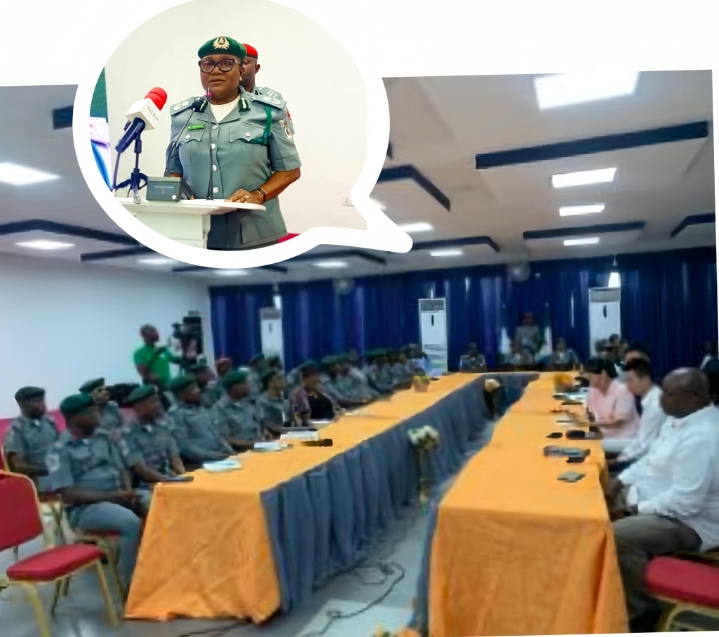
The Nigeria Customs Service (NCS), Lagos Free Trade Zone (LFTZ) Command, generated ₦408.87 billion in revenue during the first half of 2026, representing a 28.85 per cent increase over the ₦317.32 billion collected in the corresponding period of 2025.
The Customs Area Controller of the Command, Comptroller Hauwa Abubakar, disclosed this during the Command’s 2026 Half-Year Media Briefing, attributing the impressive performance to improved compliance, enhanced operational efficiency and sustained collaboration with investors and other stakeholders operating within the Free Trade Zones and the Lekki Deep Sea Port.
According to her, the Command realised ₦408,869,138,497.75 between January and June 2026, exceeding the ₦317,322,735,712.06 generated in the same period last year by ₦91.55 billion, further consolidating its position as one of the Nigeria Customs Service’s fastest-growing revenue-generating commands.

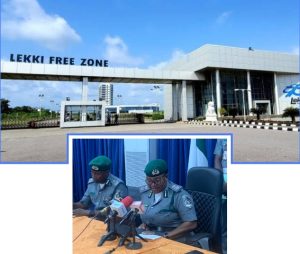 The Command also recorded its highest monthly revenue collection since its establishment four years ago, generating ₦87.1 billion in June 2026, a milestone Comptroller Abubakar described as evidence of the Command’s increasing operational capacity and the growing volume of legitimate trade passing through the Free Trade Zones.
She explained that the remarkable growth was driven by deliberate strategies aimed at strengthening compliance with customs regulations, improving operational processes and encouraging voluntary compliance through continuous engagement with licensed customs agents, importers, exporters, Free Zone enterprises and other stakeholders.

Abubakar noted that although the primary mandate of the Lagos Free Trade Zone Command is to facilitate trade and support investment within Nigeria’s Free Trade Zones, the Command has consistently balanced trade facilitation with effective revenue collection and regulatory enforcement.
She said the Command remains committed to promoting ease of doing business by ensuring transparency, professionalism and efficient cargo clearance without compromising statutory obligations.
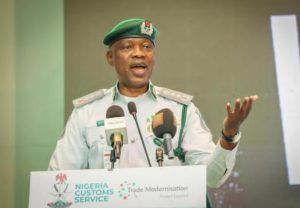
CGC Adeniyi
The Customs Area Controller commended the Comptroller-General of Customs, Bashir Adewale Adeniyi, for providing visionary leadership and strategic direction that continue to drive reforms across the Service. She also applauded officers of the Command, sister security agencies and industry stakeholders for their dedication and cooperation, which she said contributed significantly to the record-breaking performance.
Looking ahead, Abubakar expressed confidence that the Command would surpass its revenue performance in the second half of the year through sustained stakeholder engagement, improved compliance and operational efficiency.
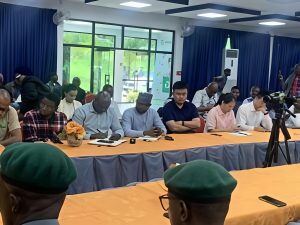
As part of activities marking the media briefing, the Command also organised a stakeholders’ sensitisation programme on the importance of proper documentation in processing transire cargo from mother ports to other terminals and Free Trade Zones.
Speaking during the session, the Officer in Charge of the Bond Seat, Assistant Comptroller O.A. Omeka, stressed that accurate documentation remains fundamental to effective customs control, seamless cargo movement and revenue protection.
He explained that complete and authentic documentation enables Customs to accurately assess duties, detect smuggling, under-declaration, document forgery and other fraudulent practices, while reducing operational bottlenecks.
Omeka warned that incomplete or inaccurate documentation could result in cargo delays, increased demurrage and storage costs, financial penalties, cargo seizures and disputes among terminal operators, importers and Free Zone enterprises.
He urged shipping companies, terminal operators and Free Zone operators to comply fully with the provisions of the Nigeria Customs Service Act, 2023, particularly Sections 47, 152 and 153, governing transit cargo documentation.
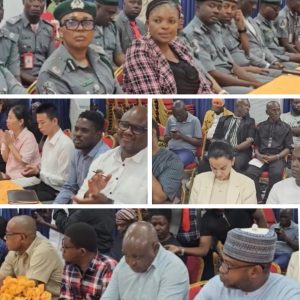
Some of the officers and stakeholders at the briefing
The Assistant Comptroller also advocated regular stakeholder sensitisation, thorough verification of transit documents before cargo movement and prompt reporting of irregularities, noting that proper documentation alone could eliminate nearly 70 per cent of the challenges associated with transit cargo operations while safeguarding government revenue and enhancing trade efficiency.




-

 Crime2 years ago
Imo police confirm arrest of journalist, ‘Nonsonkwa’ over alleged Cyberstalking, Incitement
-
 Education7 months ago
Anambra leads South-east in education allocation ratio, as Imo ranks lowest
-

 News6 years ago
Orthodox Anglican Church, not Same as Church of Nigeria- Bishop
-

 Business6 years ago
Pay-As-You-Go not applicable to pay TV – FCCPC
-

 Agriculture4 years ago
Environment Day: Foundation partners, FCMB, Chevron, harps on collective efforts on earth protection
-

 Crime3 years ago
Pastor allegedly kills female member, prevents 20 year old daughter from attending burial