…Oyetola, maritime leaders celebrate AMBO
By Ezurike Ugochukwu
In an industry where regulation meets risk and public trust often determines progress, few recognitions resonate as deeply as one bestowed by the media itself.
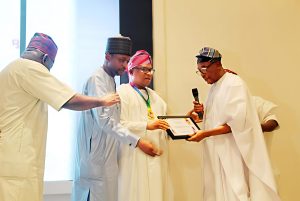
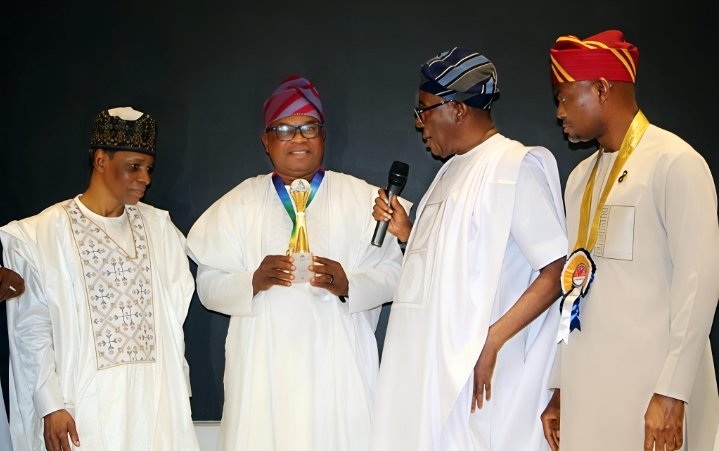
On Tuesday, February 10, 2026, Abuja witnessed such a moment when Asiwaju Munirudeen Bola Oyebamiji (AMBO), immediate past Managing Director of the National Inland Waterways Authority (NIWA), stepped forward to receive the prestigious “Most Media-Friendly Maritime CEO” Award.
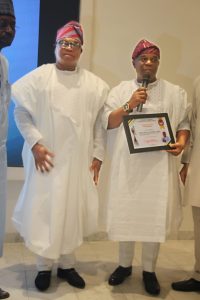
Oyebamiji and Meke
The honour, conferred by the Coalition of Maritime Journalists of Nigeria, was more than ceremonial applause. It was a validation of a leadership style anchored on transparency, accessibility, institutional reform, and stakeholder engagement – qualities that, according to industry watchers, defined Oyebamiji’s tenure at NIWA.
Standing prominently among those who paid glowing tributes was the Minister of Marine and Blue Economy, Dr. Adegboyega Oyetola, who described Oyebamiji as a consummate public servant whose stewardship repositioned NIWA within Nigeria’s evolving marine and blue economy architecture.
AMBO’s culture of openness in a strategic sector
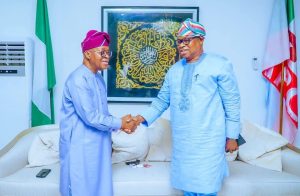
Oyetola and Oyebamiji
Maritime governance is rarely simple. It demands a balance between enforcement and facilitation, safety and commerce, revenue generation and public accountability. For Oyetola, what distinguished Oyebamiji was his ability to navigate these complexities while maintaining an open-door relationship with journalists and industry stakeholders.
“By recognising leaders who uphold openness and constructive engagement with the media, you reinforce values that enhance transparency and institutional credibility,” Oyetola remarked during the investiture ceremony.
The Minister commended the Coalition of Maritime Journalists for advancing accountability and professionalism within the sector, noting that specialised maritime journalism plays a critical role in shaping public understanding and strengthening governance.
In an era where misinformation can distort public perception of regulatory agencies, Oyetola stressed that leaders who see the media as partners rather than adversaries help foster institutional trust and national development.
Reforms, revenue & regulation of Oyebamiji at NIWA
Beyond the symbolism of the award lies a record of measurable reforms. Under Oyebamiji’s leadership, NIWA experienced significant revenue growth, improved operational efficiency, stronger stakeholder collaboration, and enhanced regulatory oversight.
Industry analysts note that these achievements strengthened the Authority’s financial sustainability and service delivery capacity across Nigeria’s inland waterways, an often underutilised yet strategically vital component of the nation’s transportation matrix.
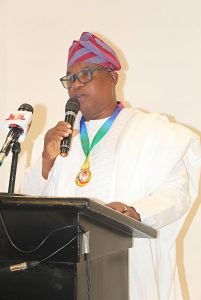
Oyebamiji
Perhaps the most celebrated milestone of his tenure was the development and implementation of the first Inland Waterways Safety Code in 35 years.
Describing it as one of Oyebamiji’s most enduring legacies, Oyetola said the Safety Code modernised regulatory standards and established comprehensive operational protocols nationwide.
“One of the most enduring legacies of Asiwaju Oyebamiji’s tenure was the Inland Waterways Safety Code, a landmark achievement that modernised regulation and improved safety across the nation’s waterways,” the Minister affirmed.
The code introduced clearer compliance frameworks, strengthened enforcement mechanisms, and provided structured guidelines for operators—steps widely credited with improving navigation safety and reducing accidents.
Confronting boat mishaps with evidence-based strategy
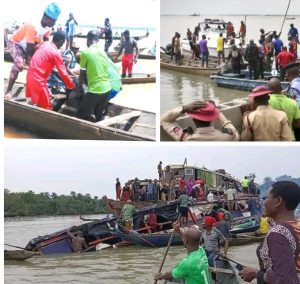
Boat mishaps have long posed serious challenges to inland water transportation in Nigeria. Recognising the urgency of the issue, Oyebamiji chaired the Special Committee on the Prevention of Boat Mishaps, coordinating national efforts aimed at reducing accidents.
Through stakeholder sensitisation campaigns, stricter enforcement, inter-agency collaboration, and evidence-driven policymaking, the committee implemented strategies that significantly improved awareness and compliance.
Oyetola highlighted these efforts as emblematic of Oyebamiji’s pragmatic leadership—combining firmness with inclusiveness and accountability.
“He demonstrated humility and strength in equal measure, engaging operators, security agencies, community leaders, and journalists alike,” the Minister noted.
Impacting humans, beyond infrastructure
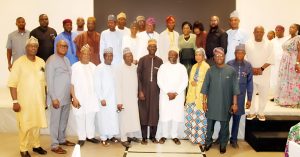
At the award ceremony
While statistics and regulatory reforms tell part of the story, NIWA’s Acting Managing Director, Alhaji Umar Yusuf Girei, emphasised the human dimension of Oyebamiji’s legacy.
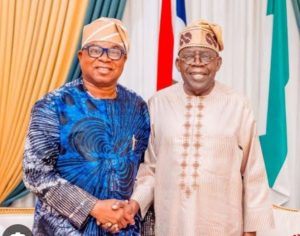
Oyebamiji and President Tinubu
In his goodwill message, Girei praised his predecessor for transforming NIWA’s work culture and aligning its programmes with President Bola Ahmed Tinubu’s Renewed Hope Agenda.
He disclosed that NIWA would also receive the New Telegraph Maritime Agency of the Year 2025 Award, a testament to the institutional strides recorded during Oyebamiji’s administration.
“Beyond policies and infrastructure, the human lives rescued, businesses stabilised, and families positively impacted are legacies we are proud to uphold,” Girei stated.
Staff morale reportedly improved during the period, with value-driven programmes strengthening internal cohesion and productivity.
Why the media chose Oyebamiji
For the coalition of maritime journalists, the award was grounded in experience, not sentiment. Chairman of the Coalition, Mr. Frank Meke, explained that the honour recognises leaders who promote transparency, encourage field reporting, and support journalists’ welfare in the course of duty.

Meke
“Leaders like Asiwaju Oyebamiji see the media not as adversaries but as partners in development, he encouraged firsthand reporting across NIWA operations, ensuring accurate coverage of projects and safety initiatives,” Meke said.
Journalists who cover maritime operations often work in high-risk environments, from remote jetties to turbulent waterways. According to Meke, Oyebamiji not only granted access but fostered a conducive atmosphere for responsible reporting.
That partnership, observers say, contributed significantly to raising public awareness about inland water safety and regulatory compliance.
A journey of mentorship & public service
In his acceptance speech, Oyebamiji struck a reflective tone. He described the award as a collective achievement, attributing it to teamwork within NIWA and consistent collaboration with stakeholders.
 He paid tribute to Oyetola, describing him as mentor and leader whose guidance shaped his public service trajectory – from their early days at the Osun State Investment Company to later roles in federal service and ultimately at NIWA.
The bond between the two leaders was evident throughout the ceremony, underscoring a continuity of vision within Nigeria’s marine and blue economy framework.
Oyebamiji also acknowledged the courage of maritime journalists who report from high-risk waterways, noting that their engagement strengthened safety awareness nationwide.
From Maritime Leadership to Political Aspiration

The ceremony carried additional significance given Oyebamiji’s emergence as the All Progressives Congress (APC) governorship candidate for Osun State in the August 8, 2026 election.
For Oyetola and other speakers, the award served as further validation of a leadership style they believe is transferable beyond maritime administration.
“As he now represents the APC as governorship candidate, many who have witnessed his track record remain confident in his ability to deliver purposeful and transformational leadership,” Oyetola said.
Political observers at the event interpreted the recognition as reinforcing Oyebamiji’s reputation as a reform-driven administrator with demonstrable results.
A night of applause & reflection
The Abuja ceremony drew top government officials, maritime regulators, industry players, and media executives – an assembly reflective of NIWA’s central role within Nigeria’s transport ecosystem.
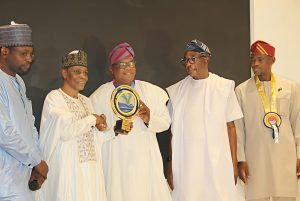
Beyond the celebratory atmosphere, the event offered an opportunity to reflect on the broader trajectory of Nigeria’s blue economy. Inland waterways, once overlooked, are increasingly viewed as catalysts for trade facilitation, job creation, tourism, and environmental sustainability.
Under Oyebamiji’s tenure, NIWA positioned itself more strategically within that national conversation—strengthening oversight while promoting investment and safety.
The enduring message
Awards often fade into memory, but institutional reforms endure. For many attendees, the significance of the evening lay less in the plaque presented and more in what it represented: a model of leadership grounded in accountability, collaboration, and measurable impact.
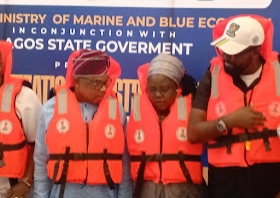
Life jacket distribution by Oyebamiji
By fostering trust with journalists, reinforcing regulatory frameworks, modernising safety standards, and strengthening operational efficiency, Oyebamiji’s tenure at NIWA carved a distinctive chapter in Nigeria’s maritime governance story.
As applause echoed through the hall and cameras captured the symbolic handshake between mentor and protégé, one message resonated clearly: in sectors as strategic as marine and blue economy, transparency is not merely a virtue—it is an asset.
And for Asiwaju Munirudeen Bola Oyebamiji, it is an asset that has now earned him both industry recognition and renewed public attention as he charts the next phase of his leadership journey.














 Crime2 years ago
 News6 years ago
 Business6 years ago
 Crime3 years ago
 Agriculture4 years ago
 News2 years ago