
Business
Inland dry ports, digital reforms top NSC’s 2025 achievements

By Ezurike Ugochukwu
The Nigerian Shippers’ Council (NSC) has placed infrastructure expansion and digital transformation at the heart of its reform agenda, recording notable strides in 2025 with Inland Dry Ports (IDPs) development and the full deployment of electronic documentation systems emerging as its defining achievements.
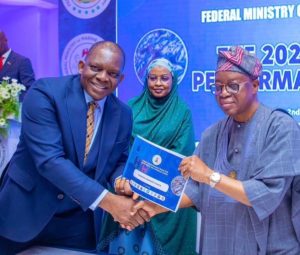
At a time when Nigeria’s maritime sector is under increasing pressure to improve efficiency, reduce congestion and enhance global competitiveness, the Council’s dual focus on decentralising cargo operations and modernising internal processes is being seen as a strategic response to longstanding bottlenecks in the system.
Bringing Ports Service Closer

A major highlight of the Council’s performance in 2025 is the sustained progress in the development and operationalisation of Inland Dry Ports across the country. Designed to serve as cargo handling and clearance centres away from congested seaports, the facilities are expected to transform Nigeria’s logistics landscape by bringing port services closer to businesses in the hinterland.
Industry stakeholders have overtime argued that functional dry ports hold the key to reducing pressure on major seaports in Lagos, particularly Apapa and Tin Can Island, where congestion has historically driven up the cost of doing business.
By facilitating cargo clearance inland, IDPs not only cut transportation time and costs but also improve supply chain efficiency for importers and exporters.
The Executive Secretary and Chief Executive Officer of the NSC, Dr. Akutah Pius, noted that the Council has continued to play a central role in coordinating the development of these projects, working closely with investors, state governments and the Federal Ministry of Marine and Blue Economy.
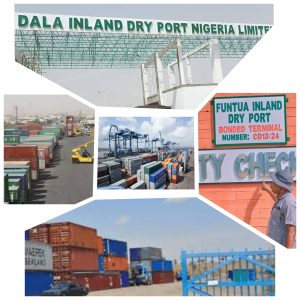 “The Inland Dry Port initiative is critical to the future of Nigeria’s logistics ecosystem. It is about decongesting our seaports, improving trade flow and ensuring that businesses across the country can access port services without unnecessary delays,” he said.
Beyond easing congestion, the dry ports are also expected to stimulate economic activities in host communities, create jobs and enhance Nigeria’s participation in regional trade, particularly under the African Continental Free Trade Area (AfCFTA).
Driving Efficiency Through Digitalisation
Complementing its infrastructure push, the NSC also made significant progress in digital transformation with the successful implementation of its Enterprise Content Management System (ECMS), a platform that has effectively eliminated manual documentation processes within the Council.
The transition to a fully digital system has streamlined workflows, reduced paperwork and improved turnaround time for service delivery. Stakeholders say this marks a critical shift toward transparency and operational efficiency in a sector often weighed down by bureaucratic delays.
Dr. Akutah described the ECMS rollout as a milestone in the Council’s modernisation drive.

Akutah
“We have moved from a paper-based system to a fully digitised process. This has not only improved internal efficiency but has also enhanced the quality and speed of services we provide to stakeholders,” he explained.
The adoption of digital systems aligns with global best practices in port administration, where automation and data-driven processes are increasingly being used to reduce human interface, curb inefficiencies and promote accountability.
Protecting Port Users, Saving Costs
In addition to infrastructure and digital reforms, the NSC’s regulatory interventions in 2025 delivered tangible economic benefits. Through its dispute resolution mechanisms, the Council successfully mediated conflicts between port users and service providers, saving businesses billions of naira in disputed charges and avoidable costs.
These interventions have reinforced the Council’s role as the economic regulator of Nigeria’s ports, ensuring fairness, transparency and compliance within the system.
“Our responsibility is to protect the interests of port users while ensuring that service providers operate within established guidelines. The savings recorded through our interventions reflect the impact of proactive regulation,” Dr. Akutah said.
Ready for a Competitive Future
Analysts say the combination of infrastructure expansion and digital reform positions the NSC as a key driver of Nigeria’s broader trade facilitation agenda. With global trade becoming increasingly competitive, efficiency at ports and along logistics corridors remains a critical determinant of economic performance.
The Council’s achievements in 2025 are therefore seen not just as institutional milestones, but as contributions to national economic growth and improved ease of doing business.

Akutah addressing Marine and Blue Economy stakeholders in Lagos
As Nigeria continues to pursue reforms under the marine and blue economy framework, the NSC’s focus on Inland Dry Ports and digital transformation offers a clear blueprint for sustainable progress.
With momentum building, stakeholders expect the Council to consolidate these gains in the coming years—ensuring that the benefits of reform are felt across the entire trade value chain, from the ports to the hinterland and beyond.











Afeni deepens inter-agency alliance as Ogun I Customs, NAFDAC, Army intensify anti-smuggling fight

Oyetola’s waterways safety directive gains momentum as NIWA reaches FCT communities

Customs implements new ECOWAS tariff regime, updates import, export rules
-

 Crime2 years ago
Imo police confirm arrest of journalist, ‘Nonsonkwa’ over alleged Cyberstalking, Incitement
-

 Education5 months ago
Anambra leads South-east in education allocation ratio, as Imo ranks lowest
-

 News6 years ago
Orthodox Anglican Church, not Same as Church of Nigeria- Bishop
-

 Business6 years ago
Pay-As-You-Go not applicable to pay TV – FCCPC
-

 Agriculture4 years ago
Environment Day: Foundation partners, FCMB, Chevron, harps on collective efforts on earth protection
-

 Crime3 years ago
Pastor allegedly kills female member, prevents 20 year old daughter from attending burial