
News
2027: Atiku challenges Tinubu’s eligibility over ‘Tinubu Bola Adekunle’ certificate
By Ezurike Ugochukwu
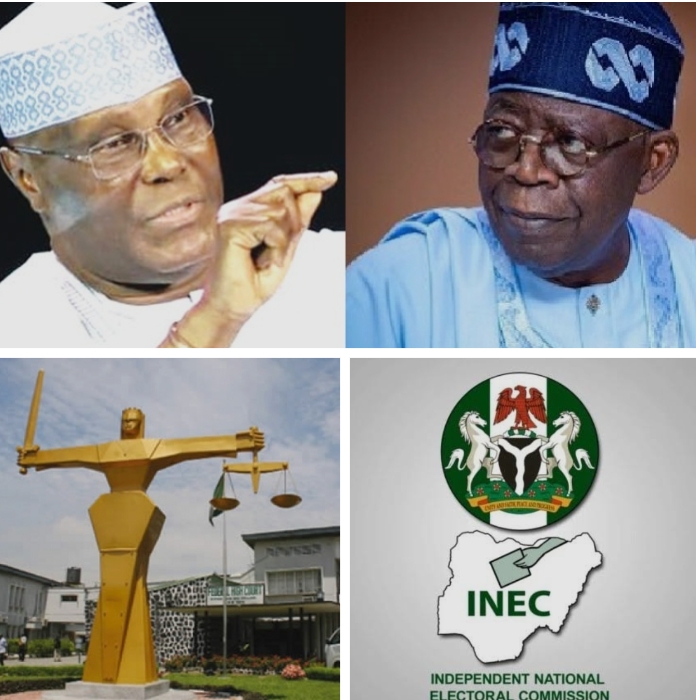
Former Vice President and presidential candidate of the African Democratic Congress (ADC), Atiku Abubakar, has instituted a legal action seeking to disqualify President Bola Ahmed Tinubu from contesting the 2027 presidential election, citing alleged discrepancies in documents associated with his eligibility.
Atiku personally deposed to an affidavit at the Federal High Court on Friday, August 14, in support of the suit filed alongside the ADC against Tinubu, the All Progressives Congress (APC) and the Independent National Electoral Commission (INEC).
The case invokes constitutional provisions relating to the qualification of presidential candidates and the presentation of credentials, including Sections 137(1)(j), 139(1)(a)(i) and 285(14)(c) of the 1999 Constitution, as amended, as well as relevant provisions of the Electoral Act 2026.


At the centre of the action is an alleged discrepancy involving a National Youth Service Corps (NYSC) discharge certificate bearing the name “Tinubu Bola Adekunle.”
The plaintiffs contend that the name differs from the President’s publicly established name, Bola Ahmed Tinubu, and are asking the court to determine the legal significance of the discrepancy.
They specifically want the court to establish whether the document was submitted to the electoral body by Tinubu and, if so, whether its presentation amounts to the submission of a forged credential within the meaning of the Constitution.
Speaking after taking the oath, Atiku said he personally attended the court registry because of what he described as the constitutional importance of the case.
“I came here personally because the issues before the court go to the heart of our Constitution and the integrity of the office of President,” he said.
Atiku said the case should be determined through the courts rather than through public debate or social media.
‘Let evidence establish it’
In his affidavit, the former vice president said INEC had been formally notified to produce relevant qualification documents submitted in connection with presidential elections.
He said applications for certified true copies of the relevant records had been made before the commencement of the proceedings.
“This is precisely why we have gone to court. We are not asking Nigerians to decide this matter on social media, and we are not asking INEC to become a court,” Atiku said.
“We are asking the institution holding the records to produce them and the judiciary to examine the evidence and pronounce on it.”
He added: “If the certificate belongs to Bola Ahmed Tinubu, let that be established before the court. If ‘Tinubu Bola Adekunle’ and ‘Bola Ahmed Tinubu’ are one and the same person for the purpose of that certificate, let the evidence establish it.”
Challenges Electoral Act provisions
Beyond the alleged certificate discrepancy, the plaintiffs are challenging provisions of the Electoral Act 2026 which they contend restrict the circumstances under which a candidate’s eligibility can be challenged before an election.
Atiku and the ADC argue that provisions of ordinary legislation cannot override constitutional requirements or prevent judicial scrutiny of a candidate’s qualification.
“This case raises a fundamental question for our democracy. Can an Act of the National Assembly be used as a shield against an express provision of the Constitution?” Atiku asked.
He maintained that constitutional provisions should apply equally to all Nigerians seeking elective office, including the presidency.
The former vice president also drew a comparison between the scrutiny ordinarily applied to certificates and official documents presented by ordinary Nigerians and the standard expected of presidential candidates.
“Nigerian graduates cannot complete NYSC documentation with one identity and simply ask employers to ignore discrepancies,” he said.
“The standard cannot suddenly disappear because the applicant is seeking the highest office in the land. The Presidency is not an immunity certificate against constitutional scrutiny.”
Atiku calls on INEC to produce records

Atiku urged INEC to maintain neutrality by producing all relevant documents required by the court.
He argued that resolving questions concerning candidates’ eligibility before the election would provide greater certainty and protect the credibility of the electoral process.
“INEC is holding the documents. The court has the jurisdiction to examine the issues. President Tinubu has the opportunity to defend himself. That is the constitutional process, and nobody should be afraid of it,” he said.
According to him, voters should not be required to cast their ballots before fundamental questions concerning candidates’ qualifications are subsequently subjected to legal scrutiny.
Atiku said he was prepared to defend the allegations contained in his affidavit and submit himself to the legal process.
“I have sworn to my case before the law. I am prepared to be held accountable for what I have placed before the court. President Tinubu should equally be prepared to answer the case against him before the law,” he said.
He described the action as a constitutional matter rather than a personal dispute, insisting that the objective was to ensure that the same legal standards apply to every candidate seeking the presidency.
The suit is expected to test the scope of pre-election challenges to presidential eligibility, the evidentiary value of documents submitted to INEC and the relationship between constitutional qualification requirements and limitations contained in electoral legislation.
Tinubu, the APC and INEC are expected to respond to the allegations through the judicial process.









Seme–Krake: Nigeria, Benin Customs begin push for seamless border trade
AMJON Conference: NIMASA, Customs, NPA, NSML push innovation, digital skills for future-ready maritime sector

Customs: Discipline, character critical as 2025 recruitment screening enters final phase
-

 Crime2 years ago
Imo police confirm arrest of journalist, ‘Nonsonkwa’ over alleged Cyberstalking, Incitement
-
 Education7 months ago
Anambra leads South-east in education allocation ratio, as Imo ranks lowest
-
 News6 years ago
Orthodox Anglican Church, not Same as Church of Nigeria- Bishop
-

 Business6 years ago
Pay-As-You-Go not applicable to pay TV – FCCPC
-

 Agriculture4 years ago
Environment Day: Foundation partners, FCMB, Chevron, harps on collective efforts on earth protection
-

 Crime3 years ago
Pastor allegedly kills female member, prevents 20 year old daughter from attending burial