
Business
Waterways clean-up: LASWA seeks collective action as NIWA, Part Central launch initiative

By Ezurike Ugochukwu
The Lagos State Waterways Authority (LASWA) has called for collective action by government agencies, waterfront owners, boat operators, dredgers, communities and other stakeholders to support the National Inland Waterways Authority (NIWA)-Part Central initiative to rid Nigeria’s waterways of pollution.
The call came as NIWA and Part Central Limited formally launched a long-term clean-up programme targeting plastic waste, sewage, refuse and other pollutants threatening the nation’s inland waterways.

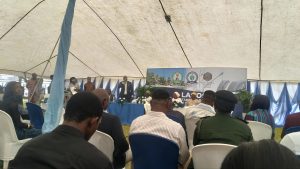
Some of the participants at the event at Lekki Lagos
Speaking at the launch in Lekki Phase 1, Lagos, LASWA General Manager, Dr Oluwadamilola Emmanuel, represented by Ibrahim Oladayo, said waterways pollution was largely caused by human activities and therefore could not be tackled by NIWA alone.

“Cleaning up the waterways is a collective responsibility. The water does not generate waste; it is us that put it there,” he said.
Emmanuel, who is also Special Adviser to the Lagos State Governor on Blue Economy, commended NIWA and Part Central for the initiative, saying the proposed waste collection and recycling arrangements gave him confidence that the programme could be sustained.
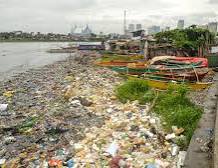
He warned that indiscriminate dumping also posed risks to aquatic life and human health, as plastics consumed by fish could eventually enter the human food chain.
Earlier, NIWA’s Acting Managing Director, Yusuf Girei, urged stakeholders to support the programme and end indiscriminate dumping.
“Our waterways must not only be clean; they must be safe, productive and sustainable,” Gire said, adding that the partnership was expected to create jobs while supporting the Federal Government’s Blue Economy agenda.
NIWA Lagos Area Manager, Engr. Sarat Braimah, said the initiative would begin in Lagos before being extended to other parts of the country.
She noted that with about one-third of Lagos State covered by water, the cleanliness of its waterways was critical to navigation, economic activity and job creation.
Braimah particularly urged waterfront owners, dredgers, boat operators and tank farm operators to change practices that allow sewage, wastewater and other refuse to enter waterways.
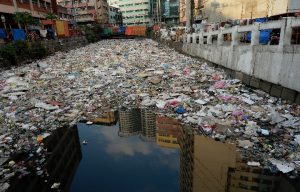 “Waterfront owners don’t see reason to have a soakaway; they believe our waters should take it away. This is a very wrong practice. We need to stop that,” she said.
She also cited the Kirikiri axis as an example of areas severely affected by pollution and urged operators to properly dispose of plastic and other waste.
Bins for boats, jetties
Managing Director of Part Central, Hon. Henry Olaoluwa Onifade, said the company would deploy technology and a structured collection system covering waterfronts, landing points and jetties.
He said every watercraft operating on the nation’s inland waterways would be provided with approved waste bins, while each jetty would have a larger “mother bin” where collected waste could be deposited.
“We will provide and make sure that every boat on Nigeria’s inland waterways will have a NIWA and Part Central-approved waste bin. Every jetty will have a mother bin where you offload your waste when you anchor,” Onifade said.
The programme has a renewable 10-year lifespan, indicating that the partnership is intended as a sustained waterways-management intervention rather than a short-term clean-up exercise.
Stakeholders at the launch, however, stressed that the programme would require strong community participation and enforcement.
The Odofin of Onisiwo, High Chief Lateef Rufai, said refuse dumped into waterways eventually accumulated around waterfront communities, while the Publicity Secretary of the Lekki Phase 1 Residents Association urged the organisers to maintain continuous engagement with host communities.
He recalled that waterway pollution had previously affected boat races in the area because of the volume of debris in the water.
Similarly, President of the Fish Farmers Association, Comrade Ayedogbon Samuel Sunday, proposed direct reporting channels for blockages, oil spills and other violations. He also offered the support of fishermen, saying they could participate in periodic waterways sanitation exercises.
The Barge Operators Association of Nigeria (BOAN), represented by Alhaji Musa Ogani, also welcomed the initiative, noting that clean and navigable waterways were essential to expanding cargo movement across the country’s inland water network.

The Maritime Police, represented by Deputy Commissioner of Police U.M. Ogechi, linked environmental protection to maritime safety and security, warning that polluted waterways could endanger aquatic life, boat operators and passengers and increase the risk of accidents.
Stakeholders also stressed the need for effective recycling, enforcement against persistent polluters and clear channels for reporting violations.
The initiative ultimately seeks to move Nigeria’s waterways management beyond periodic clean-up exercises towards a structured system of waste collection, recycling, enforcement and community participation, with cleaner waterways positioned as a foundation for safer navigation, fisheries, tourism, job creation and the wider Blue Economy.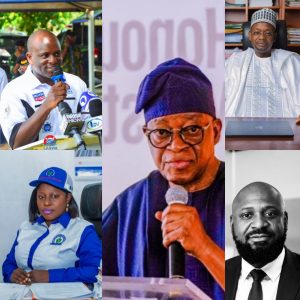






-

 Crime2 years ago
Imo police confirm arrest of journalist, ‘Nonsonkwa’ over alleged Cyberstalking, Incitement
-
 Education7 months ago
Anambra leads South-east in education allocation ratio, as Imo ranks lowest
-
 News6 years ago
Orthodox Anglican Church, not Same as Church of Nigeria- Bishop
-
 Business6 years ago
Pay-As-You-Go not applicable to pay TV – FCCPC
-

 Agriculture4 years ago
Environment Day: Foundation partners, FCMB, Chevron, harps on collective efforts on earth protection
-

 Crime3 years ago
Pastor allegedly kills female member, prevents 20 year old daughter from attending burial