
Business
Nigeria’s tourism revival: Why Runsewe’s experience matters now
By Frank Meke
Some people occupy public offices, while others leave behind legacies that continue to shape the institutions they once led. Otunba Olusegun Runsewe, OON, belongs to the latter category.
My friend, Nkereuwem Onung, often offers a heartfelt prayer: “May Otunba Segun Runsewe live long.” Beyond its simplicity, the prayer reflects the appreciation of a man whose passion, commitment and contributions to Nigerian tourism and cultural development remain significant to many industry practitioners.
To understand why Runsewe’s experience deserves renewed national attention, it is important to revisit his achievements at the Nigerian Tourism Development Corporation (NTDC), now the Nigerian Tourism Development Authority (NTDA), between 2006 and 2013, and subsequently at the National Council for Arts and Culture (NCAC).
His record raises an important question: at a time when Nigeria is searching for practical ways to diversify its economy, create jobs and attract investment through tourism and the creative industries, should President Bola Ahmed Tinubu consider bringing an experienced tourism administrator like Runsewe back into the national development framework?
I believe he should.
2006: Repositioning a Struggling Tourism Institution
When Runsewe was appointed Director-General of NTDC in August 2006, he inherited an institution that, by his assessment and that of several industry observers, was struggling with visibility, coordination and effective engagement with tourism stakeholders.
He responded by declaring a state of emergency in the corporation and introducing what he described as practical tourism, anchored on efficiency, professionalism, effectiveness and stakeholder collaboration.
His approach was to take tourism promotion beyond government offices and make it a subject of national conversation.
It was during this period that the slogan “Tourism is Life” became a defining feature of NTDC’s public engagement.
For Runsewe, tourism was not simply about festivals, entertainment and ceremonial activities. It was an economic instrument capable of generating employment, supporting businesses, attracting investment, preserving cultural heritage and creating opportunities for ordinary Nigerians.
His administration also intensified Nigeria’s participation in international tourism exhibitions, strengthening the country’s visibility among global tour operators, investors and destination marketers.
Putting Nigeria on the Global Tourism Map
One of the defining features of Runsewe’s tenure was the sustained promotion of Nigeria at major international tourism exhibitions.
Under his leadership, NTDC maintained Nigeria’s presence at prominent global platforms, including:
- FITUR, Madrid, Spain.
- ITB Berlin, Germany.
- Arabian Travel Market, Dubai.
- World Travel Market, London.
These exhibitions offered opportunities to showcase Nigeria’s tourism attractions, engage international investors, establish industry partnerships and connect local operators with the global tourism market.
His administration reportedly received commendation letters from international exhibition organisers, including WTM London and FITUR Spain.
Runsewe also addressed an international World Press Conference at WTM London, demonstrating his commitment to projecting Nigeria’s tourism opportunities before the global media.
The importance of this international visibility becomes more evident when considered against the subsequent challenges of sustaining Nigeria’s participation in major tourism exhibitions.
Following his departure from NTDC in 2013, Nigeria’s participation at WTM London reportedly experienced a prolonged interruption. The National Association of Nigeria Travel Agencies (NANTA) later committed resources towards restoring the country’s presence between 2022 and 2024.
This experience reinforces an important lesson: destination marketing requires institutional continuity, consistent government support and sustained engagement with international tourism markets.
Abuja Carnival: Showcasing Nigeria’s Cultural Diversity
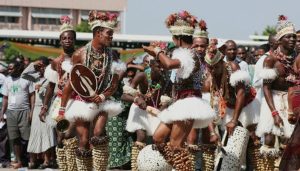
Runsewe’s contributions extended beyond international destination marketing.
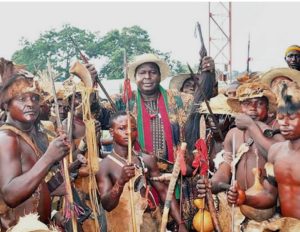
As Chairman of the Planning Committee of the Abuja Carnival, he played a pioneering role in organising an event designed to showcase Nigeria’s cultural diversity through colourful displays, performances, traditional costumes and artistic expressions.
The carnival became an important platform for projecting the country’s cultural heritage and attracting attention to the economic possibilities of cultural tourism.
Its growing visibility reportedly attracted international interest, including an approach from Trinidad and Tobago seeking his expertise in organising a cultural celebration connected with the Commonwealth Heads of Government Meeting.
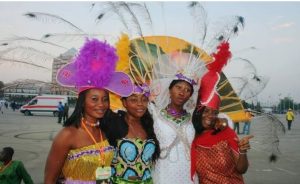
The underlying philosophy was clear: Nigerian culture should not be celebrated only within the country’s borders. It should be professionally packaged, marketed and presented internationally as a tourism product with commercial value.
2010 & 2018 World Cups: Culture Beyond Football
Nigeria’s participation at the 2010 FIFA World Cup in South Africa was not particularly successful on the football pitch. However, the country’s cultural presentation offered another opportunity to attract international attention.
Through the Nigerian Tourism Village, an initiative championed by Runsewe, Nigeria created a cultural showcase featuring its arts, crafts, music, hospitality and traditional heritage.
The initiative provided international visitors with an opportunity to experience Nigeria beyond football and reportedly received recognition during the tournament.
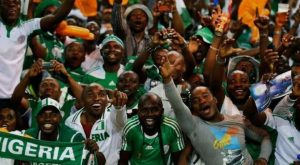
A similar cultural projection followed at the 2018 FIFA World Cup in Russia, where Nigerian arts and culture were showcased.
These initiatives reflected Runsewe’s understanding that countries are marketed not only through government policies and investment documents but also through their food, music, fashion, hospitality, cultural expressions and distinctive stories.
Building Institutions, Not Just Organising Festivals
Perhaps one of Runsewe’s most significant contributions was his recognition that sustainable tourism development requires systems, institutional capacity and infrastructure rather than occasional celebrations.
During his tenure at NTDC, he introduced biometric data registration for workers in the hospitality industry, an initiative intended to strengthen accountability and address security concerns within the sector.
He also repositioned the corporation’s premises in Area 1, Garki, Abuja, into a Tourism Village, while improving the working environment of the secretariat.
His infrastructure vision extended to the proposed development of a Fish House at the Argungu Fishing Village.
These initiatives reflected an approach that sought to connect tourism promotion with practical institutional development.
In recognition of his contributions, Runsewe received the national honour of Officer of the Order of the Niger (OON). In 2011, he was also decorated as Tourism Man of the Year by then Vice President Namadi Sambo, who described him as a beacon of hope for the industry.
2017: Taking the Cultural Revolution to NCAC
When former President Muhammadu Buhari appointed Runsewe Director-General of the National Council for Arts and Culture in 2017, he moved from mainstream tourism administration into an institution with a broader cultural development mandate.
He approached the assignment with the same emphasis on visibility, stakeholder engagement and economic value.
One of his major priorities was repositioning the National Festival of Arts and Culture (NAFEST), which had struggled to achieve the national relevance and commercial impact expected of such an important cultural platform.
Under his leadership, NAFEST gained renewed visibility and attracted greater interest from state governments and cultural stakeholders.
From Kaduna to Rivers, Edo, Plateau, Ekiti and Lagos, the festival became an avenue for showcasing Nigeria’s cultural diversity, promoting national unity and exploring opportunities within the creative economy.
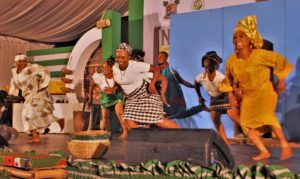
Rather than treating NAFEST merely as an annual celebration, Runsewe sought to make it a platform for cultural exchange, skills acquisition, enterprise development and national integration.
How NAFEST Became an Economic Platform
One of the most important aspects of Runsewe’s leadership at NCAC was his attempt to demonstrate that cultural activities could generate economic value beyond entertainment.
Several initiatives during his tenure illustrated this philosophy.
Skills Acquisition and Creative Enterprise
At NAFEST and other cultural events, attention was given to equipping women, young people and artisans with practical skills.
At the 2017 African Arts and Crafts Expo, for instance, 2,125 participants reportedly received training in the production of Ankara bags and shoes, hand fans, beaded slippers, liquid soap, antiseptics and air fresheners.
The objective was to transform traditional and creative skills into sustainable livelihoods.
The ₦300 Million Bank of Industry Partnership
Runsewe also signed a ₦300 million Memorandum of Understanding with the Bank of Industry to facilitate access to financing for young people and artisans involved in arts and crafts.
The initiative sought to address one of the biggest challenges facing creative entrepreneurs: access to affordable capital.
It reinforced the argument that cultural enterprise should be treated as an economic activity capable of attracting structured financing.
From AFAC to INAC: Expanding Nigeria’s cultural reach
He repositioned the African Arts and Crafts Expo (AFAC) into the International Arts and Crafts Expo (INAC), expanding its scope beyond African participation to encourage wider international involvement.
The initiative provided opportunities for cultural exchange, international exhibitions and the promotion of Nigerian and African creative products.
The 37 Cultural Wonders of Nigeria
Another initiative was the promotion of the 37 Cultural Wonders of Nigeria, designed to identify and showcase important cultural attractions across the 36 states and the Federal Capital Territory.
The concept sought to improve the visibility of Nigeria’s diverse heritage and encourage the development of cultural attractions as marketable tourism products.
The 1,000 Palaces of Pride
Runsewe also proposed a compendium of traditional rulers’ palaces, featuring prominent royal institutions, including those of the Sultan of Sokoto, Ooni of Ife, Obi of Onitsha and Alake of Egbaland.
The initiative recognised traditional institutions as important custodians of Nigeria’s history, heritage and cultural identity, with considerable potential for heritage tourism.
Culture as Nigeria’s New Oil
Runsewe consistently advocated the economic repositioning of culture, describing NCAC as the “Central Bank of Culture in Nigeria” and culture as the country’s next oil.
His administration explored opportunities in cultural merchandising, crafts, exhibitions and other creative businesses, encouraging a shift from dependence on government-funded celebrations to entrepreneurship and commercial sustainability.
COVID-19: Keeping Cultural Enterprise Alive
When the COVID-19 pandemic disrupted economic activities globally, NCAC explored local production of face masks and hand sanitisers using locally available materials.
The council also organised NAFEST 2020 in Jos, Plateau State, under the theme, “COVID-19 and Cultural Dynamism.”
The event reportedly attracted representatives of 32 embassies, demonstrating an effort to sustain cultural engagement despite the difficult circumstances.
Supporting the Revival of Argungu Fishing Festival
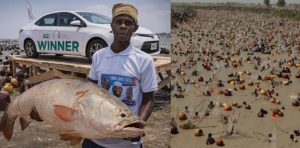
Runsewe also championed efforts to revive the Argungu International Fishing and Cultural Festival after years of inactivity.
The festival, an important symbol of Nigeria’s cultural heritage and national unity, received renewed attention through the revival campaign.
Digital preservation through an e-library
His administration also pursued an electronic library initiative aimed at connecting Nigeria’s cultural heritage with audiences in approximately 150 countries.
The project reflected the growing importance of digital technology in preserving, documenting and promoting cultural assets beyond geographical boundaries.
Taken together, these initiatives demonstrate an important principle: culture can create jobs, support small businesses, promote exports, attract investment and generate foreign exchange when properly organised and commercially developed.
Why Tinubu Should Consider Bringing Him Back
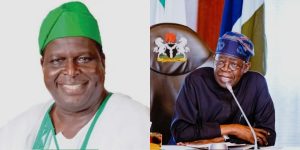
Runsewe and President Tinubu
Mr President, Nigeria’s tourism industry needs experienced leadership, institutional memory, policy consistency and stronger coordination between government and private-sector operators.
Since Runsewe’s departure from NTDC in 2013, the industry has experienced administrative changes, shifting policy priorities and challenges in sustaining international destination marketing.
The private sector has continued to make efforts to promote Nigeria’s tourism interests. NANTA has invested resources in restoring the country’s presence at international tourism exhibitions, while the Nigerian Association of Tour Operators (NATOP) has introduced the Nigeria Tourism Passport as a destination-marketing initiative.
AITEC World has equally provided platforms for projecting Nigeria’s tourism and investment opportunities internationally.
These interventions deserve recognition. However, private-sector associations cannot independently shoulder the full responsibility of national destination marketing without consistent government support, institutional coordination and a clearly defined national tourism strategy.
Nigeria needs leadership capable of connecting tourism promotion with cultural development, hospitality, investment, destination marketing and the creative economy.
Runsewe’s experience across both NTDC and NCAC provides an important foundation for considering him for another national assignment.
He understands the institutional structure of tourism administration, has worked with cultural stakeholders across the country and has participated in international tourism engagements.
President Tinubu should therefore consider bringing him back into the national tourism leadership structure, whether through a ministerial appointment or a strategic advisory position with a clear mandate, defined responsibilities and the authority required to deliver results.
What Runsewe Could Help Achieve Within 24 Months
A renewed national assignment could provide an opportunity to translate his experience into a practical tourism recovery and development programme.
Some priority areas could include:
• International destination marketing: Restore consistent Nigerian participation at WTM London, FITUR Madrid, ITB Berlin and Arabian Travel Market through coordinated national tourism pavilions and stronger engagement with international tour operators.
• A unified national cultural tourism calendar: Connect NAFEST, INAC, Abuja Carnival and Argungu Fishing Festival into a coordinated programme that allows international tour operators to develop tourism packages around Nigeria’s cultural events.
• Creative industry financing: Strengthen partnerships with the Bank of Industry, commercial banks and diaspora investors to improve access to finance for artisans, cultural entrepreneurs and creative businesses.
• State tourism development: Encourage state governments to identify, develop and market their tourism attractions through coordinated national programmes and competitive cultural initiatives.
• Tourism as an economic development strategy: Reposition “Tourism is Life” beyond a promotional slogan by integrating tourism and cultural enterprise into Nigeria’s broader economic diversification agenda.
These are achievable areas of focus, provided the government establishes clear performance targets, adequate institutional support and measurable outcomes.
Otunba Must Live Long
I say this with all sincerity: Otunba Segun Runsewe must live long.
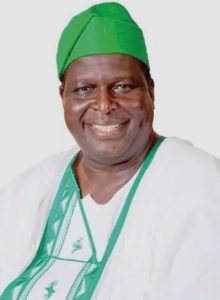
He must live long to witness a Nigeria where culture becomes a stronger pillar of the national economy.
He must live long to see the young people he encouraged to acquire skills in Ankara bag-making, crafts and other creative enterprises grow into successful business owners and exporters.
He must live long to see NAFEST achieve its full potential as one of Africa’s leading cultural festivals.
He must live long to see Nigeria reclaim a consistent place in the global tourism conversation.
And he must live long to witness the institutional continuity and policy support that the initiatives he championed deserve.
As members of the media and stakeholders in the tourism industry, including NANTA, NATOP, the Federation of Tourism Associations of Nigeria (FTAN) and AITEC, we must also learn to celebrate people who have contributed to the development of the sector while they are alive and available to share their experience.
Runsewe should not be remembered only through tributes and retrospective accounts. His institutional knowledge, experience and ideas should remain available to an industry that continues to seek sustainable direction.
He is more than a former Director-General. He is an experienced cultural administrator, a passionate tourism advocate and an important figure in the development of Nigeria’s tourism sector.
Mr President, consider recalling him. Give him a clear mandate and the institutional support to deliver. Let him help reboot Nigeria’s tourism and cultural economy.
Nigeria’s tourism potential is enormous. What the country needs is a deliberate strategy to organise, package, market and translate its cultural and natural attractions into sustainable economic opportunities.
Runsewe has spent much of his professional career advocating that proposition. His experience deserves serious consideration as Nigeria charts the next chapter of its tourism development.
Tourism is Life. And Runsewe has spent years preaching that gospel.










-

 Crime2 years ago
Imo police confirm arrest of journalist, ‘Nonsonkwa’ over alleged Cyberstalking, Incitement
-
 Business1 year ago
Kirikiri Lighter Terminal Customs achieves 63% revenue growth in first half of 2025, generates ₦89.2b
-

 Business1 year ago
Nigerians can now independently verify vehicle duty payment status online with ₦15,000
-

 Business3 years ago
Floating Naira: Imminent drawback to revenue as Customs Duty Exchange Rate rises again to ₦783.174
-

 Crime6 years ago
EFCC: “Why Magu’s confirmation was turned down by Senate”
-

 Crime3 months ago
Smuggling: Customs FOU ‘A’ intercepts 220 consignments, recovers ₦729m