
Business
Nigeria Customs enhances border surveillance through INTERPOL partnership

By Ezurike Ugochukwu
The Nigeria Customs Service (NCS) has significantly enhanced its border security and intelligence-gathering capabilities with the deployment of an INTERPOL Data Centre at its headquarters in Abuja, providing officers with real-time access to one of the world’s largest criminal intelligence networks to combat transnational crime and strengthen border enforcement.
Comptroller-General of Customs, Adewale Adeniyi, unveiled the facility during a demonstration at the Service Headquarters, describing it as a major milestone in the NCS’ technology-driven transformation and intelligence-led enforcement strategy.
 He said the integration of the INTERPOL platform marks a new phase in Customs operations, where advanced technology and global intelligence sharing will play a central role in securing Nigeria’s borders, disrupting criminal networks and facilitating legitimate trade.

Adeniyi maintained that Customs enforcement has evolved beyond conventional compliance, with technology now playing a central role in combating transnational crime. He added that the planned signing of a Memorandum of Understanding (MoU) with INTERPOL would further deepen cooperation between both organisations.
The CGC also highlighted the Service’s indigenous B’Odogwu platform, describing it as an innovative digital solution that can support trade facilitation in Nigeria and across other African Customs administrations.
 INTERPOL Consultant Chikwe Udensi said the facility is the eighth INTERPOL Data Centre in Africa and provides Customs officers with access to more than 152 global criminal databases covering stolen vehicles, vessels, cargo, parcels, and other transported assets.
According to Udensi, the platform enables officers to instantly verify whether goods or transport assets have been reported stolen anywhere in the world, strengthening investigations, border security and revenue generation through real-time intelligence.

On his part, Deputy Comptroller-General of Customs in-charge of Enforcement, Investigation and Inspection, Timi Bomodi, said officers have already been trained to operate the system, which has been fully integrated into the Service’s ICT infrastructure. He noted that the platform also enhances cargo profiling, valuation and risk assessment by providing accurate information on the description and origin of goods.






Seme–Krake: Nigeria, Benin Customs begin push for seamless border trade
AMJON Conference: NIMASA, Customs, NPA, NSML push innovation, digital skills for future-ready maritime sector

Customs: Discipline, character critical as 2025 recruitment screening enters final phase
-

 Crime2 years ago
Imo police confirm arrest of journalist, ‘Nonsonkwa’ over alleged Cyberstalking, Incitement
-
 Education7 months ago
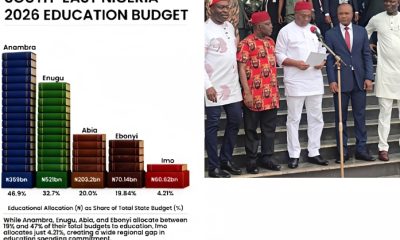
Anambra leads South-east in education allocation ratio, as Imo ranks lowest
-

 News6 years ago
Orthodox Anglican Church, not Same as Church of Nigeria- Bishop
-

 Business6 years ago
Pay-As-You-Go not applicable to pay TV – FCCPC
-

 Agriculture4 years ago
Environment Day: Foundation partners, FCMB, Chevron, harps on collective efforts on earth protection
-

 Crime3 years ago
Pastor allegedly kills female member, prevents 20 year old daughter from attending burial