
Crime
NCCSALW, Niger/Kogi Customs deepen partnership to curb illicit arms proliferation
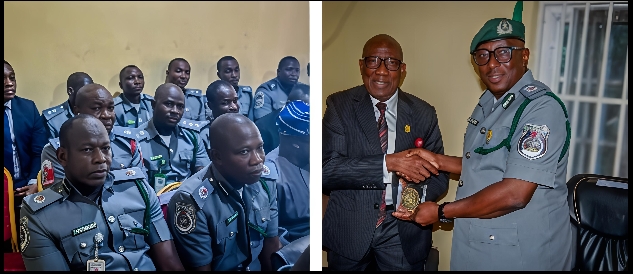
...As Kokumo commends Adeniyi’s inter-agency approach
By Ezurike Ugochukwu
The National Centre for the Control of Small Arms and Light Weapons (NCCSALW) and the Nigeria Customs Service (NCS) have moved to strengthen inter-agency collaboration, intelligence sharing and coordinated enforcement operations to curb the proliferation of illicit small arms and light weapons across Nigeria’s borders.
The commitment was reached on Wednesday, August 19, 2026, when the Director-General of NCCSALW, Deputy Inspector-General of Police (Rtd.) Johnson Babatunde Kokumo, mni, PhD, led a delegation on a courtesy visit to the Customs Area Controller, Niger/Kogi Area Command, Comptroller Mohammed Sani Umar, mni, at the Command Headquarters in Minna, Niger State.

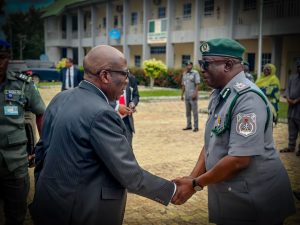
Kokumo commended the Customs Service for what he described as its sustained commitment to preventing the illegal movement of arms, ammunition and other prohibited items through the nation’s borders.
He said Customs occupies a strategic position in Nigeria’s security architecture because of its responsibility for border management and enforcement, making its cooperation essential to efforts to disrupt the movement of illicit weapons and other transnational criminal activities.
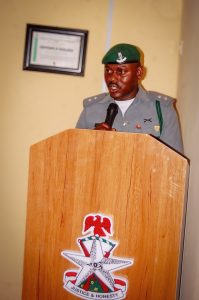
In a release by ASC Abubakar Zakariya, Customs PRO of the command stated that the NCCSALW boss emphasised that the scale and complexity of arms trafficking required stronger collaboration among security and law-enforcement agencies, particularly through timely intelligence exchange, joint operations and continuous capacity development.
He said effective inter-agency cooperation remained critical to protecting lives and property, securing national assets and strengthening peace and stability across the country.
Kokumo also commended the Comptroller-General of Customs, Bashir Adewale Adeniyi, MFR, mnipr, PhD, for his support for inter-agency collaboration.
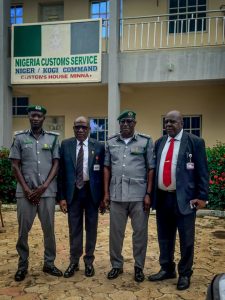
According to him, the leadership of the Customs Service has continued to foster stronger relationships among security and law-enforcement agencies, thereby creating opportunities for coordinated responses to emerging security threats.
He described the Service as a critical partner in the national campaign against the proliferation of small arms and light weapons and expressed confidence that closer collaboration would yield stronger operational results.
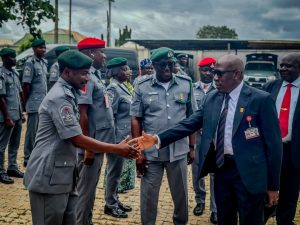
Kokumo assured the Niger/Kogi Area Command of NCCSALW’s readiness to deepen the partnership through intelligence-driven operations, information sharing, capacity building and other joint initiatives aimed at detecting and preventing the trafficking of arms and ammunition.
Responding, Comptroller Umar thanked the NCCSALW delegation for the visit and reaffirmed the Command’s readiness to work closely with the Centre and other sister security agencies in strengthening national security.
He said the Customs Service remained committed to enforcing government policies, protecting Nigeria’s borders and supporting lawful initiatives designed to prevent the movement of illicit weapons and other prohibited goods.
Umar said the Niger/Kogi Area Command would continue to strengthen its operational strategies, improve intelligence-gathering mechanisms and enhance collaboration with relevant stakeholders.
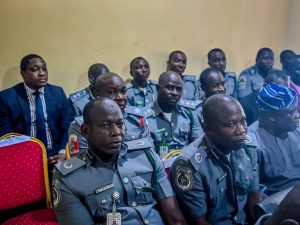
He stressed that effective border management requires sustained cooperation among agencies with complementary mandates, particularly in confronting criminal networks that exploit border routes to move prohibited items.
The CAC also conveyed the appreciation of officers and men of the Command to the Comptroller-General of Customs for his leadership and efforts to reposition the Service through greater efficiency, professionalism and collaboration with sister agencies.
The engagement provided an opportunity for both organisations to examine areas of mutual interest and identify practical measures for strengthening cooperation.
Discussions focused particularly on intelligence gathering, information sharing, capacity development and coordinated enforcement operations.
The renewed partnership is significant given the security implications of illicit arms trafficking, which can fuel violent crime, communal conflicts, banditry and other forms of organised criminal activity.
For the two agencies, the objective is to ensure that intelligence available to one institution can be effectively utilised by others where necessary, while coordinated operations help close gaps that criminals could exploit along Nigeria’s borders.
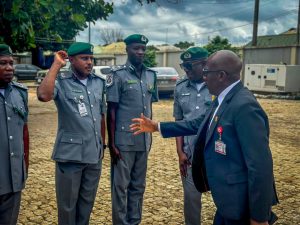
The meeting ended with both organisations reaffirming their commitment to sustained cooperation towards strengthening arms control, improving border security and contributing to a safer Nigeria.












-

 Crime2 years ago
Imo police confirm arrest of journalist, ‘Nonsonkwa’ over alleged Cyberstalking, Incitement
-
 Business1 year ago
Kirikiri Lighter Terminal Customs achieves 63% revenue growth in first half of 2025, generates ₦89.2b
-

 Business1 year ago
Nigerians can now independently verify vehicle duty payment status online with ₦15,000
-

 Business3 years ago
Floating Naira: Imminent drawback to revenue as Customs Duty Exchange Rate rises again to ₦783.174
-
 Education8 months ago
Anambra leads South-east in education allocation ratio, as Imo ranks lowest
-

 Crime6 years ago
EFCC: “Why Magu’s confirmation was turned down by Senate”