
Law
Maritime justice must match pace of global commerce, says Dantsoho
By Ezurike Ugochukwu
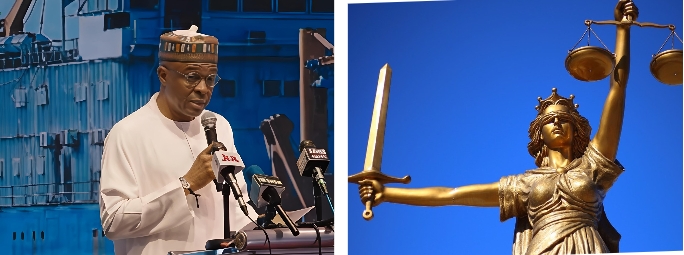
The Managing Director of the Nigerian Ports Authority (NPA), Dr. Abubakar Dantsoho, has called for a more responsive and efficient maritime justice system, stressing that the speedy resolution of maritime disputes is essential to sustaining global commerce, attracting investment and strengthening Nigeria’s competitiveness in international shipping.
Dantsoho made the call on Wednesday while speaking at the 18th International Maritime Seminar for Judges held at the Abuja Continental Hotel, where judicial officers, maritime regulators, policymakers and industry stakeholders gathered to examine ways of strengthening maritime jurisprudence in Nigeria.

Addressing participants on the theme, “Advancing Maritime Justice: Strengthening Global Trade,” the NPA boss said the rapid evolution of international shipping, port operations and cross-border trade demands a legal system capable of resolving commercial disputes promptly, professionally and in line with global best practices.

According to him, efficient maritime justice has become an indispensable pillar of international trade, as investors and shipping operators increasingly seek jurisdictions where commercial disagreements are resolved fairly and within reasonable timelines.
“Maritime justice must keep pace with the speed and complexity of global commerce. Delayed adjudication not only increases the cost of doing business but also undermines investor confidence, disrupts supply chains and weakens national competitiveness,” he said.
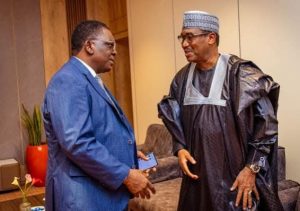
Dantsoho noted that with global shipping becoming increasingly sophisticated, the judiciary plays a strategic role in safeguarding commercial interests and creating the legal certainty required for sustainable growth in the maritime sector.
He commended the National Judicial Institute (NJI) for sustaining the annual seminar, describing it as a valuable platform for equipping judges with specialised knowledge in maritime law and admiralty practice.

Ikechukwu Onyemekara
According to him, continuous judicial training is necessary to ensure that courts remain abreast of emerging issues in international shipping, marine insurance, cargo claims, port operations and other specialised areas of maritime commerce.
The seminar comes amid ongoing reforms by the Federal Government under President Bola Ahmed Tinubu’s Renewed Hope Agenda to reposition the marine and blue economy as a major contributor to Nigeria’s economic diversification and sustainable development.

Gboyega
Earlier, the Minister of Marine and Blue Economy, Adegboyega Oyetola, said the Tinubu administration has embarked on comprehensive reforms aimed at transforming Nigeria into a leading maritime hub in West and Central Africa.
He highlighted initiatives including the implementation of the National Single Window project, automation of port operations, infrastructure rehabilitation, improved maritime security and measures to reduce cargo dwell time and logistics costs while enhancing the ease of doing business.

Dantosho and Amutah
As the agency responsible for managing the nation’s seaports, the Nigerian Ports Authority has remained central to implementing many of these reforms.
Under Dantsoho’s leadership, the Authority has intensified efforts to modernise port infrastructure, improve channel management, accelerate digital transformation, promote multimodal cargo evacuation and enhance operational efficiency across the country’s ports.
He said these investments would deliver their full economic benefits only when supported by a legal system that guarantees certainty, protects commercial rights and resolves disputes without unnecessary delays.
Maritime stakeholders at the seminar agreed that while investments in infrastructure, technology and security are vital to improving port performance, an efficient and predictable judicial system remains equally important in attracting shipping lines, investors and international trade.
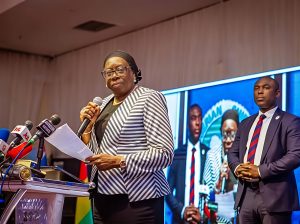 The annual International Maritime Seminar for Judges has continued to serve as one of Nigeria’s foremost platforms for strengthening judicial capacity in maritime law, fostering collaboration between the Bench and the maritime industry, and aligning the country’s legal framework with international standards to support the growth of the marine and blue economy.







Ododo seeks Apostolic Church’s prayers for Kogi’s peace, prosperity

Gov Ododo approves reconstruction of 50-year-old Amuro Community Secondary School

31 years of waiting: MWUN seeks payment of NNSL Seafarers’ entitlements before it’s too late
-

 Crime2 years ago
Imo police confirm arrest of journalist, ‘Nonsonkwa’ over alleged Cyberstalking, Incitement
-
 Education7 months ago
Anambra leads South-east in education allocation ratio, as Imo ranks lowest
-
 News6 years ago
Orthodox Anglican Church, not Same as Church of Nigeria- Bishop
-

 Business6 years ago
Pay-As-You-Go not applicable to pay TV – FCCPC
-

 Agriculture4 years ago
Environment Day: Foundation partners, FCMB, Chevron, harps on collective efforts on earth protection
-

 Crime3 years ago
Pastor allegedly kills female member, prevents 20 year old daughter from attending burial