
Education
Library Services remain foundation of quality education despite AI advancement – Ichie Nwabueze
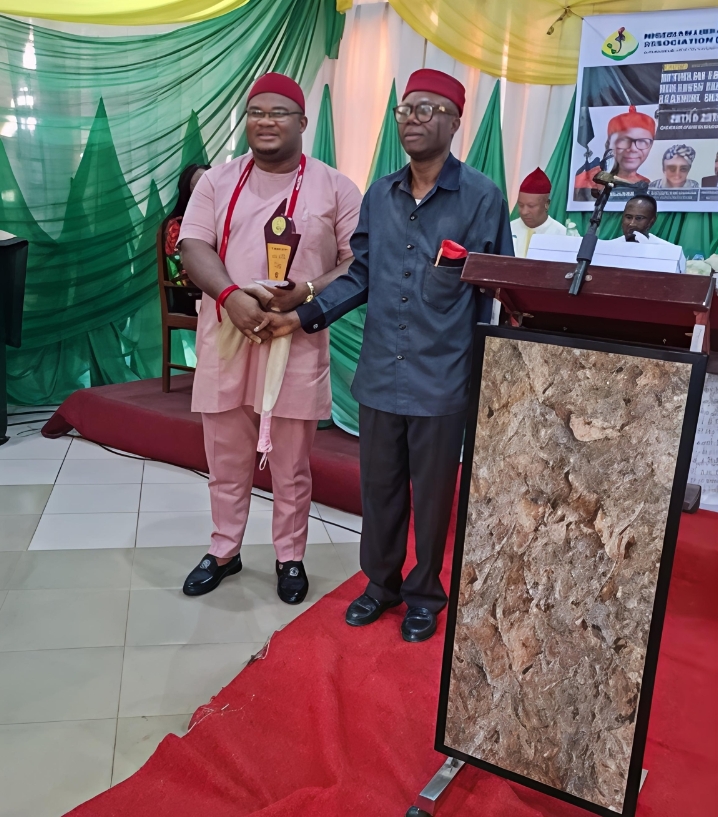
…Bags Humanitarian Service, Education Support Award
By Ezurike Ugochukwu
Sir Dr Izuchukwu Nwabueze, Ichie Chinemeze n’Ukpo, has emphasised that despite the rapid advancement of artificial intelligence (AI) and internet-based learning, reading books and effective library services remain fundamental to acquiring qualitative and well-grounded education.
Nwabueze, who stated this while reflecting on the evolving role of libraries in contemporary education, maintained that technological innovations should complement rather than replace traditional reading culture and the institutional value of libraries in knowledge acquisition.
He argued that libraries remain the foundation of teaching, learning, research and intellectual development, stressing that access to credible information, relevant reading materials and professional library services is indispensable to building a sound educational system.
According to him, the growing influence of artificial intelligence and digital learning platforms makes it even more important to strengthen libraries and equip librarians with the knowledge, skills and technological resources required to meet emerging educational demands.
Nwabueze made the remarks following his conferment with the Humanitarian Service and Education Support Award by the Nigeria Library Association (NLA), Anambra State Chapter, in recognition of his contributions to humanitarian service and educational development.
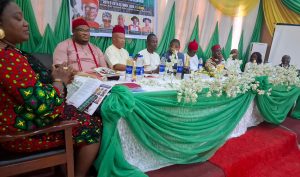
The award was presented at the association’s Annual Conference and Annual General Meeting held on Wednesday, October 28, 2026, at the Prof. Kenneth Dike Central E-Library Hall, Awka, Anambra State.
The conference, which brought together librarians, academics, education stakeholders and other distinguished personalities, was organised around the theme, “Retooling Libraries and Librarians for Enhanced Services, Including Teaching, Learning, Research and Development.”
The keynote address was delivered by Prof. Okee Okoro, who examined the changing responsibilities of libraries and librarians in a rapidly evolving, knowledge-driven society.
The event was chaired by Engr. Barr. Ndubuisi Nwokporo, while the Governor of Anambra State, Prof. Chukwuma Charles Soludo, CFR, who was the Special Guest of Honour, was represented by the Commissioner for Information and Value Reorientation, Dr Law Mefor.
The Royal Father of the Day was His Royal Highness, Igwe P. Ezeamama, Onyia Dike II of Enugu-Umuonyia, Orumba South Local Government Area.

Nwabueze was among distinguished personalities honoured at the conference for their contributions to humanitarian service, educational advancement and societal development.
Other award recipients included Engr. Barr. Ndubuisi Nwokporo, a lawyer and trained engineer; Ven. Prof. Obiora Nwosu, Vice-Chancellor of Paul University, Awka; Dr Adolphus Ugwuanyi, member of the Governing Council of the Federal College of Education (Technical), Umunze; and Barr. Christopher Onebunne, a distinguished librarian and former Director of the Anambra State Library Board.
Others were Barr. Felix Oduah, Chairman of the Academic Staff Union of Polytechnics and Dean, School of Information Technology, Federal Polytechnic, Oko; and Ven. Dr Tony Okeke, Head of the Anglican Praying Association and Principal/Administrator of Amichi Diocesan School of Theology, Mission and Evangelicalism.
Describing the recognition as an encouragement to sustain his commitment to humanitarian service and educational development, Nwabueze noted that education remained a critical instrument for sustainable community and national development.

He also acknowledged the important role of private individuals, community leaders and organisations in complementing government efforts towards expanding educational opportunities, promoting human development and building an enlightened society.
He commended the Chairperson of the NLA Anambra State Chapter, Dr Ndidi Grace Nwankwo, and other organisers for selecting a theme that addressed the realities and challenges confronting libraries in the digital age.
He stressed that repositioning libraries required deliberate investment in modern facilities, relevant books and learning materials, digital infrastructure and continuous professional development for librarians.
According to him, libraries should no longer be viewed merely as repositories of books but as active centres of teaching, learning, research, innovation and intellectual engagement.
He therefore called on governments at all levels and their relevant agencies to intensify efforts towards revitalising public and institutional libraries to make them more responsive to the needs of students, researchers, teachers and the wider society.
The conference similarly underscored the need for stronger collaboration among government, professional associations, educational institutions and private-sector stakeholders to improve library services and strengthen the country’s knowledge infrastructure.
Nwabueze maintained that the future of education would depend not only on access to emerging technologies but also on the ability of society to preserve reading culture, strengthen library institutions and ensure that learners acquire the knowledge and critical thinking skills required to thrive in an increasingly complex world.
















-

 Crime2 years ago
Imo police confirm arrest of journalist, ‘Nonsonkwa’ over alleged Cyberstalking, Incitement
-
 Business1 year ago
Kirikiri Lighter Terminal Customs achieves 63% revenue growth in first half of 2025, generates ₦89.2b
-

 Business1 year ago
Nigerians can now independently verify vehicle duty payment status online with ₦15,000
-

 Business3 years ago
Floating Naira: Imminent drawback to revenue as Customs Duty Exchange Rate rises again to ₦783.174
-

 Crime6 years ago
EFCC: “Why Magu’s confirmation was turned down by Senate”
-
 Education8 months ago
Anambra leads South-east in education allocation ratio, as Imo ranks lowest