Stakeholders at the Mirror Newspaper Conference and Excellence Awards for Heroes of Our Time have called on Nigerians to urgently rethink their dietary habits, warning that excessive salt and sugar consumption is fuelling a growing public health crisis.
The event, held at the Lagos Chamber of Commerce and Industry (LCCI), Alausa, Ikeja, brought together health experts, policymakers and community leaders under the theme: “X-raying the Salt: Safeguarding National Health.”
 Chairman of the occasion Asiwaju Kunle Kalejaye, a Senior Advocate of Nigeria(SAN), urged Nigerians to take personal responsibility for their health by adopting healthier eating habits.
He advised a reduction in the consumption of salt, sugary foods and processed drinks, while encouraging increased water intake and a shift away from canned beverages.

“People must take responsibility for what they eat and drink. Reduce salt and sugary foods, take more water, and de-emphasise canned juices and drinks,” Kalejaye said, stressing that maintaining healthy habits becomes even more critical with age.
He also commended The Mirror Newspaper for its credibility and growing influence, describing it as “an embodiment of integrity,” while calling for continued commitment to justice and fairness in national life.
Earlier, keynote speaker and Executive Director of Corporate Accountability and Public Participation Africa, Akinbode Oluwafemi, warned that excessive salt consumption has become a “silent driver” of non-communicable diseases in Nigeria.

Martins
Represented by Ogunlade Olamide Martins, Associate Director at CAPPAA, who revealed that Nigerians consume an average of 10 grams of salt daily—double the less than 5 grams recommended by the World Health Organization—thereby increasing the risk of hypertension and other life-threatening conditions.
He noted that hypertension currently affects between 30 and 40 percent of Nigerian adults and is closely linked to heart disease, stroke and kidney failure.
“Many sudden deaths we often attribute to mysterious causes are actually linked to undiagnosed or poorly managed non-communicable diseases driven by what we consume daily,” Oluwafemi said.

He identified factors such as insecurity in farming communities, high transportation costs, rising food prices and dependence on processed foods as key drivers of unhealthy dietary patterns.
Oluwafemi further highlighted that commonly consumed items like bouillon cubes contain high sodium levels, contributing significantly to excessive salt intake nationwide.
Despite the challenges, he acknowledged ongoing government initiatives, including proposed mandatory salt reduction targets and front-of-pack warning labels aimed at cutting national salt consumption by 30 percent.

The Rev’d Stanley Ihedigbo
In his remarks, Editor-in-Chief of The Mirror Newspaper, Rev. Stanley Ihedigbo, urged Nigerians to take health advisories seriously, noting that the conference was designed to spark awareness and action.
He added that the “Heroes of Our Time” awards recognise individuals whose contributions, though often unnoticed, have had lasting impact on society.
“We gather to honour men and women whose sacrifices, though sometimes quiet, have left indelible marks on our communities and national development,” he said.
According to him, the awards celebrate a broad spectrum of contributors, including farmers, factory workers, journalists and other grassroots actors.

Delivering a goodwill message, the Grand Chief Imam of Oyoland, Shaykh Billal Akinola Husayn Akeugberu, called for a return to values that promote both physical and spiritual wellbeing.
He encouraged Nigerians to embrace healthy living practices rooted in moral and religious teachings, while offering prayers for good health and longevity.
Participants at the conference emphasised the need for sustained collaboration among government, industry players, civil society organisations and the media to effectively tackle Nigeria’s growing burden of diet-related diseases.
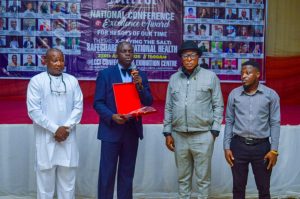 The event climaxed with the presentation of awards to deserving individuals and organisations, reinforcing the dual focus of the conference on public health advocacy and recognition of outstanding contributions to national development.

Some of the guests at the Mirror Newspaper Conference











 Crime2 years ago
 Education7 months ago
 News6 years ago
 Business6 years ago
 Agriculture4 years ago
 Crime3 years ago