
Business
From Bonny to the world: How NSML is building Nigeria’s maritime future
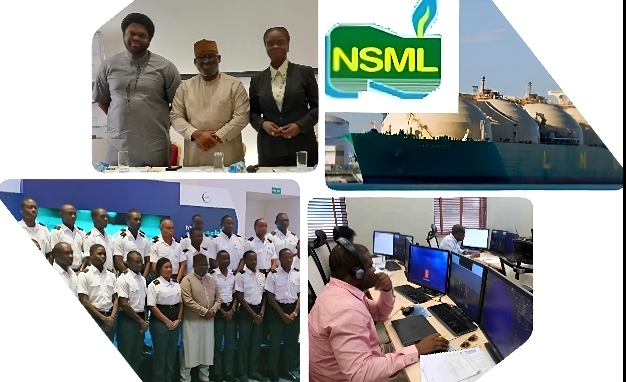
…Charts new course for Nigerian seafarers
By Ezurike Ugochukwu
For decades, one of the biggest challenges confronting Nigeria’s maritime sector has not been a lack of ambition, but a shortage of internationally recognised training opportunities capable of producing globally competitive seafarers and maritime professionals.
Despite being Africa’s largest economy, a major oil and gas producer, and a country with more than 850 kilometres of coastline, Nigeria has often depended on foreign institutions to provide specialised maritime training and certification for its workforce.

Reality may be changing
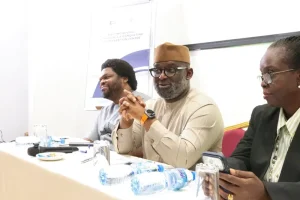
L-R: Dr. Effiong Ekanem-Attah, Manager, MCOE Bonny; Abdulkadir Ahmed, Managing Director of NSML and Anne-Marie Palmer-Ikuku, Manager Corporate Communications and Public Affairs, NLNG, at NSML media event in Lagos
At a press conference in Lagos, NLNG Ship Management Limited (NSML) announced that its Maritime Centre of Excellence (MCOE) in Bonny, Rivers State, has secured certification from the UK Nautical Institute, one of the world’s most respected maritime professional bodies.
The development is more than another corporate achievement. Industry stakeholders believe it represents a significant step in Nigeria’s quest to build local maritime capacity, improve the employability of Nigerian seafarers and strengthen the country’s position in the global shipping industry.
Maritime Centre Built for Global Standards
Established by NSML, a wholly-owned subsidiary of Nigeria LNG Limited (NLNG), the Maritime Centre of Excellence was conceived as a one-stop hub for maritime training, research and competence development serving Nigeria, West Africa and the wider global maritime community.
 Located on Bonny Island, the facility houses modern maritime simulators and advanced training infrastructure designed to replicate real-life vessel operations and offshore environments.
Speaking at the event, NSML Managing Director and Chief Executive Officer, Abdulkadir Ahmed, described the latest accreditation as a validation of years of investment in quality, infrastructure and human capital development.
According to him, the certification confirms that the training delivered at the Centre meets internationally accepted standards for competence development and operational excellence.
“This achievement is particularly significant for Nigeria because it demonstrates that world-class maritime training can be delivered here at home while meeting global expectations,” he said.
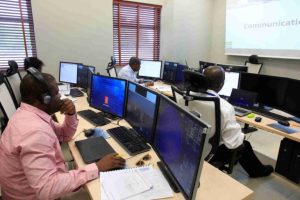 The UK Nautical Institute accreditation authorises the MCOE to deliver key Dynamic Positioning (DP) programmes, including induction, simulator, revalidation and vessel maintenance courses.
Dynamic Positioning systems are critical in modern offshore operations, enabling vessels to maintain precise positions automatically without anchors. Professionals trained in this field are among the most sought-after personnel in the offshore oil and gas and maritime industries.
Today, the MCOE stands among a select number of institutions in West Africa with this level of Nautical Institute accreditation, placing Nigeria firmly on the map of globally recognised maritime training providers.
Building on Existing International Recognition
 The latest certification is not the Centre’s first international endorsement.
The MCOE already holds accreditation from DNV under globally recognised standards, including ISO 9001:2015 for Quality Management Systems and DNV-ST-0029 standards covering Maritime Simulator and Maritime Training Centres.
In addition, the facility delivers several specialised programmes accredited by the UK Maritime and Coastguard Agency (MCA), widely regarded as one of the world’s foremost maritime regulatory authorities.
These include training in Gas Tanker Operations, Dynamic Positioning, Human Element Leadership and Management, Electronic Chart Display and Information Systems (ECDIS), and High Voltage Training at both operational and management levels.
For industry observers, the growing list of international certifications reflects an increasingly important shift in Nigeria’s maritime development strategy: creating globally recognised competence locally rather than exporting talent for training abroad.
Why Capacity Matters
Beyond the certification itself lies a broader conversation about competitiveness.
 Ahmed argued that nationality matters less in international shipping than competence and performance.
“If you can compete and operate to international standards, then who you are and where you come from would not matter,” he told journalists.
According to him, organisations operating in global industries must continually prove their value by meeting international benchmarks.
“We are being evaluated and judged based on international standards. If we don’t deliver, then what value do we bring to the table?” he asked.
His message underscored a reality well understood across global shipping: maritime employers hire based on competence, safety records and internationally recognised qualifications.
The implication for Nigeria is clear. Building a globally competitive maritime workforce begins with investing in the institutions capable of producing one.
“You cannot do what you do not know how to do,” Ahmed noted.
That philosophy has become central to NSML’s strategy of developing local maritime expertise capable of competing on the world stage.
Creating a Pipeline of Nigerian Seafarers
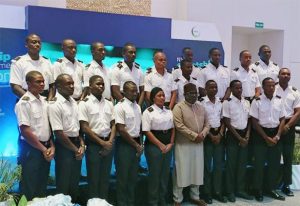
Perhaps the most visible expression of that strategy is the Seafarers Continuous Development Programme (SCDP), one of the Centre’s flagship initiatives.
According to Dr. Effiong Ekanem-Attah, Manager of the Maritime Centre of Excellence, the programme provides cadets with sea-time experience, professional mentoring and support toward obtaining the internationally recognised Certificate of Competency required to sail globally.
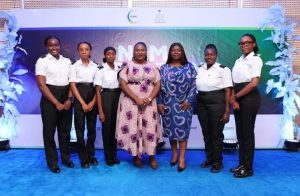 To date, 225 cadets have completed sea-time training through the programme, while another 54 are either in maritime colleges or currently onboard vessels working towards their certification.
The initiative is implemented in partnership with organisations such as the Nigerian Maritime Administration and Safety Agency (NIMASA) and the Maritime Academy of Nigeria, Oron.
More importantly, it addresses one of the most persistent challenges facing young Nigerian cadets: the transition from classroom learning to practical sea experience.
Industry experts frequently identify the shortage of sea-time opportunities as a major obstacle preventing many graduates from obtaining their professional certifications.
By bridging that gap, the programme is helping to develop a new generation of Nigerian seafarers capable of serving both local and international fleets.
It also supports NSML’s objective of maintaining an 85 per cent Nigerian workforce onboard vessels under its management.
Beyond Training
The Maritime Centre of Excellence is not solely a training institution.
 The Centre has increasingly expanded into maritime research, consultancy and technical support services.
Its activities now include shipbuilding supervision, dry-docking oversight, commercial evaluations for maritime projects and broader maritime intelligence services.
According to Ekanem-Attah, the Centre has established a track record as a reliable partner throughout the vessel lifecycle—from keel laying and construction to delivery, management and crewing.
This diversification reflects a growing recognition that maritime development requires more than training alone. It demands an ecosystem that includes technical expertise, research capability, vessel management capacity and institutional knowledge.
Maritime leeway for Nigeria
The significance of the MCOE’s achievement extends beyond NSML and even beyond the maritime industry itself.
Nigeria has increasingly identified the blue economy as a major pillar for future economic growth. The sector encompasses shipping, fisheries, ports, offshore energy, marine services and maritime logistics.
Globally, countries such as India and the Philippines have built thriving maritime labour industries that generate substantial foreign exchange earnings through the export of skilled seafarers.
During the press conference, speakers repeatedly referenced India’s success in producing large numbers of globally employable maritime professionals.
The challenge posed was straightforward: if India can become a global supplier of maritime manpower, why can’t Nigeria do the same for Africa?
“What we need is the same capacity that they have,” the event’s moderator observed, suggesting that the Maritime Centre of Excellence could provide the foundation for Nigeria to emerge as a leading supplier of maritime talent on the continent.
The comparison is ambitious but not unrealistic.
With its large population, strategic coastal location, expanding offshore sector and growing maritime infrastructure, Nigeria possesses many of the ingredients required to become a significant maritime manpower hub.
What has often been missing is the institutional framework to develop internationally certified professionals at scale.
The Road Ahead
 NSML is already planning the next phase of growth.
With support from the Nigerian Content Development and Monitoring Board (NCDMB), the Centre has commenced steps toward a major expansion project aimed at increasing training capacity, broadening course offerings and accommodating more participants.
For Ahmed, however, the goal extends beyond obtaining certificates and accreditations.
The broader objective is to create a maritime institution that commands respect not only within Nigeria but across the international maritime community.
“This achievement challenges us to continue raising standards, deepening innovation and maintaining global best practices in everything we do,” he said.
That challenge may ultimately define the significance of the latest accreditation.
 In an industry where competence is currency and global standards determine access to opportunity, the certification earned by NSML’s Maritime Centre of Excellence sends a powerful message: Nigeria’s maritime future will not be built merely by owning ships or expanding ports, but by investing in the people who operate them.
And from Bonny Island, a new generation of Nigerian maritime professionals may be preparing to sail that future.






Seme–Krake: Nigeria, Benin Customs begin push for seamless border trade
AMJON Conference: NIMASA, Customs, NPA, NSML push innovation, digital skills for future-ready maritime sector

Customs: Discipline, character critical as 2025 recruitment screening enters final phase
-

 Crime2 years ago
Imo police confirm arrest of journalist, ‘Nonsonkwa’ over alleged Cyberstalking, Incitement
-
 Education7 months ago
Anambra leads South-east in education allocation ratio, as Imo ranks lowest
-
 News6 years ago
Orthodox Anglican Church, not Same as Church of Nigeria- Bishop
-

 Business6 years ago
Pay-As-You-Go not applicable to pay TV – FCCPC
-

 Agriculture4 years ago
Environment Day: Foundation partners, FCMB, Chevron, harps on collective efforts on earth protection
-

 Crime3 years ago
Pastor allegedly kills female member, prevents 20 year old daughter from attending burial