
Uncategorized
Akutah: NPERA must become financially strong, technology-driven port regulator
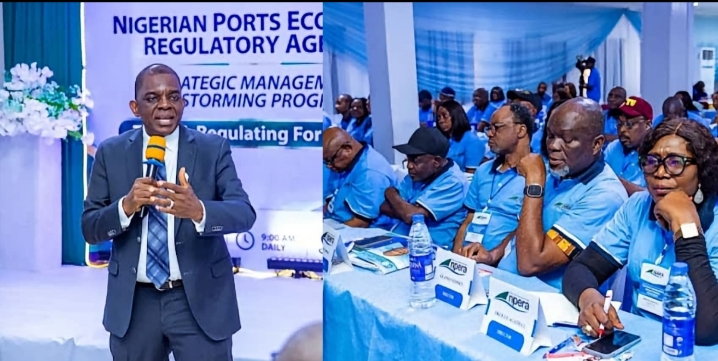
The Director-General and Chief Executive Officer of the Nigerian Ports Economic Regulatory Agency (NPERA), Dr. Pius Akutah, MON, has said the Agency must build strong financial capacity, embrace technology and improve operational efficiency to deliver effective regulation of Nigeria’s port sector.
Akutah, who gave the charge at a Strategic Management Brainstorming Programme in Lagos, themed “Regulating for Growth”, urged management staff to provide the strategic leadership required to reposition the Agency and establish it as a credible, competitive and financially sustainable port economic regulator.
He said the transition from the Nigerian Shippers’ Council (NSC) to NPERA, following the signing of the NPERA Act into law, had ushered in a new phase of institutional responsibility that required deliberate planning, stronger internal structures and a collective commitment to effective regulation.
“The law has come to pass, it has been signed. We have entered NPERA. Effective regulation needs us to do a lot. The transition has started,” he said.
The DG/CEO stressed that financial sustainability would be fundamental to the Agency’s ability to discharge its new mandate, drive reforms, deploy modern technology and maintain effective oversight of the nation’s port industry.
“Without financial sustainability, the Agency cannot drive reforms, deploy technology or sustain effective regulation of the nation’s port sector,” he said.

He therefore challenged management staff to develop practical strategies for revenue generation, operational efficiency and value creation, noting that the Agency’s long-term effectiveness would depend on its ability to build a sound financial and operational foundation.
Akutah said the brainstorming programme was organised to examine the provisions of the new law, identify strategic priorities and determine the institutional arrangements required to give effect to NPERA’s expanded regulatory mandate.
“We are looking at the legal framework, the institutional framework, and even the organogram. The relationship between the Board, Management and Staff, and also what we need to do to bring stakeholders to the realisation that we have come to a new era,” he said.
He explained that the exercise would help determine the structures, systems and experiences of the former Council that should be retained, strengthened or adapted to meet the demands of the new regulatory framework.
According to him, the discussions would also clarify the roles and responsibilities of the Board, management, staff and other stakeholders, describing the programme as part of the ongoing work of the Transition Implementation Committee.
The NPERA chief executive emphasised that the transition must not be treated as a mere change of institutional name but as a fundamental transformation in the Agency’s mandate, capacity and approach to port economic regulation.

He further urged management to ensure continuity in service delivery while building an institution that is transparent, operationally driven, technologically enabled and capable of responding to the changing demands of the maritime industry.
Akutah also highlighted the importance of succession planning, saying a clearly defined framework was necessary to preserve institutional knowledge, sustain reforms and guarantee continuity beyond the tenure of the present leadership.
On the high cost of doing business at Nigerian ports, he said the NPERA Act was designed to address persistent concerns about service failures, inefficiencies and inadequate competitiveness in the sector.
He maintained that the new legislation had equipped the Agency with the legal authority to confront these challenges, adding that internal activities were already underway to prepare the institution for the full implementation of its regulatory responsibilities.
Akutah assured stakeholders that they would be carried along in the transition and implementation process, stressing that the success of the new regulatory framework would require cooperation among government institutions, port operators, service providers and other industry players.
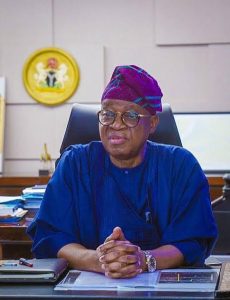
Gboyega
He recalled that the Minister of Marine and Blue Economy, Dr. Adegboyega Oyetola, CON, had unveiled the NPERA Act and the Agency’s logo, while the Ministry and NPERA had established separate Transition Implementation Committees to facilitate an orderly transition.
The DG/CEO reiterated that the Agency must distinguish itself through measurable performance in the discharge of its statutory responsibilities, particularly in promoting efficiency, encouraging competition and improving service delivery across the nation’s port system.
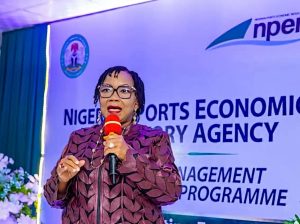
The Strategic Management Brainstorming Programme forms part of NPERA’s efforts to establish its institutional direction and develop the financial, administrative and technological capacity required to function as a modern port economic regulator.












Bunu-led MWUN NEC commends industrial harmony, pushes for maritime sector reforms

Nwala leads Cross River Customs representation at Shettima’s visit to Calabar

Akutah: NPERA must become financially strong, technology-driven port regulator

-

 Crime2 years ago
Imo police confirm arrest of journalist, ‘Nonsonkwa’ over alleged Cyberstalking, Incitement
-

 Business1 year ago
Kirikiri Lighter Terminal Customs achieves 63% revenue growth in first half of 2025, generates ₦89.2b
-
 Business1 year ago
Nigerians can now independently verify vehicle duty payment status online with ₦15,000
-

 Business3 years ago
Floating Naira: Imminent drawback to revenue as Customs Duty Exchange Rate rises again to ₦783.174
-

 Crime6 years ago
EFCC: “Why Magu’s confirmation was turned down by Senate”
-

 Crime4 months ago
Smuggling: Customs FOU ‘A’ intercepts 220 consignments, recovers ₦729m