
Crime
NPA: NAGAFF defends Dantsoho, cites rising cargo, vessel traffic, port reforms
By Ezurike Ugochukwu
The National Association of Government Approved Freight Forwarders (NAGAFF) has rejected calls for the removal of the Managing Director of the Nigerian Ports Authority (NPA), Dr Abubakar Dantsoho, arguing that the Authority’s ongoing reforms and emerging performance gains deserve time and institutional stability to deliver lasting results.
The association’s position comes amid renewed criticism of the NPA management by the Coalition of Maritime and Energy Consultants in Nigeria, which has asked President Bola Tinubu to replace Dantsoho over alleged governance lapses, procurement concerns and persistent operational challenges at the nation’s ports.
However, NAGAFF, in a statement signed by its Secretary-General, Godfrey Nwosu, passed a vote of confidence in Dantsoho and the current management, describing the removal demand as misleading and potentially disruptive to reforms already underway.
“We consider the demand not only misleading but also a deliberate attempt to undermine the ongoing reforms and remarkable progress being recorded within the nation’s port system under Dr Dantsoho’s leadership,” the association said.
NAGAFF maintained that the NPA management had demonstrated commitment to port infrastructure renewal, digital transformation, investment attraction and operational efficiency, insisting that the Authority should be allowed to consolidate the gains rather than be distracted by calls for leadership change.
Cargo, vessel traffic record growth
Among the performance indicators supporting its position is the reported increase in cargo throughput and vessel traffic across Nigerian ports.
NPA figures show that cargo throughput rose from 103.6 million metric tonnes in 2024 to 129.3 million metric tonnes in 2025, representing a 24.8 per cent increase.
The growth continued in the first half of 2026, when cargo throughput reached 68.2 million metric tonnes, compared with 60.8 million metric tonnes in the corresponding period of 2025, an increase of 12.2 per cent.
Vessel traffic also recorded an improvement, with 2,300 ships calling at Nigerian ports in the first half of 2026, against 2,152 vessels in the same period of the previous year.
While these figures indicate increased activity across the port system, they do not, on their own, resolve concerns about cargo dwell time, clearance efficiency, port charges and the cost of doing business. They nevertheless provide important indicators for assessing the Authority’s performance alongside operational and service-delivery measures.
Port Modernisation, Expansion & Digitalisation
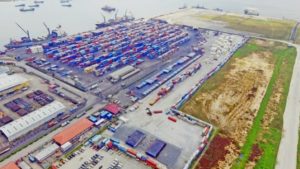
NAGAFF also cited the port modernisation and rehabilitation programme covering Apapa, Tin Can Island, Rivers, Onne, Warri and Calabar ports as a major achievement of the current management.
The association said more than $1 billion had been earmarked for reconstruction and infrastructure renewal, describing the programme as one of the most comprehensive port rehabilitation efforts in decades.
It also highlighted proposed port expansion projects, including Snake Island Port, Badagry Deep Seaport and Ondo Deep Seaport, which are expected to expand cargo-handling capacity and strengthen Nigeria’s position in regional and international trade.
On digitalisation, NAGAFF pointed to Nigeria’s integration into the International Port Community System Association (IPCSA), describing it as an important step towards implementing the National Single Window project.
The initiative is expected to improve information exchange among agencies and port operators, reduce bureaucratic bottlenecks, promote transparency and accelerate cargo clearance.
The association further identified improvements in port automation and digital processes, as well as stronger engagement among government agencies, terminal operators, freight forwarders, shipping companies and investors.
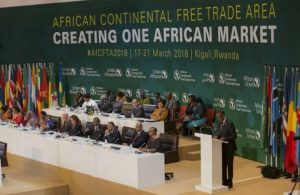
It said these measures would help position Nigerian ports to support the African Continental Free Trade Area (AfCFTA) and the Federal Government’s blue economy objectives.
NPA, NPERA Transition Requires Coordination
Another important consideration in assessing the NPA’s performance is the changing institutional framework governing the maritime sector, particularly the establishment of the Nigerian Ports Economic Regulatory Agency (NPERA), formerly the Nigerian Shippers’ Council.
The transition has brought a more distinct regulatory framework to the sector, with implications for the responsibilities and working relationships of institutions involved in port administration, economic regulation and service delivery.
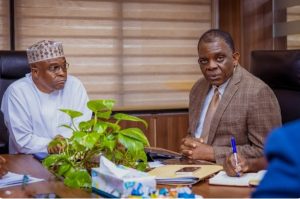
Dr Dantosho NPA Managing Director and Dr Pius Akutah, NPERA Managing Director
As NPERA assumes its statutory regulatory responsibilities, the relationship between the agency, the NPA, terminal operators and other port stakeholders requires effective coordination, clear delineation of functions and consistent implementation of the new framework.
The institutional transition is therefore another reason to allow the system sufficient time to stabilise, without weakening the need for transparency, accountability and measurable performance from all relevant agencies.
For the NPA, the challenge is to concentrate on its responsibilities as port authority and infrastructure manager while maintaining productive working relationships with the regulator and other stakeholders.
Removal Demands and Unresolved Concerns
The Coalition of Maritime and Energy Consultants in Nigeria, in its statement signed by spokesperson Engr. Danjuma Yakubu, urged President Tinubu to appoint what it described as a more competent, transparent and result-oriented maritime professional to head the NPA.
The coalition raised concerns about alleged administrative shortcomings, procurement controversies and accountability issues within the Authority.
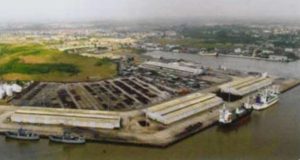
Warr Escravos Channel
It specifically questioned the reported $25 million emergency dredging contract for the Warri–Escravos channel, asking whether the emergency justification and procurement process complied with applicable public procurement requirements.
The group also called for independent scrutiny of multi-billion-naira budget allocations for dredging, consultancy, environmental sanitation, conferences and other administrative expenditure.
On port concessions, it alleged that some terminal operators might still be operating under expired agreements and called for terminal-by-terminal performance audits.
The coalition further cited congestion, high port charges, slow cargo clearance and infrastructure deficits. It claimed that cargo dwell time at Apapa and Tin Can Island ports ranged between 18 and 21 days, compared with what it described as a global benchmark of about four days which the NPA management should have the opportunity to respond to the specific issues raised.
NAGAFF: Structural Problems Predate Current Management
NAGAFF in its response to the criticisms argued that many of the challenges confronting Nigerian ports are longstanding structural problems that cannot reasonably be expected to disappear within a short period.
It said infrastructure deficits, congestion and logistics bottlenecks had accumulated over several years and would require sustained investment, coordinated policy implementation and consistent management attention.
“To expect the current Managing Director to completely eliminate decades of accumulated structural deficiencies within a short period is not only unrealistic but intellectually dishonest,” the association stated.
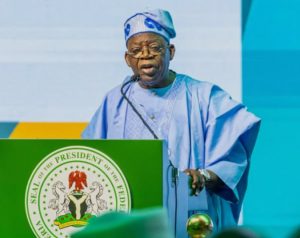
President Tinubu
NAGAFF urged President Tinubu to disregard what it described as distractions from anonymous groups and continue supporting public officials delivering on the administration’s reform agenda.
It argued that the maritime sector needed continuity, stability and constructive engagement rather than leadership disruptions especially with the creation of the separate ministry of Marine and Blue Economy rather than being driven by allegations that had not been independently established.
“The true measure of leadership is performance, and by every objective assessment, Dr Abubakar Dantsoho has shown himself to be a visionary maritime administrator whose tenure is already producing visible results,” the association added.
The Task Ahead
Beyond the defence of the NPA management, the debate over Dantsoho’s leadership highlights the need to assess the Authority against clear performance targets.
Rising cargo throughput and vessel traffic, ongoing infrastructure projects, port expansion plans and digitalisation initiatives are significant developments as well as lower logistics costs, improved infrastructure, more efficient port operations and a better experience for port users.
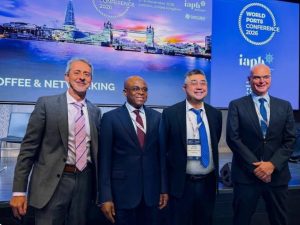
For Dantsoho, the immediate task is to consolidate the reforms, show measurable improvements in service delivery and strengthen collaboration with NPERA and other institutions in the port ecosystem.
While the calls for accountability should not be dismissed, the argument for continuity is that a reform programme involving major infrastructure investments, digital systems and institutional adjustments requires adequate time to deliver sustainable results.
Ultimately, Dantsoho’s tenure will be judged not only by the growth figures and projects announced, but by the extent to which the reforms will produce more competitive, efficient and cost-effective Nigerian ports.













-
 Business1 year ago
Kirikiri Lighter Terminal Customs achieves 63% revenue growth in first half of 2025, generates ₦89.2b
-

 Crime2 years ago
Imo police confirm arrest of journalist, ‘Nonsonkwa’ over alleged Cyberstalking, Incitement
-
 Business1 year ago
Nigerians can now independently verify vehicle duty payment status online with ₦15,000
-
 Business3 years ago
Floating Naira: Imminent drawback to revenue as Customs Duty Exchange Rate rises again to ₦783.174
-

 Crime6 years ago
EFCC: “Why Magu’s confirmation was turned down by Senate”
-

 Crime4 months ago
Smuggling: Customs FOU ‘A’ intercepts 220 consignments, recovers ₦729m