
Business
NIWA reveals ballast water link to Nigeria’s water hyacinth menace, commences waterways clean-up
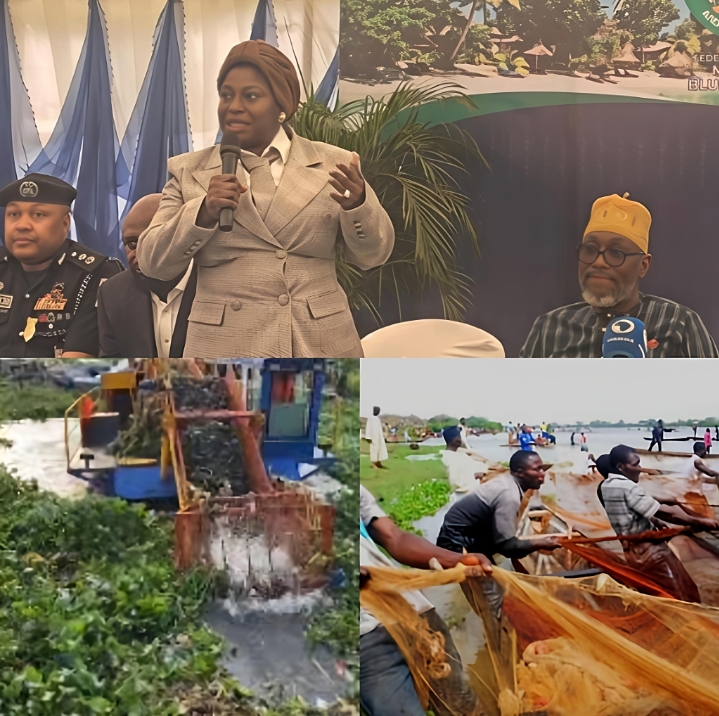
…As fishermen propose periodic environmental sanitation on waterways
By Ezurike Ugochukwu
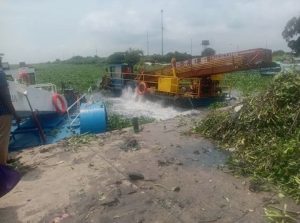
The National Inland Waterways Authority (NIWA) has revealed how the discharge of ship ballast water contributed to the emergence of water hyacinth in Nigeria, as the authority commenced a fresh waterways clean-up drive aimed at tackling pollution and restoring the nation’s inland waterways to safer and more navigable conditions.
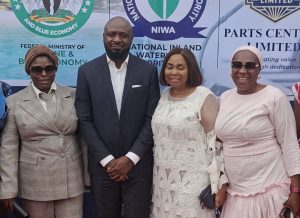
NIWA Lagos Area Manager, Engr. Sarat Braimah, made the disclosure in Lagos on Tuesday, August 18, 2026, during the launch of the clean-up initiative being implemented in partnership with indigenous firm, Parts Central Limited.

Braimah said water hyacinth was not historically a feature of Nigeria’s waterways but emerged following the transfer of aquatic organisms through international shipping.
“Nigeria did not have water hyacinth in the last 20 years; there was nothing like water hyacinth. But because of our carelessness and non-regulated monitoring, we have a serious problem of water hyacinth in Nigeria today,” she said.
According to her, a ship that entered the country through Cotonou brought ballast water containing aquatic organisms into Nigerian waters.
She explained that ballast water is used by ships to maintain stability and safety during voyages but is required under international regulations to be properly treated before discharge to prevent the transfer of potentially harmful organisms from one marine environment to another.
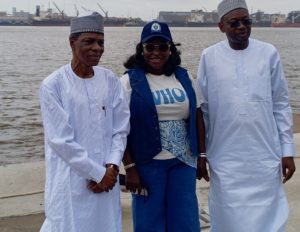
Braimah said the introduction of invasive species through shipping demonstrated the need for stronger monitoring and enforcement of environmental and maritime regulations.
The water hyacinth menace has become a major challenge to navigation and aquatic livelihoods in several parts of the country, with dense growth capable of obstructing waterways, affecting fishing activities and disrupting aquatic ecosystems.
NIWA launches clean-up drive
The ballast-water revelation came as NIWA formally launched its partnership with Parts Central to tackle the growing volume of plastic bottles, human waste, refuse, debris and other pollutants dumped into Nigeria’s waterways.
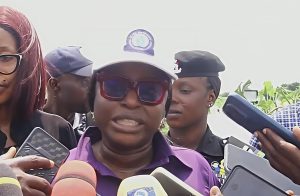
Braimah said the initiative would begin in Lagos before being extended to other parts of the country, stressing that Lagos was a strategic starting point because of its extensive waterways and the importance of water transport to the state’s economy.
“We have to make sure that the waterways are clean first. If the water is clean, navigation will be easy; if it is clean, it will create jobs,” she said.
She disclosed that the partnership would operate under a long-term arrangement, with NIWA providing regulatory oversight while Parts Central deploys private-sector technology and waste-management systems to waterfronts, landing points and jetties.
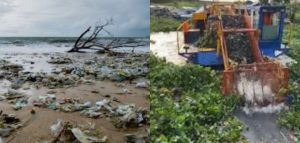
She particularly warned waterfront owners, dredgers and boat operators against indiscriminate dumping and the discharge of sewage and wastewater into waterways.
“We are not making the blue to be blue here. Don’t dump your plastic waste; dispose of it properly,” Braimah said.

Onifade
The Managing Director of Parts Central Limited, Hon. Henry Olaoluwa Onifade, said the company would introduce designated waste-collection systems at waterfronts and jetties.
According to him, approved waste bins would be provided for boats and watercraft, while designated “mother bins” would be installed at jetties to facilitate the collection, transfer and recycling of waste.
Fishermen seek waterways sanitation
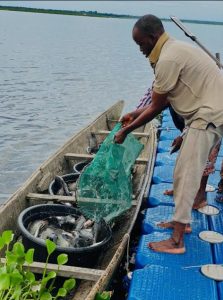
Against the backdrop of the pollution challenge, the President of the Lagos State Fishermen Association, Comrade Ayodegbon Samuel Sunday, proposed the introduction of periodic environmental sanitation exercises on the waterways.
Sunday said the exercise could be modelled after environmental sanitation activities previously conducted on land, with fishermen and riverine communities playing leading roles.
“We can introduce it to the waterways and let the fishermen be at the forefront. There is no riverine community in Lagos and outside Lagos where we don’t have fishermen,” he said.
He added that fishermen were prepared to use their boats to assist in removing plastics, broken wood and other debris from the waterways, provided an appropriate framework was established by NIWA and Parts Central.
The fishermen’s leader also called for direct channels through which users could report blockages, oil spillages and other hazards on the waterways.
Stakeholders back initiative
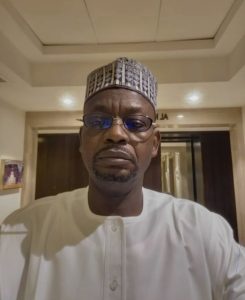
Acting Managing Director of NIWA, Yusuf Girei, urged stakeholders to support the clean-up operation, stop indiscriminate dumping and promote recycling.
“As we launch this today, I call on all stakeholders to support Part Central in the execution of clean-up operations, let us stop indiscriminate dumping, encourage recycling and protect our waterways for future generations,” he said.
Girei said clean and safe waterways were essential to unlocking the economic potential of Nigeria’s inland waterways and advancing the Federal Government’s blue economy agenda.
The General Manager of the Lagos State Waterways Authority (LASWA), Dr. Oluwadamilola Emmanuel, represented by Ibrahim Oladayo, described the clean-up as a collective responsibility.
He said most waste found in waterways originated from human activities on land and eventually entered rivers and lagoons through drainage channels.
“If I, as a person, drop plastic on the waterways, fishes in the oceans will consume them,” Emmanuel said, warning that the consequences of pollution could eventually return to humans through the food chain.
The Lagos State Commissioner for Waterfront Infrastructure Development, Hon. Ekundayo Alebiosu, described the initiative as laudable but cautioned against illegal dredging, which he said could damage aquatic life and affect fishing communities.
Dr. Richard, representing Lagos Island Local Government Area at the event said the success of the initiative would depend largely on community participation and the involvement of local councils along the waterways.
He called for regular clearing of feeder drainage channels leading into lagoons and stronger enforcement of sanitation laws along coastal communities.
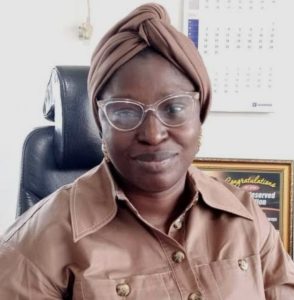
In response to Richard, Engr. Braimah said NIWA would engage the affected local governments and establish mechanisms for closer collaboration.
“We have called this stakeholders’ meeting because we need feedback. We want to know where we are lacking, where we have not touched and where we need to improve,” she said.
Other stakeholders, including the National Association of Nigerian Travel Operators (NATOP), Association of Tourist Boat Operators and Water Transporters of Nigeria (ATBOWATON), Barge Operators Association of Nigeria (BOAN), Lagos Recyclers Association and the Sustainable Waterways Awareness, Advancement and Development Organisation (SWAADO), also pledged support.
They called for stronger enforcement, greater involvement of local governments and sustained community participation to ensure that the clean-up exercise produces lasting results.
NIWA said the ultimate objective was not merely to remove existing waste and water hyacinth but to change the practices responsible for pollution and create a cleaner, safer and more productive waterways system capable of supporting navigation, fisheries, tourism, employment and Nigeria’s wider blue economy.
With the 10-year renewable partnership now underway, NIWA and Parts Central are banking on sustained intervention, technology-driven waste collection and stronger stakeholder cooperation to transform Nigeria’s polluted waterways from an environmental liability into a productive asset capable of driving the country’s blue economy.










-

 Crime2 years ago
Imo police confirm arrest of journalist, ‘Nonsonkwa’ over alleged Cyberstalking, Incitement
-
 Business1 year ago
Kirikiri Lighter Terminal Customs achieves 63% revenue growth in first half of 2025, generates ₦89.2b
-

 Business1 year ago
Nigerians can now independently verify vehicle duty payment status online with ₦15,000
-

 Business3 years ago
Floating Naira: Imminent drawback to revenue as Customs Duty Exchange Rate rises again to ₦783.174
-
 Education8 months ago
Anambra leads South-east in education allocation ratio, as Imo ranks lowest
-

 Crime6 years ago
EFCC: “Why Magu’s confirmation was turned down by Senate”