
Business
How Dangote Refinery turns byproducts into economic value – from waste to wealth
By Ezurike Ugochukwu
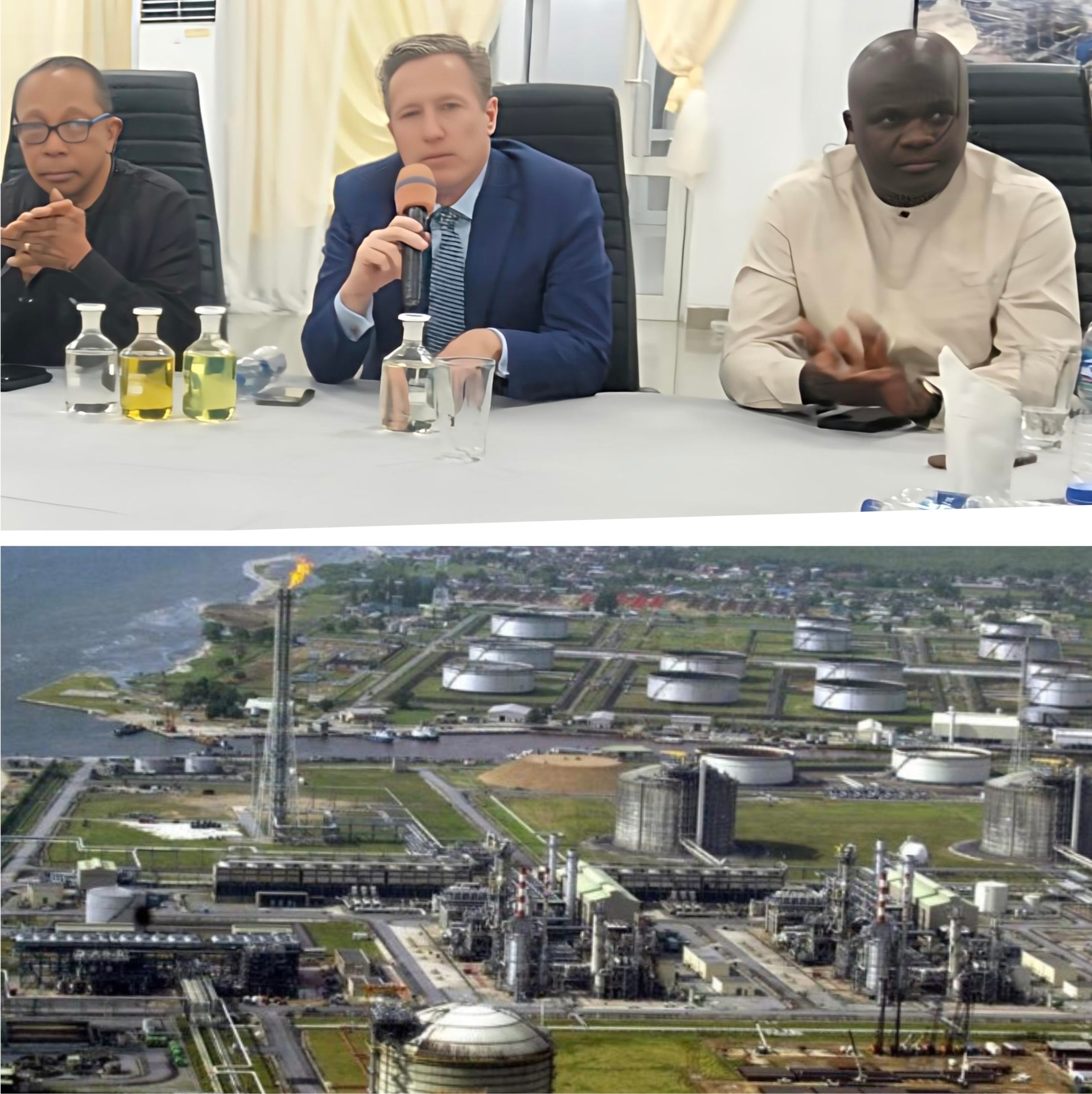
Mr. David Bird, the Chief Executive Officer and Managing Director of Dangote Petrochemical Refinery has said the refinery is designed to use the latest technology to comply with stringent guidelines and regulations to protect the local environment, and at the same time produce the latest environmentally friendly petroleum products for worldwide markets.
Bird underscored the refinery’s petrochemical component, explaining

that it would support the growth of downstream industries turning all weste into use including “waste water” thereby providing essential raw materials for manufacturing sectors such as plastics, packaging, and textiles.

Speaking with members of the Maritime Correspondent of Nigeria (MARCON) and other journalists after a guided tour of the sprawling facility recently, Bird highlighted the refinery’s scale, advanced technology which he said would further strengthen Nigeria’s industrial base and stimulate broader economic growth.
Giving a technical rundown, some staff engineers guiding at the tour reiterated that at the Dangote Refinery, nothing is considered waste.
They stated that sulphur removed during refining is sold, minerals are extracted from water, hydrogen and carbon dioxide are captured for fertilizer production, and treated water is reused at different stages of operations.
“Every nonsense has sense,” they posited.
“To us, everything that comes out of the refining process has economic value. We convert what others may consider waste into wealth.”
On generating its Powering Independently, they said the refinery, which has made history as the world’s largest single-train refinery with a 650,000 barrels-per-day capacity attainment generates its own electricity through a massive captive power plant.
“We generate our own power here; we use our steam turbines,” the officials explained.
As observed by Nationupdate during the tour, the complex operates a combined-cycle power plant with eight gas turbines and four steam turbines, delivering between 435 megawatts and 570 megawatts of electricity. By harnessing waste heat to produce additional steam power, the refinery runs independently of Nigeria’s national grid – ensuring uninterrupted production for both the refinery and its adjoining fertilizer plant.
“This level of energy self-sufficiency is critical for industrial stability in Nigeria.” They went on to say, “We cannot rely on external supply for a project of this magnitude.”
Turning Byproducts into Business
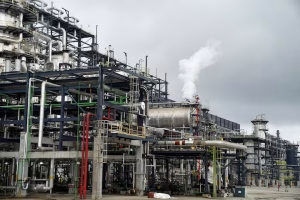 Sulphur, one of the major elements removed during refining, is not discarded.
The guides stated, “The sulphur we remove, we sell it off, it becomes another revenue stream.”
Water treatment as equally strategic according to the guides, minerals they say are extracted to produce de-mineralised water for industrial use, while treated water is recycled across multiple operational points.
“All water has different uses. We treat them at different stages to eliminate toxic components and harmful effects before directing them for specific industrial applications,” the officials hinted.
The guides reliably informed Nationupdate that hydrogen and carbon dioxide generated during processing are channelled into fertilizer production at Dangote Fertilizer Limited, further strengthening the group’s integrated industrial model.
Laboratory Precision and Environmental Compliance
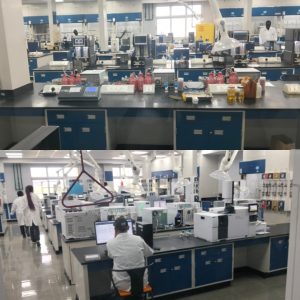 Quality control sits at the heart of operations. Inside the refinery complex are multiple advanced laboratories, including:
Furnace-Based Instrument Lab – where sulphur content and other chemical properties are rigorously analysed.
Polymer Testing Lab – dedicated to evaluating product composition and durability standards.
Water Lab – responsible for ensuring treated water meets strict environmental safety benchmarks.
“We test everything here to ensure compliance with environmental standards and to protect human life and aquatic ecosystems,” An official stressed.
The refinery’s design conforms with World Bank, US Environmental Protection Agency (EPA), European Union, and Nigeria’s regulatory emission and effluent standards.
“We don’t pollute energy or the environment. Regulators come here regularly. Our international lenders would not support us if we failed to meet global standards,” a management staff said.
Global-Standard Products
The CEO Mr Bird further hinted that Dangote’s gasoline is produced at RON 95 (Research Octane Number) with Euro V specifications and ultra-low sulphur content of 10 parts per million (ppm).
“Our octane rating is 95 percent. Our products meet international standards and are exported outside Nigeria,” he said.
An official at the laboratory revealed that diesel is also refined into different grades for heavy-duty trucks and lighter vehicles through advanced cracking processes.
“The diesel used for big trucks is not the same as that for smaller vehicles. We crack them for different uses,” the guide explained.
Maritime Game-Changer
According to Mr. Satendra Singh Rana, Head of Marine, Petroleum and Petrochemical since commencing operations, the refinery has handled about 800 vessels – a figure describe as unprecedented for a new refining complex.
“We are looking at another 600 vessels this year. This is a game-changer not only for Nigeria but for Africa,” he said.
Added that crude oil feedstock is sourced from Nigeria and the United States, ensuring steady supply chains.
The staff guides explained how massive gantries within the facility aid in seamless loading of petroleum products to tankers which lasts about 35 minutes.
Items they dispense including fuel, jet fuel, and carbon black feedstock – directly into tanker trucks for nationwide distribution.
Massive Storage, Strategic Security
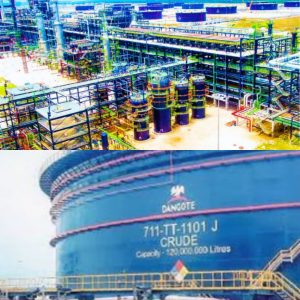 The refinery boasts numerous reserve tanks ranging from 30 million litres to 120 million litres in capacity for crude and refined products.
“These tanks can sustain supply for up to 20 days even without new crude deliveries. The era of fuel scarcity is over.”
Before the refinery came on stream, Nigeria had largely exported crude oil for decades and only rely no import for its refined products.
“Before this project, Nigeria had not exported refined petroleum products in nearly 20 years. Today, we are not only meeting local demand but exporting.”
Safety and Gas Management
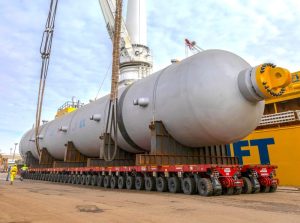 The guides reiterated that while gas flaring remains a global safety practice; common in oil-producing nations such as Russia, Iraq, Iran, the United States, Algeria, Nigeria, and Venezuela – Dangote officials insist it is applied strictly under controlled safety standards.
“When you don’t have immediate use for certain gases, you release them safely,” an engineer explained.
Cooling towers are used to regulate high pipeline temperatures, ensuring operational safety across the complex.
Gas supply to the refinery is facilitated by the East-West Offshore Pipeline, which runs through the facility and provides steady gas feedstock for both refining and power generation.
Looking Ahead
Officials say expansion plans are already underway. “When we expand, we are going to be the highest in the world,” a senior staff at the cooperate communications department stated confidently.
The refinery currently employs about 4,200 operational staff, with expansion projects expected to create tens of thousands of construction jobs at peak periods.
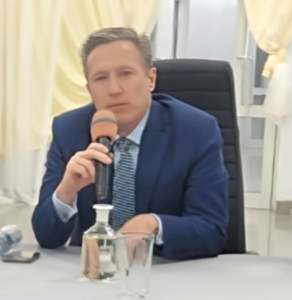
The CEO Bird reaffirmed the company’s commitment to driving industrial transformation in Nigeria and across Africa, describing the refinery as a landmark project designed to reshape the continent’s energy future.
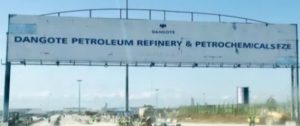
Built at a cost of about $20 billion by Dangote Industries Limited, the refinery represents a shift in Nigeria’s industrial narrative — from crude exporter to value-added petroleum producer.
In the words of one the plant engineers: “We don’t see waste here. We see opportunity. That is the philosophy driving this refinery – turning waste into wealth, and challenges into solutions.”





-

 Crime2 years ago
Imo police confirm arrest of journalist, ‘Nonsonkwa’ over alleged Cyberstalking, Incitement
-
 Education7 months ago
Anambra leads South-east in education allocation ratio, as Imo ranks lowest
-
 News6 years ago
Orthodox Anglican Church, not Same as Church of Nigeria- Bishop
-

 Business6 years ago
Pay-As-You-Go not applicable to pay TV – FCCPC
-

 Agriculture4 years ago
Environment Day: Foundation partners, FCMB, Chevron, harps on collective efforts on earth protection
-

 Crime3 years ago
Pastor allegedly kills female member, prevents 20 year old daughter from attending burial