
Business
Customs Identifies digital literacy, resistance to change as threats to new licensing reform

By Ezurike Ugochukwu
The Nigeria Customs Service (NCS) has identified digital literacy gaps, stakeholder resistance to change, and the need for sustained sensitisation as major challenges confronting the successful implementation of its new automated licensing and permit regime.
The concerns were raised by the Public Relations Officer(PRO), Lagos Free Trade Zone Command, Chief Superintendent of Customs LA Abdullahi-Lagos, during a paper presentation at the 2026 Annual Conference and Awards of the Association of Maritime Journalists of Nigeria (AMJON) in Lagos.

Speaking on the theme, “Attaining Port Efficiency in the Face of Emerging Technology,” Abdullahi-Lagos said while the new licensing and permit regime offers significant opportunities to improve trade facilitation and operational efficiency, successful implementation will depend largely on stakeholder adaptation to the digital process.

According to him, some operators within the maritime industry are still challenged by limited digital knowledge, while others remain reluctant to move away from the long-established manual system.
He noted that resistance to reform remains common whenever major technological changes are introduced into established operational systems.
“These include digital literacy gaps among some stakeholders, resistance to change from those accustomed to the old system, and the need for continuous stakeholder sensitisation,” he said.
Abdullahi-Lagos explained that the Nigeria Customs Service introduced the new licensing and permit framework as part of broader reforms aimed at modernising trade processes and aligning Nigeria with international best practices.
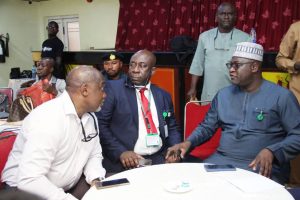
Some participants at the conference
He said the new regime replaces manual licensing procedures, which were previously characterised by delays, administrative bottlenecks, repeated physical visits, and opportunities for fraudulent practices.
Under the new system, stakeholders can electronically process import and export licences, warehouse permits, bonded terminal approvals, excise licences, renewals, and other approvals through a centralised digital portal.
The reform also includes digital verification tools designed to authenticate submitted documents and eliminate fake permits.
Licences now have a defined annual validity period ending December 31 to ensure improved compliance and accountability.
Abdullahi-Lagos said the system is integrated with key trade platforms such as Form M, Pre-Arrival Assessment Report (PAAR), Authorised Dealer Banks, the Single Window system, and other regulatory agencies.
According to him, this integration is expected to reduce duplication, strengthen inter-agency coordination, and accelerate cargo documentation processes.

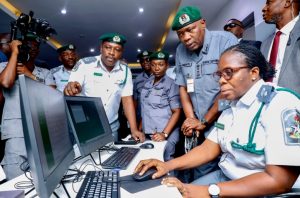
Customs automation in progress
He added that the automated regime would improve pre-arrival processing, reduce cargo clearance delays, minimise human bottlenecks, and limit opportunities for corruption.
The reform is also expected to strengthen government oversight through improved trade data visibility, compliance tracking, and revenue monitoring.
Despite these projected benefits, Abdullahi-Lagos stressed that technology reforms can only succeed when users are adequately equipped and informed.
He therefore called for continuous education, stakeholder engagement, and policy clarity to ensure widespread adoption of the system.
He also underscored the role of maritime journalists in driving awareness and public understanding of the reform.
According to him, journalists have a responsibility beyond news reporting, serving as policy interpreters and public educators capable of countering misinformation and fostering trust in government reforms.
He noted that reforms often struggle when poorly communicated, but gain acceptance when stakeholders clearly understand their objectives and benefits.
 Abdullahi-Lagos described the new Nigeria Customs Service Licensing and Permit Regime as a strategic reform designed to improve trade efficiency, strengthen regulatory compliance, protect government revenue, and position Nigeria for greater competitiveness in the global trade environment.
He urged all stakeholders in the maritime sector to embrace digital transformation, stressing that the future of Nigeria’s ports depends on efficiency, transparency, and intelligent processing systems.








Customs implements new ECOWAS tariff regime, updates import, export rules

MARCON 2026: OGFZA MD leads Blue Economy dialogue, CGC Adeniyi bags Lifetime Achievement Award

Ogun LG chairman hails Idiroko Customs football initiative, seeks professional pathway for border talents
-

 Crime2 years ago
Imo police confirm arrest of journalist, ‘Nonsonkwa’ over alleged Cyberstalking, Incitement
-
 Education5 months ago
Anambra leads South-east in education allocation ratio, as Imo ranks lowest
-
 News6 years ago
Orthodox Anglican Church, not Same as Church of Nigeria- Bishop
-

 Business6 years ago
Pay-As-You-Go not applicable to pay TV – FCCPC
-

 Agriculture4 years ago
Environment Day: Foundation partners, FCMB, Chevron, harps on collective efforts on earth protection
-

 Crime3 years ago
Pastor allegedly kills female member, prevents 20 year old daughter from attending burial