
Business
Adeniyi launches ICRAM, orders Customs Commands to map corruption risks
By Ezurike Ugochukwu
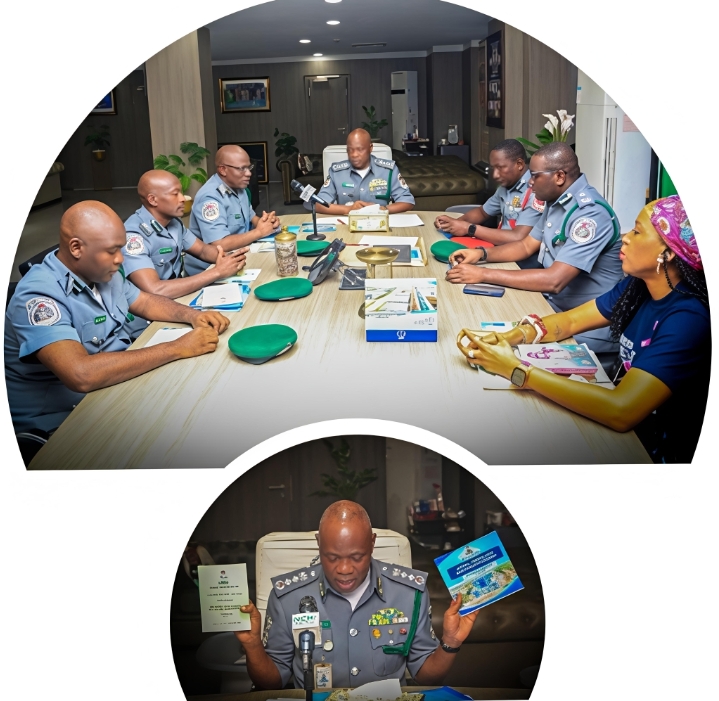
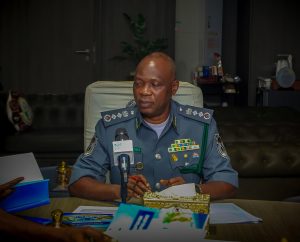
The Comptroller-General of Customs, Adewale Adeniyi, has launched a new internal anti-corruption framework for the Nigeria Customs Service, directing its immediate implementation across all zones, commands and units.
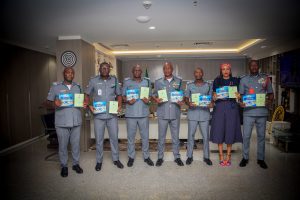
Adeniyi gave the directive on Tuesday, October 6, 2026, at the NCS Headquarters in Abuja, after signing the Standard Operating Procedure(SOP) for Internal Corruption Risk Analysis and Mapping (ICRAM), the ICRAM Handbook and the Integrity Action Plan, while formally activating the ICRAM Steering Committee.
CGC Adeniyi said the documents resulted from a painstaking process involving an internal team, the World Customs Organisation (WCO), and partner administrations such as His Majesty’s Revenue and Customs (HMRC), noting that the objective was to ensure integrity remains central to all operations.

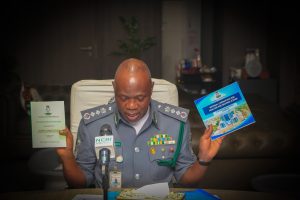
“These two documents are products of a painstaking process which we have undertaken with efforts from an internal team working together with our partners from the WCO and a number of other Customs administrations that have walked this path with us to ensure that we have a Service where integrity leads,” CGC Adeniyi said.
He explained that the documents were developed as practical tools to enable officers at ports, borders, and airports to identify and map corruption risks within their areas of operation and implement targeted measures to eliminate them.
“We want to believe that we have laid a practical step, very easy to follow, for all our operatives at the ports, the borders, and the airports, to be able to conduct corruption risk mapping in their places, giving them the opportunity and capacity to implement the action plan to instil integrity in our system,” he added.
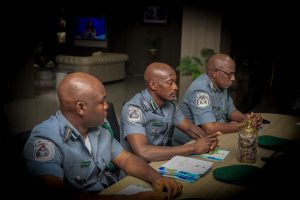
Earlier, the Assistant Comptroller-General of Customs in charge of the Strategic Research and Policy Department, ACG Nafi’u Isyaku, who led senior officers to present the documents, sought approval for its full rollout across the Service.
Before the formal launch, the ICRAM methodology was piloted across seven key Commands and Units, covering 66 processes across regulatory, core Customs, and support functions. The pilot locations included:
Sea Modality: Apapa Area Command
Air Modality: Murtala Muhammed Cargo (MMAC) and Murtala Muhammed International Airport (MMIA) Commands
Land Modality: Seme Area Command
Specialised Units: Customs Police Unit Zone A, PAAR Ruling Centre, and the Procurement Unit.
The pilot produced a comprehensive Integrity Action Plan (IAP) with 101 Action Items and 295 Sub-Action Items. Key focal areas include enhanced automation, strengthened supervision and accountability, robust audit trails and traceability, clear segregation of duties, regular staff rotation, targeted training, and improved officer-stakeholder controls.













-

 Crime2 years ago
Imo police confirm arrest of journalist, ‘Nonsonkwa’ over alleged Cyberstalking, Incitement
-
 Education7 months ago
Anambra leads South-east in education allocation ratio, as Imo ranks lowest
-
 News7 years ago
Orthodox Anglican Church, not Same as Church of Nigeria- Bishop
-

 Business6 years ago
Pay-As-You-Go not applicable to pay TV – FCCPC
-

 Agriculture4 years ago
Environment Day: Foundation partners, FCMB, Chevron, harps on collective efforts on earth protection
-
 Business1 year ago
Kirikiri Lighter Terminal Customs achieves 63% revenue growth in first half of 2025, generates ₦89.2b