By Ezurike Ugochukwu
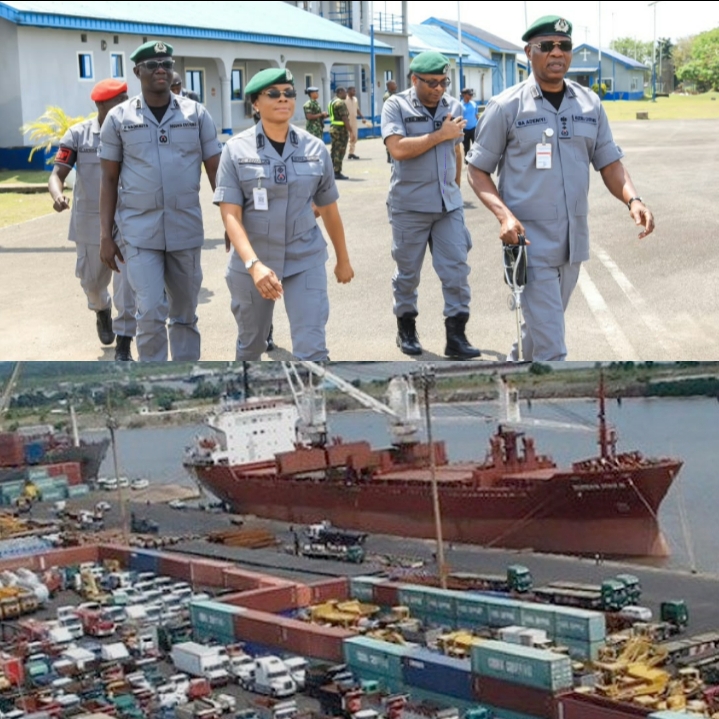
The Comptroller-General of the Nigeria Customs Service (NCS), Bashir Adewale Adeniyi, has expressed optimism that Cross River State is on the path to reclaiming its historic position as one of Nigeria’s leading commercial centres, citing the proposed Bakassi Deep Sea Port and ongoing trade modernisation initiatives as major catalysts for economic revival.
Adeniyi, who spoke on Friday, November 13, 2026, at the 6th AfSNET Investment Conference in Calabar, said the state’s rich commercial heritage, strategic geographical location and emerging maritime infrastructure projects present significant opportunities for investment, regional trade and economic growth.
He described the groundbreaking ceremony for the Bakassi Deep Sea Port, scheduled for the day of the conference, as a significant milestone that could transform Cross River’s economic fortunes and reposition the state as a major gateway for international commerce.
Reflecting on Calabar’s historical importance, the Customs chief recalled that the city once hosted Nigeria’s busiest Customs port, noting that its contribution to the country’s commercial development dates back about a century.
He also recalled that Nigeria’s first indigenous and longest-serving Comptroller-General of Customs hailed from Calabar, describing the historical connection as further evidence of the state’s longstanding relevance to the nation’s maritime and trade sector.
Adeniyi expressed confidence that developments around the proposed deep seaport, supported by strategic investments in trade infrastructure, could restore Cross River’s prominence in Nigeria’s commercial landscape.
On the Customs Service’s modernisation agenda, he stressed that infrastructure development must be preceded by a proper assessment of operational challenges, warning that building ports and border facilities without addressing existing bottlenecks would not automatically translate into efficient trade operations.
He disclosed that the Service had conducted a Time Release Study to determine how long it takes to process consignments at the ports, identify delays and establish practical measures for improving cargo clearance.
According to him, understanding the factors responsible for delays is essential to developing targeted interventions that will make Nigerian ports more competitive and attractive to investors.
The Comptroller-General also highlighted the delicate responsibility of Customs administrations in balancing trade facilitation with enforcement, explaining that efforts to accelerate legitimate commerce must go hand in hand with measures to prevent smuggling and other illicit cross-border activities.
He acknowledged the contributions of the African Export-Import Bank (Afreximbank) to trade development and modernisation initiatives, while underscoring the importance of compliance-driven reforms in improving revenue performance.
He specifically highlighted the impact of the Authorised Economic Operator (AEO) programme, which he said had facilitated the recovery of approximately ₦200 billion through improved compliance.
Adeniyi further called for stronger private-sector participation in the development of critical economic infrastructure, maintaining that government alone could not provide all the resources required to create sustainable wealth and unlock Nigeria’s economic potential.
He argued that effective partnerships between government, financial institutions and private investors would be essential to mobilising the capital, expertise and innovation needed to deliver transformative projects.
On technology-driven Customs operations, the CGC emphasised the need to maximise the deployment of non-intrusive inspection equipment, particularly scanners, to facilitate legitimate trade, reduce unnecessary physical examinations and strengthen enforcement.
He explained that the wider application of scanning technology would improve cargo examination processes, enhance operational transparency and enable officers to concentrate enforcement resources on high-risk consignments.
Addressing cross-border trade challenges, Adeniyi identified the establishment of effective One-Stop Border Posts (OSBPs) at the Mfum-Ekok and Seme-Krake corridors as critical to eliminating multiple examinations, reducing clearance delays and expanding regional trade.
He said properly implemented One-Stop Border Posts could increase trade volumes by as much as 70 per cent, while improving the movement of goods and strengthening economic integration between Nigeria and its neighbouring countries.
The Customs chief noted, however, that the success of the initiative would depend on the provision of complementary infrastructure, including warehouses, storage facilities, weighbridges and scanners, to improve cargo handling and border management.
He disclosed that the Service had undertaken studies of successful border management models in other countries, expressing confidence that relevant international best practices could be adapted to Nigeria’s operational environment.
According to him, the objective is to establish more coordinated, efficient and transparent border operations capable of supporting legitimate businesses while maintaining effective national security controls.
The CGC maintained that sustained institutional commitment, strategic investments and productive partnerships would be necessary to translate the proposed reforms into tangible economic benefits.
For Cross River State, he said, the combination of the proposed Bakassi Deep Sea Port and the modernisation of the Mfum-Ekok border corridor could open new opportunities for regional commerce, export expansion, employment generation and increased investment inflows.
He added that the Nigeria Customs Service remained committed to working with government institutions, financial organisations, private-sector operators and other stakeholders to improve trade processes, strengthen border security and support Nigeria’s broader economic transformation.











 Crime2 years ago
 Business1 year ago
 Business1 year ago

 Business3 years ago

 Crime6 years ago

 Crime3 months ago