
Agriculture
Customs returns trafficked Gorilla to Congo, rescues 699 animals in 9 months
By Ezurike Ugochukwu
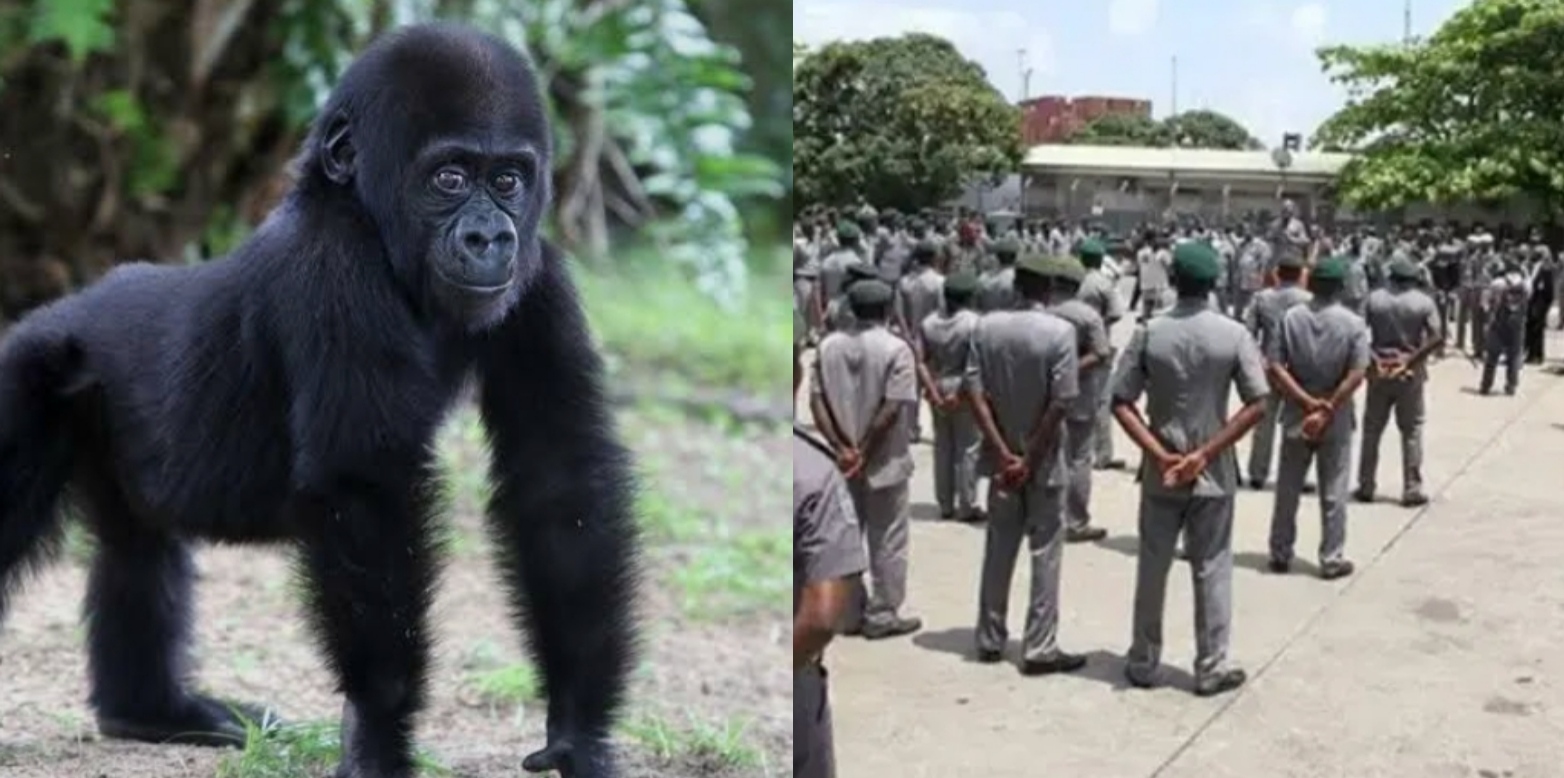
The Nigeria Customs Service (NCS) has repatriated a rescued female baby gorilla, Bili, to the Republic of Congo, after rescuing 699 live animals and recording 22 wildlife seizures in nine months as part of its intensified crackdown on illegal wildlife trafficking.
The repatriation of Bili, which took place between September 22 and 28, 2026, marked what the Service described as its first full-cycle international wildlife operation, covering interception, rescue, rehabilitation and the safe return of a trafficked animal to its country of origin.
Bili was returned to the Réserve Naturelle de Tchimpounga, Département du Kouilou, Pointe-Noire, Republic of Congo, through the NCS Special Wildlife Office (SWO) under the Customs Intelligence Unit.

According to the National Public Relations Officer of the NCS, Deputy Comptroller of Customs Abdullahi Maiwada, the gorilla was rescued in August 2023 by Customs officers during enforcement operations against wildlife trafficking.
Following her rescue, Bili was placed under the care of the Pandrillus Foundation in Calabar for rehabilitation.
A DNA test subsequently confirmed that the gorilla originated from the Republic of Congo, paving the way for arrangements for her repatriation.
Bili was moved from Calabar to Lagos and later airlifted to the Republic of Congo by DHL at no cost, accompanied by a caregiver and a veterinary doctor.
The repatriation was supported by the CITES Management Authority under the Federal Ministry of Environment, in line with the provisions of the Convention on International Trade in Endangered Species of Wild Fauna and Flora (CITES).
The gorilla is listed under Appendix I of CITES, which affords the highest level of protection to species threatened with extinction.
The Customs Service said Bili’s return represented the culmination of a coordinated process involving enforcement, rescue, rehabilitation, scientific identification and international cooperation in protecting endangered wildlife.
The Service said it remained committed to strengthening its enforcement capabilities to disrupt wildlife trafficking networks and developing partnerships to ensure that rescued animals receive appropriate care and, where established, are safely returned to their countries of origin.
The repatriation came against the backdrop of intensified enforcement operations by the NCS against illegal wildlife trade across the country.
Between January and September 2026, the Special Wildlife Office and Customs Area Commands recorded 22 wildlife seizures, rescued 699 live animals and arrested 11 suspects.
The seizures included 220 kilogrammes of pangolin scales, 48 elephant tusks and 219.05 kilogrammes of worked ivory, in addition to various live endangered and protected species intercepted at different locations.
The enforcement operations covered Ogun, Kano, Borno/Yobe, Calabar, Taraba, Kaduna and Lagos, among other locations.
The Service said notable interventions during the period included the rescue of pangolins, primates, lion cubs, hyenas, crowned cranes, tortoises, gorillas and chimpanzees.
In September, Customs also intercepted 440 African mud turtles and 90 ostrich chicks, while several suspects were arrested in connection with wildlife trafficking.
The NCS said the arrests and seizures demonstrated its continued efforts to disrupt networks involved in the illegal wildlife trade and protect endangered and protected species.
The Comptroller-General of Customs, Bashir Adewale Adeniyi, MFR, and the management of the Service acknowledged the support of the Pandrillus Foundation, DHL, Focused Conservation, the Aspinall Wildlife Trust, the CITES Desk of the Federal Ministry of Environment and the Government of the Republic of Congo in the rescue, rehabilitation and repatriation of Bili.
The Service stressed that its responsibilities extend beyond revenue generation to include national security and environmental protection.
It urged members of the public to report information on suspected illegal wildlife trafficking to the nearest Customs formation, as part of efforts to strengthen the fight against the illicit trade and protect endangered wildlife.













-

 Crime2 years ago
Imo police confirm arrest of journalist, ‘Nonsonkwa’ over alleged Cyberstalking, Incitement
-
 Education7 months ago
Anambra leads South-east in education allocation ratio, as Imo ranks lowest
-
 News6 years ago
Orthodox Anglican Church, not Same as Church of Nigeria- Bishop
-

 Business6 years ago
Pay-As-You-Go not applicable to pay TV – FCCPC
-

 Agriculture4 years ago
Environment Day: Foundation partners, FCMB, Chevron, harps on collective efforts on earth protection
-

 Crime3 years ago
Pastor allegedly kills female member, prevents 20 year old daughter from attending burial