
Education
₦50,000 WAEC, NECO fee sparks backlash as Atiku accuses FG of pricing out students
By Ezurike Ugochukwu
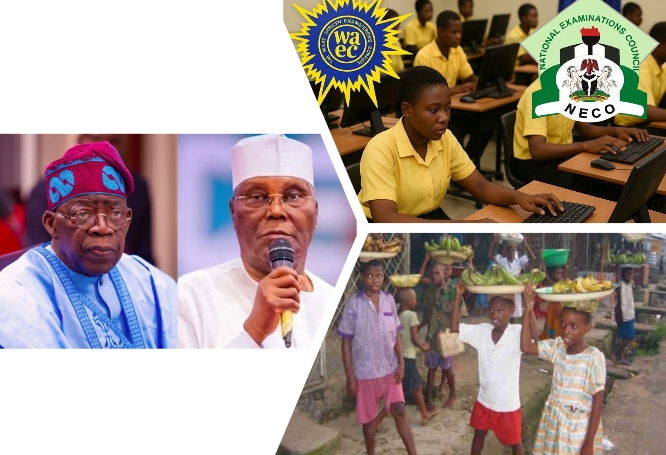
The Federal Government’s decision to raise the registration fee for the West African Examinations Council (WAEC) and National Examinations Council (NECO) Senior Secondary School Certificate Examinations (SSCE) to a uniform ₦50,000 from 2027 has triggered widespread criticism.
Reacting to the development, former Vice President Atiku Abubakar accused the current administration of placing education beyond the reach of many Nigerian students.
The new fee, approved by the Federal Ministry of Education, represents a sharp increase from the current ₦27,000 charged by WAEC and ₦30,000 by NECO. The policy, which takes effect from the 2027 examination cycle, followed consultations between the ministry and examination bodies over the rising cost of conducting public examinations.

 The approval was contained in a memo dated June 18, 2026, signed by the Director of Senior Secondary Education, Adeniji Ibrahim, on behalf of the Minister of Education. The directive also mandates both examination bodies to adopt a uniform registration fee for all internal SSCE candidates beginning next year.
While the Federal Government has yet to publicly elaborate on the reasons behind the magnitude of the increase beyond rising operational costs, the decision has already generated concerns among parents, education stakeholders and state governments that currently sponsor candidates for the examinations.
Several states fund WAEC and, in some cases, NECO registration fees for public secondary school students. Analysts warn that the higher fee could increase pressure on already stretched state budgets, while families in states without such support may struggle to register their children for the examinations.
Critics also fear the increase could worsen Nigeria’s out-of-school children crisis by forcing more students, particularly those from low-income households, to forgo the examinations due to financial constraints.
Atiku Abubakar described the policy as “cruel,” “economically insensitive” and incompatible with the constitutional responsibility of government to make education accessible to every Nigerian child.
 In a statement issued by his Senior Special Assistant on Public Communication, Phrank Shaibu, the former vice president said the fee hike comes at a time when many households are battling record inflation, rising food and transportation costs, higher electricity tariffs, stagnant incomes and widespread unemployment.
“It is unconscionable that at a time when Nigerian families are battling severe economic hardship, the government has chosen to make education even more expensive,” Atiku said.
The 2027 presidential candidate of the African Democratic Congress (ADC) warned that the policy could further widen educational inequality by disproportionately affecting children from poor and middle-income families.
“A government that genuinely believes in the future of its people does not erect financial barriers between children and education. It removes them. Education is not a privilege reserved for the wealthy; it is the birthright of every Nigerian child,” he stated.
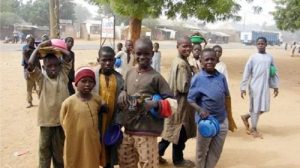 According to Atiku, Nigeria already has one of the highest numbers of out-of-school children globally, estimated at between 10.5 million and 15 million, and any policy that increases the cost of education risks worsening the situation.
He also questioned what he described as the contradiction between the government’s promotion of the Nigerian Education Loan Fund (NELFUND) and policies that, in his view, make it more difficult for students to complete secondary education and qualify for university admission.
Education stakeholders say the new fee is likely to dominate discussions in the coming months, with many calling on the Federal Government to balance the financial needs of examination bodies with the constitutional obligation to guarantee affordable access to education.
The increase is expected to take effect with the 2027 WAEC and NECO Senior Secondary School Certificate Examinations.







Seme–Krake: Nigeria, Benin Customs begin push for seamless border trade
AMJON Conference: NIMASA, Customs, NPA, NSML push innovation, digital skills for future-ready maritime sector

Customs: Discipline, character critical as 2025 recruitment screening enters final phase
-

 Crime2 years ago
Imo police confirm arrest of journalist, ‘Nonsonkwa’ over alleged Cyberstalking, Incitement
-
 Education7 months ago
Anambra leads South-east in education allocation ratio, as Imo ranks lowest
-
 News6 years ago
Orthodox Anglican Church, not Same as Church of Nigeria- Bishop
-
 Business6 years ago
Pay-As-You-Go not applicable to pay TV – FCCPC
-

 Agriculture4 years ago
Environment Day: Foundation partners, FCMB, Chevron, harps on collective efforts on earth protection
-
 Crime3 years ago
Pastor allegedly kills female member, prevents 20 year old daughter from attending burial