
Arts
After 28 years, NFVCB secures first permanent headquarters, Husseini announces
By Ezurike Ugochukwu
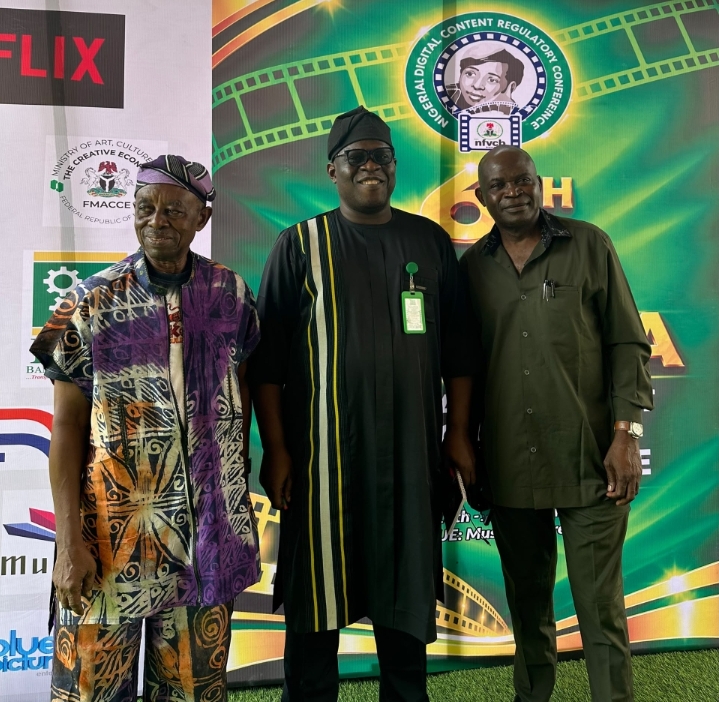
The National Film and Video Censors Board (NFVCB) has opened its sixth Peace Anyiam-Osigwe Nigeria Digital Content Regulation Conference in Lagos, unveiling institutional reforms and a stronger regulatory agenda to address emerging challenges in Nigeria’s digital film and content industry.
At the two-day conference, which commenced on Wednesday, November 18, 2026, at the Shell Hall, MUSON Centre, Onikan, NFVCB Executive Director, Dr Shaibu Husseini, disclosed that the board had secured its first permanent headquarters in 28 years, with completion expected by January 2, 2027.
The conference, which had several industry stakeholders in attendance also had celebrated actor and producer Richard Mofe-Damijo giving the keynote address.


The 2026 edition of PAO-NDCRC is themed ‘Film and Content Production in the Digital Era: Balancing Regulation and Innovation.’
Filmmaker Kunle Afolayan was among the speakers at the conference, while Judith Audu and Fidelis Duker were among the panellists.
Other participants at the conference include filmmakers Tunde Kelani, Femi Odugbemi, Nobert Young, Fred Amata, Keppy Ekpenyoung, Kazim Adeoti, Segun Arinze, Sandra Oyewole, Olumide Iyanda, Ijeoma Onah and Adetutu Laditan amidst others.
In his welcome address, the Executive Director and Chief Executive Officer of the NFVCB, Dr Shaibu Husseini said the rapid growth of social media platforms, digital distribution and new production technologies had created opportunities for the film industry while raising concerns about intellectual property, ownership, content standards and consumer protection.
Reflecting on his two years and eight months as NFVCB executive director, Dr Husseini highlighted efforts to modernise the board’s operations and strengthen its regulatory framework.

Dr Husseini disclosed that the board had secured its first permanent headquarters after 28 years of the board’s existence, adding that the building was expected to be completed by January 2, 2027.
Husseini also cited the implementation of the 2024 regulations on the control of the promotion and glamourisation of tobacco, narcotics and ritual killings as part of the board’s regulatory interventions.
He said the NFVCB was working towards digitising its processes, including the preservation and transfer of records of films classified since 1994.
On the relationship between regulation and creativity, he said, “The future of Nollywood cannot be built by playing as. It requires collaboration, and it requires that investors must believe in the potential of the industry.”
He urged stakeholders to support an industry where regulation would not restrict innovation and technological advancement would not undermine responsibility.
In her speech, the Minister for Art, Culture, Tourism, and the Creative Economy, Barr Hannatu Musa Musawa commended the NFVCB, film and digital content industry. She also acknowledged the legacy of the late Peace Anyiam-Osigwe, whose remarkable contribution to African cinema continues to inspire conversations about the power of storytelling, creativity and the global relevance of our film industry.
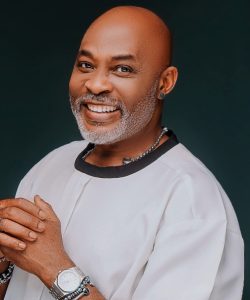
Damijo
Delivering the keynote, Mofe-Damijo called for a balance between creative freedom and responsible regulation, noting that technological developments were changing how films and other audiovisual content were produced and distributed.
“The digital revolution is not waiting for us. It is evolving and creating new possibilities every day. We must also be ready to protect our audiences, uphold professional standards, and preserve the integrity of our creative environment,” he said.
He argued that regulation should protect the public and respect the rights of creators without limiting their ability to explore new ideas.
“The future is not a choice between regulation and innovation. The future belongs to those who understand how to make both work together,” he added.
The actor also stressed the importance of protecting intellectual property, ensuring fair returns for creators and addressing piracy as the industry expands its digital reach.
He said stakeholders must work towards an industry where filmmakers could compete internationally while retaining the economic value of their work.












-

 Crime2 years ago
Imo police confirm arrest of journalist, ‘Nonsonkwa’ over alleged Cyberstalking, Incitement
-

 Business1 year ago
Kirikiri Lighter Terminal Customs achieves 63% revenue growth in first half of 2025, generates ₦89.2b
-

 Business1 year ago
Nigerians can now independently verify vehicle duty payment status online with ₦15,000
-

 Business3 years ago
Floating Naira: Imminent drawback to revenue as Customs Duty Exchange Rate rises again to ₦783.174
-

 Crime6 years ago
EFCC: “Why Magu’s confirmation was turned down by Senate”
-

 Crime3 months ago
Smuggling: Customs FOU ‘A’ intercepts 220 consignments, recovers ₦729m