
Business
Nigeria’s food insecurity deepens as 71% of households face food price hikes — Orodata
By Ezurike Ugochukwu
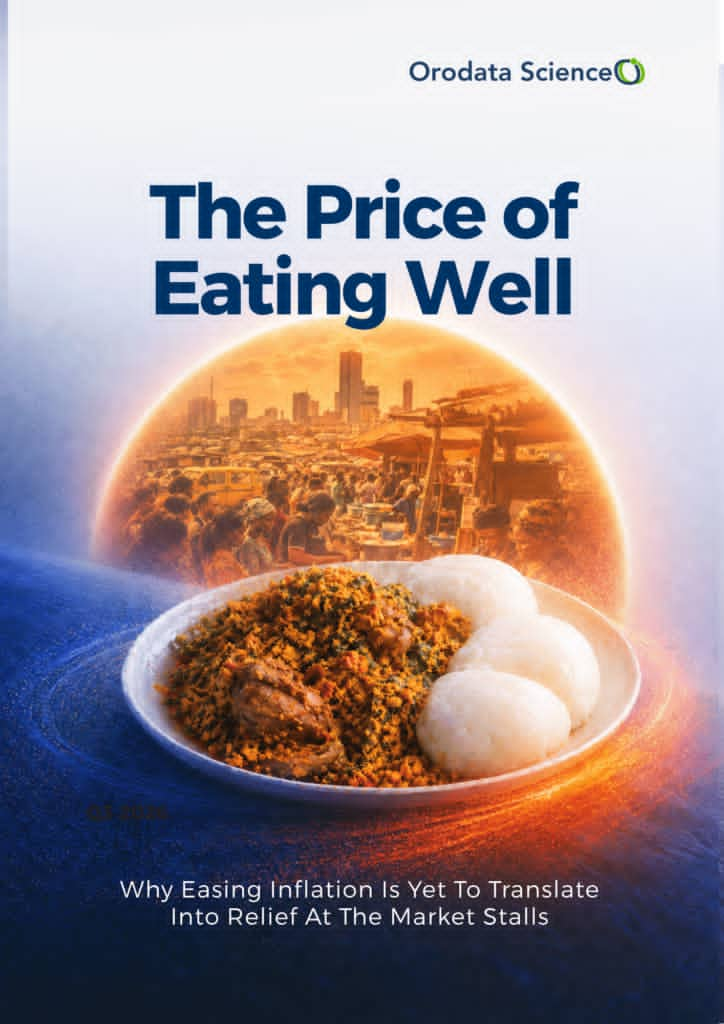
Rising food prices are worsening food insecurity in Nigeria, with 71 per cent of households affected by increases in the prices of major food items, while millions of families struggle to afford nutritious and diverse diets, according to reports by Orodata Science.
The findings were contained in two reports, Food Insecurity in Nigeria and The Price of Eating Well in Nigeria, released in Lagos on Friday to mark World Food Day.
Drawing on data from the National Bureau of Statistics (NBS), the reports examined how rising food costs, limited household incomes and regional disparities are affecting Nigerians’ access to adequate and nutritious food.

According to the NBS General Household Survey-Panel Wave 5 (2023/24), 37 per cent of Nigerian households experienced food shortages in the 12 months preceding the survey.
The North-East recorded the highest incidence, with 53 per cent of households reporting food shortages, compared with 25.7 per cent in the North-Central.
The findings also showed that food insecurity cuts across urban and rural communities, with 37.4 per cent of urban households and 36.8 per cent of rural households experiencing food shortages.
Beyond the availability of food, the reports highlighted the growing difficulty families face in obtaining healthy and nutritious meals amid rising living costs.
The survey indicated that 65.8 per cent of households could not afford healthy, nutritious or preferred foods in the 30 days preceding the survey.
Similarly, 63.8 per cent of households reported eating only a few types of food because of financial constraints, while 62.4 per cent said they worried about having insufficient food.
The reports further revealed a sharp increase in anxiety over food availability, with the proportion of households worried about having insufficient food rising from 36.9 per cent in 2018/19 to 62.4 per cent in 2023/24.
Orodata said the findings demonstrated the widespread impact of food price increases on household welfare and the ability of Nigerians to maintain balanced diets.
The regional figures showed significant disparities in household experiences of food shortages, with the North-East recording the highest rate among the regions highlighted in the report.
Its 53 per cent incidence was more than twice the 25.7 per cent recorded in the North-Central, underscoring differences in households’ access to sufficient food.
The relatively close rates recorded in urban and rural areas also suggest that food shortages are not confined to rural communities, but affect households across different settlement types.
The reports stressed the importance of examining both food availability and affordability, noting that access to food does not necessarily mean households can afford a healthy and varied diet.
In response to the findings, Orodata called for coordinated action across agriculture, social protection, nutrition, market regulation and economic policy to address the underlying causes of food insecurity.
The organisation advocated increased investment in local food production, stable markets, nutrition-sensitive social programmes and targeted assistance for vulnerable households.
It said policies should not only improve food availability but also make nutritious diets more affordable, particularly for low-income families facing mounting financial pressures.
Orodata also emphasised the importance of using accessible data to guide policy decisions, strengthen public accountability and help citizens understand the scale of the challenge.
The reports were produced by the organisation’s Food Security team, comprising researchers, data analysts, designers and visual storytellers, who translated official statistics into charts, infographics and other visual materials.
Orodata Science is a data visualisation and storytelling organisation that uses public data to promote accountability, civic engagement and evidence-based decision-making.
The reports and accompanying visualisations are available on the organisation’s website, orodata.org, and its social media platforms.













Okparaku at 60: Lessons from business, culture, service to humanity

Anambra farmers to get better market access as IFAD distributes tricycles, equipment

Nwabueze commends Arthur Eze for supporting Dunukofia Police infrastructure
-

 Crime2 years ago
Imo police confirm arrest of journalist, ‘Nonsonkwa’ over alleged Cyberstalking, Incitement
-

 Business1 year ago
Kirikiri Lighter Terminal Customs achieves 63% revenue growth in first half of 2025, generates ₦89.2b
-

 Business1 year ago
Nigerians can now independently verify vehicle duty payment status online with ₦15,000
-

 Business3 years ago
Floating Naira: Imminent drawback to revenue as Customs Duty Exchange Rate rises again to ₦783.174
-
 Education8 months ago
Anambra leads South-east in education allocation ratio, as Imo ranks lowest
-

 News7 years ago
Orthodox Anglican Church, not Same as Church of Nigeria- Bishop