
Business
Oyetola unveils NPERA Act, logo, lists six ports for modernisation
By Ezurike Ugochukwu
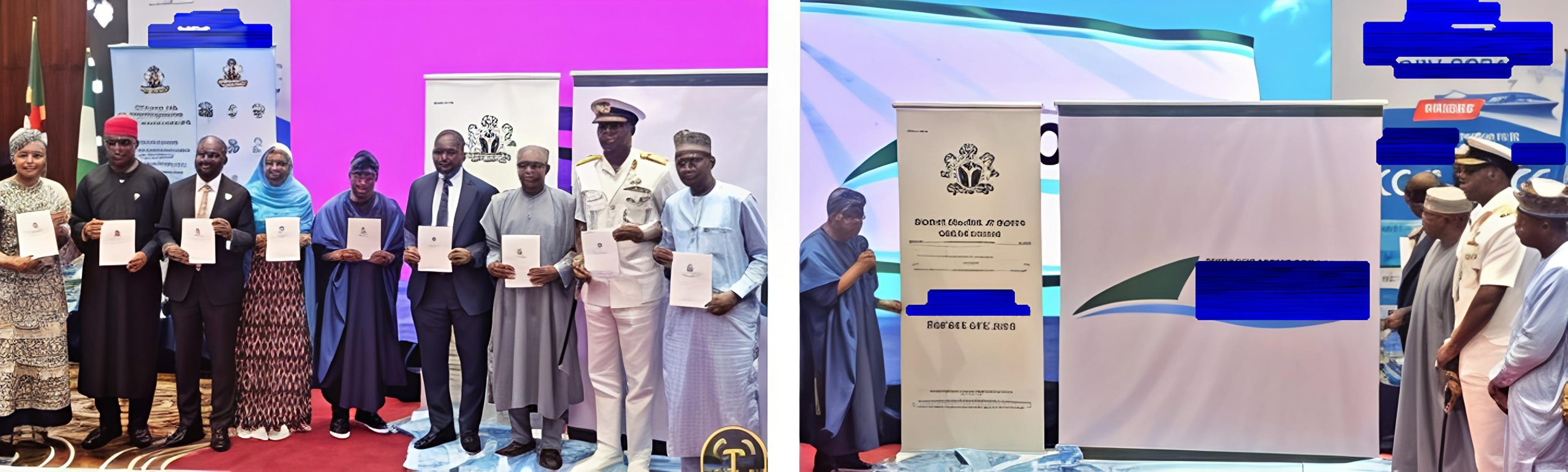
The Minister of Marine and Blue Economy, Dr Adegboyega Oyetola, has unveiled the gazetted Nigeria Ports Economic Regulatory Agency (NPERA) Act, 2026, and the agency’s official logo, while reaffirming the Federal Government’s commitment to modernising six major ports to improve efficiency and strengthen Nigeria’s maritime competitiveness.
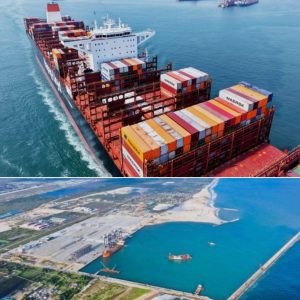
The ports earmarked for modernisation are Apapa, Tin Can Island, Onne, Rivers, Delta and Calabar, with Oyetola assuring stakeholders that the programme would promote balanced development across the country’s maritime gateways.
He disclosed this on Friday at the Third Quarter 2026 Citizens’ and Stakeholders’ Engagement of the Federal Ministry of Marine and Blue Economy in Victoria Island, Lagos.

The engagement, themed “Building Strategic Bilateral Partnerships for Sustainable Growth, Investment, and Technology of Nigeria’s Marine and Blue Economy,” brought together government officials, industry leaders, development partners and other stakeholders to discuss reforms, investment opportunities and sustainable growth in the sector.
Oyetola described the enactment of the NPERA Act, following President Bola Ahmed Tinubu’s assent in June 2026, as a significant milestone in efforts to establish a substantive statutory framework for economic regulation in the port industry.
He said the legislation followed nearly two decades of efforts to institutionalise port economic regulation, a responsibility the Nigerian Shippers’ Council had performed on an interim basis since 2014.
To facilitate the transition, the minister disclosed that he had directed the immediate constitution of a ministerial committee to oversee the transfer of the council’s port economic regulatory functions to the new agency.
Under the new framework, NPERA will regulate port tariffs and charges, promote competition, enforce service standards, resolve commercial disputes and protect the interests of port users.
The minister, however, emphasised that the agency’s effectiveness would depend on its independence, impartiality and freedom from responsibilities that could create conflicts of interest.
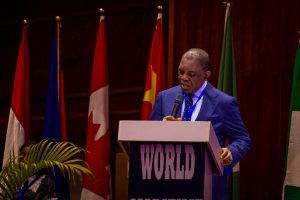
“The credibility of an economic regulator rests, in no small measure, on its independence, impartiality and freedom from responsibilities that could give rise to actual or perceived conflicts of interest,” he said.
He charged the agency to operate as an impartial arbiter in the port industry, ensuring fairness, transparency and accountability in the discharge of its regulatory responsibilities.
On infrastructure expansion, Oyetola said the modernisation programme would not be restricted to Lagos, stressing that ports in other parts of the country remained essential to national economic development.
“No part of our national port system will be left behind in this modernisation programme,” he declared.
Beyond the rehabilitation and upgrading of existing facilities, the minister disclosed that the Federal Government had approved the development of six additional deep seaports at Ibom, Bakassi, Agge, Gateway, Ondo and Bonny.
He said the proposed projects were intended to expand Nigeria’s maritime capacity, attract investment and strengthen the country’s position as a regional logistics hub.
On maritime security, Oyetola said Nigeria had maintained zero piracy incidents in its territorial waters through sustained interventions, particularly the Deep Blue Project.
He also described the lifting of the United States Coast Guard’s 12-year Condition of Entry restrictions on vessels arriving from Nigeria in August 2026 as a major development, reflecting progress in maritime security and compliance with international standards.
The minister further reaffirmed the government’s commitment to strengthening indigenous shipping, disclosing that he had directed the Nigerian Maritime Administration and Safety Agency (NIMASA) to work with approved Primary Lending Institutions to accelerate the processing and disbursement of the Cabotage Vessel Financing Fund (CVFF) to qualified applicants.
On international cooperation, Oyetola highlighted Nigeria’s election to Category C of the International Maritime Organization (IMO) Council in November 2025 and ongoing engagements with Denmark, India, Norway and the United Kingdom.
He said such partnerships must produce practical benefits for Nigeria through technology transfer, skills development, local capacity building and sustainable investment.
“Our approach to international cooperation is purposeful and results-oriented,” he said, adding that international engagements must strengthen domestic capabilities and deliver measurable outcomes.
Earlier, the Ambassador of the Kingdom of Denmark to Nigeria, Jens Ole Bach Hansen, delivered a presentation titled “Denmark’s Experience in Building a Sustainable Blue Economy: Lessons for Strategic Partnerships, Investment and Technology Transfer with Nigeria.”
The presentation examined lessons Nigeria could draw from Denmark’s experience in developing a sustainable blue economy, particularly through strategic partnerships, investment and technology transfer.












Customs Conference, C-PACT 2026 to advance digital borders, AfCFTA implementation

Customs reaffirms community development commitment with healthcare project in Modakeke

FOU Zone C boss courts security agencies in push against smuggling, insecurity in Imo
-

 Crime2 years ago
Imo police confirm arrest of journalist, ‘Nonsonkwa’ over alleged Cyberstalking, Incitement
-
 Business1 year ago
Kirikiri Lighter Terminal Customs achieves 63% revenue growth in first half of 2025, generates ₦89.2b
-

 Business1 year ago
Nigerians can now independently verify vehicle duty payment status online with ₦15,000
-
 Education8 months ago
Anambra leads South-east in education allocation ratio, as Imo ranks lowest
-

 Business3 years ago
Floating Naira: Imminent drawback to revenue as Customs Duty Exchange Rate rises again to ₦783.174
-
 News7 years ago
Orthodox Anglican Church, not Same as Church of Nigeria- Bishop